


der Feierabend
end of the workday
The time after the end of the daily work, used for rest and leisure.
EXAMPLE
Ich freue mich schon auf den Feierabend heute um 17 Uhr.
I'm already looking forward to the end of the workday today at 5 p.m.
end of the workday
Loading your saved state.
end of the workday
The time after the end of the daily work, used for rest and leisure.
Ich freue mich schon auf den Feierabend heute um 17 Uhr.
I'm already looking forward to the end of the workday today at 5 p.m.

to call it a day
To finish work for the day.
Für heute ist es genug, lass uns Feierabend machen.
That's enough for today; let's call it a day.

That's enough!
A colloquial expression used to say that a limit has been crossed and something must stop immediately.
Als die Kinder anfingen, mit Essen zu werfen, rief die Mutter: 'So, jetzt ist aber Feierabend!'
When the children started throwing food, their mother shouted: 'All right, that's enough!'
'Feierabend' is made up of 'die Feier' (celebration) and 'der Abend' (evening). Literally, it is an 'evening for celebrating,' which emphasizes the positive meaning of the end of work as a well-earned break.
Nach einer anstrengenden Woche ist der Feierabend am Freitag besonders schön.
After a tiring week, the end of the workday on Friday feels especially good.
'Feierabend' is an important concept in German work culture. It refers not only to the end of work, but also to the valued and often clearly separated time for private relaxation, family, and hobbies.
Pünktlich um 17 Uhr beginnt für viele der wohlverdiente Feierabend.
Right at 5 p.m., the well-earned end of the workday begins for many people.
In everyday life, 'Feierabend' is often used in fixed expressions. You 'hat Feierabend' (are off work), 'geht in den Feierabend' (head into your time after work), or wish colleagues 'einen schönen Feierabend' (a nice evening after work).
Ich habe heute erst um 19 Uhr Feierabend.
I don't get off work until 7 p.m. today.
The active act of finishing work is expressed with the fixed phrase 'Feierabend machen' (to call it a day). The verb 'machen' (to make/do) is the fixed partner of the noun here.
Es ist schon spät, ich mache jetzt Feierabend.
It's already late; I'm calling it a day now.
The exclamation 'Jetzt ist aber Feierabend!' has nothing to do with work. Colloquially, it means 'That's it!' or 'That's enough!' and is used to stop an unacceptable action immediately.
Hört sofort auf mit dem Lärm! Jetzt ist aber Feierabend!
Stop making that noise right now! That's enough!
evening
Abend refers to the time of day between late afternoon and night. Feierabend, by contrast, means the time left for relaxation and leisure after the end of the workday. After work, either word may fit: Abend refers to the time of day, while Feierabend refers to free time after work.
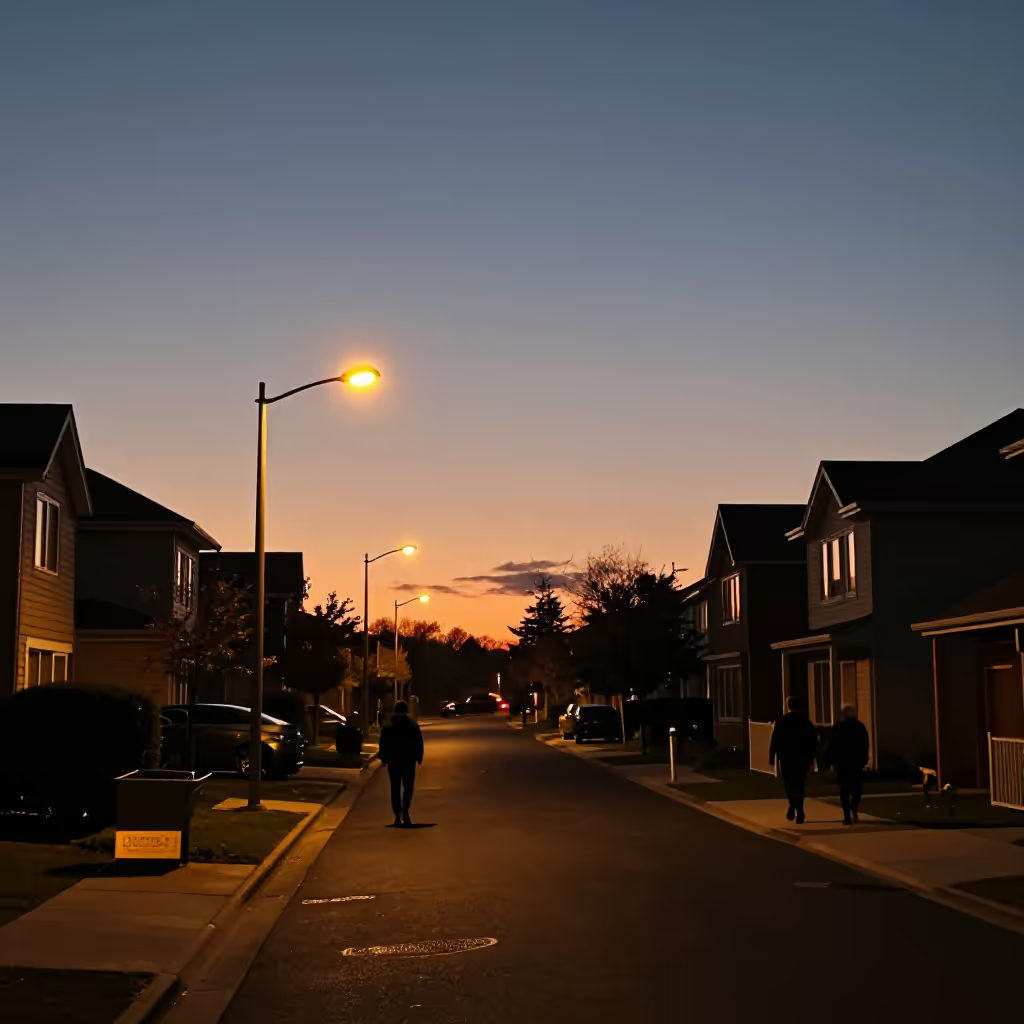
Nach der Arbeit genieße ich den ruhigen Feierabend.
After work, I enjoy some quiet time after the workday.
Nach der Arbeit genieße ich den ruhigen Abend.
After work, I enjoy a quiet evening.