

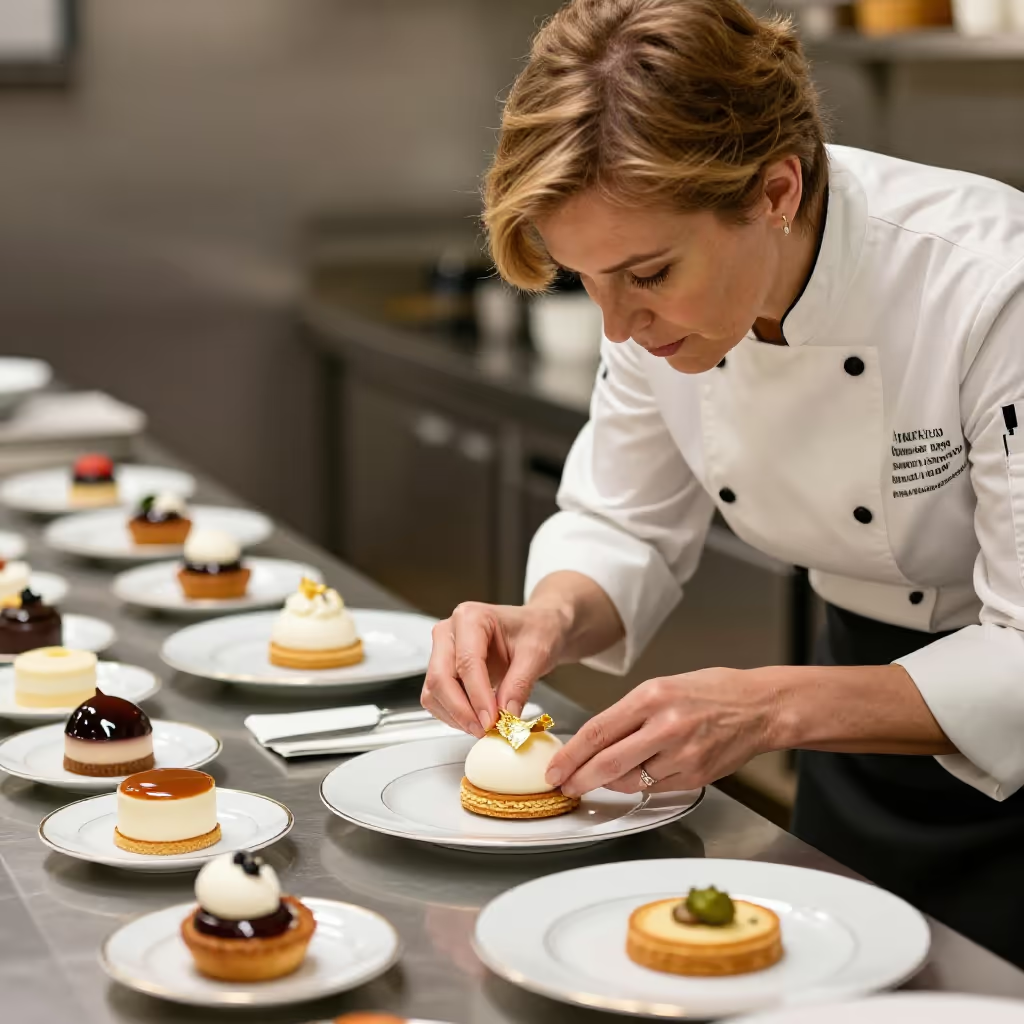
fein
fine
Of high quality, elegant, delicate, or exquisite. It can refer to materials, food, or workmanship.
EXAMPLE
Sie trug ein Kleid aus feiner Seide.
She wore a dress made of fine silk.
fine
Loading your saved state.
fine
Of high quality, elegant, delicate, or exquisite. It can refer to materials, food, or workmanship.
Sie trug ein Kleid aus feiner Seide.
She wore a dress made of fine silk.
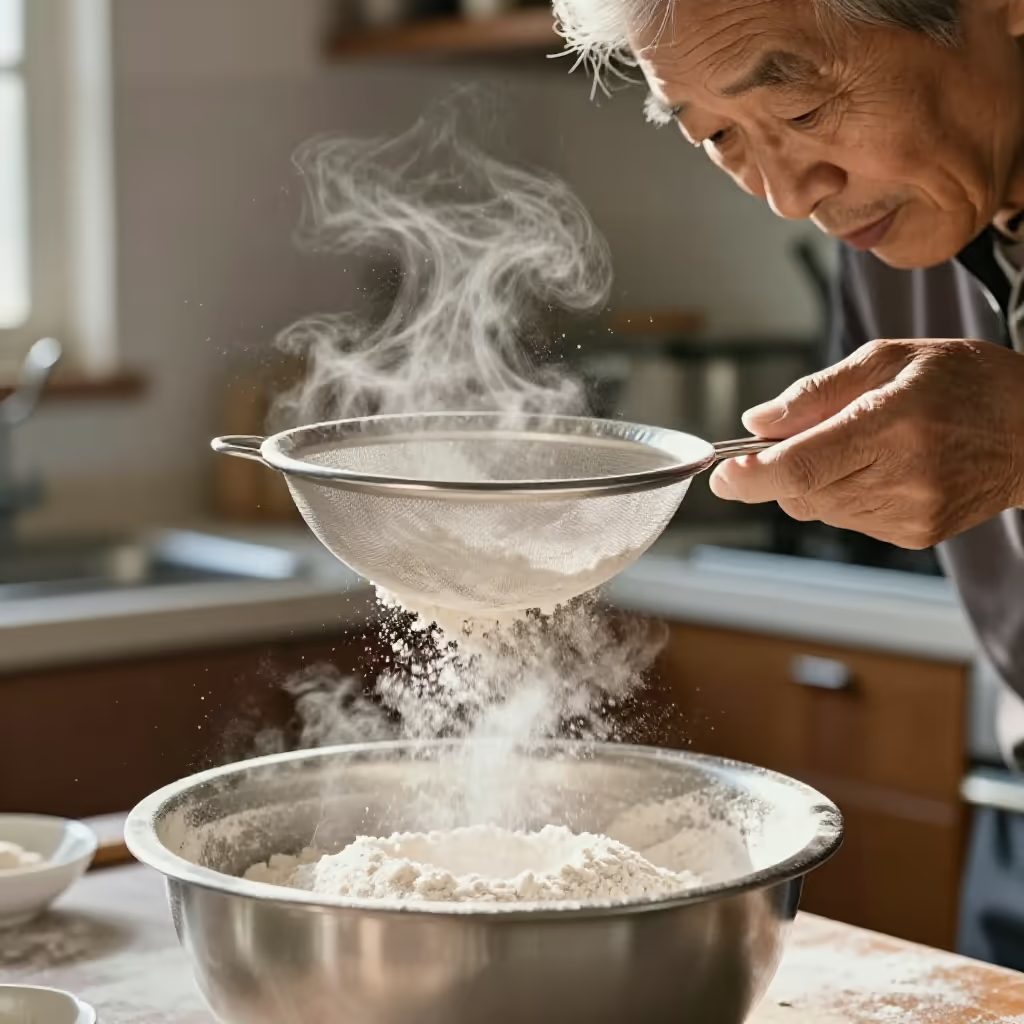
fine
Very small, thin, or consisting of tiny particles.
Der Strand war bekannt für seinen feinen, weißen Sand.
The beach was known for its fine white sand.

good
Colloquial for good, okay, or excellent. Often used as praise or as an expression of satisfaction.
Das hast du wirklich fein gemacht, vielen Dank!
You did that really well, thank you!
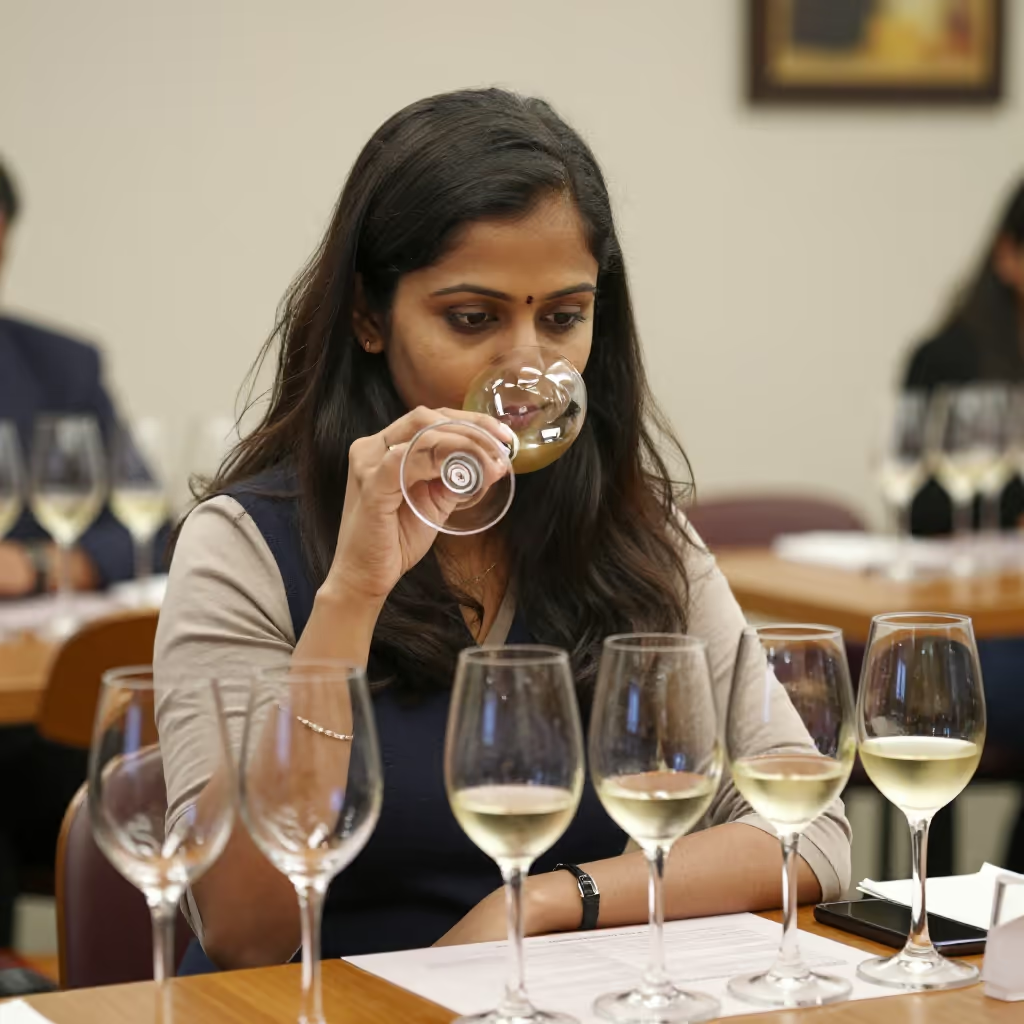
keen
Having a subtle, sharp, or precise ability to perceive things.
Der Hund hat ein feines Gehör und bemerkt jedes Geräusch.
The dog has keen hearing and notices every sound.

refined
Relating to a distinguished, educated, or socially high-ranking manner. Sometimes also used disparagingly or ironically.
Er gibt sich gerne als Mann von feiner Lebensart.
He likes to present himself as a man of refined manners.

great
Used ironically to express annoyance or displeasure about an unpleasant situation.
Na fein, jetzt habe ich auch noch den Schlüssel vergessen.
Well, great, now I've forgotten the key too.
The meaning of 'fein' (fine) depends heavily on the noun it describes. If it refers to a material ('feiner Sand' — fine sand), an ability ('feines Gehör' — keen hearing), or an action ('fein gemacht' — well done), the meaning shifts from 'small' to 'precise' to 'good'.
Der feine Staub bedeckte alle Möbel.
The fine dust covered all the furniture.
In the meaning of 'elegant' or 'exquisite', 'fein' is often used for high-quality products. Typical phrases are 'feiner Wein' (fine wine), 'feine Schokolade' (fine chocolate), or 'feine Stoffe' (fine fabrics).
Zum Dessert gab es eine feine Auswahl an Käse.
For dessert, there was a fine selection of cheeses.
This meaning often describes that something consists of very small parts or has been processed very precisely. Common combinations are 'feiner Sand' (fine sand), 'feines Pulver' (fine powder), or 'fein mahlen' (to grind finely).
Für den Kuchen müssen die Nüsse sehr fein gemahlen werden.
For the cake, the nuts have to be ground very finely.
As an expression meaning 'good' or 'okay', 'fein' is used mainly in colloquial language, often as praise for children. It can also serve as an approving response.
Du hast dein Zimmer aufgeräumt? Fein!
You tidied your room? Good!
To describe sharp perception, 'fein' is used in fixed expressions with sense organs. Typical examples are 'eine feine Nase haben' (to have a good nose; also figurative) or 'ein feines Gehör haben' (to have keen hearing).
Meine Großmutter hat trotz ihres Alters noch ein sehr feines Gehör.
Despite her age, my grandmother still has very keen hearing.
In a negative context and with sarcastic emphasis, 'fein' means the exact opposite of 'good'. It expresses annoyance or disappointment.
Na fein, jetzt regnet es auch noch.
Well, great, now it's raining too.
good
Gut is a neutral word for a positive judgment, while fein in this use is colloquial and expresses agreement or satisfaction. Both are possible for a simple compliment. Gut also fits factual situations, whereas fein sounds more casual and conversational.

Der neue Plan ist fein, dann können wir morgen loslegen.
The new plan is fine, so we can get started tomorrow.
Der neue Plan ist gut und kann morgen umgesetzt werden.
The new plan is good and can be put into action tomorrow.