

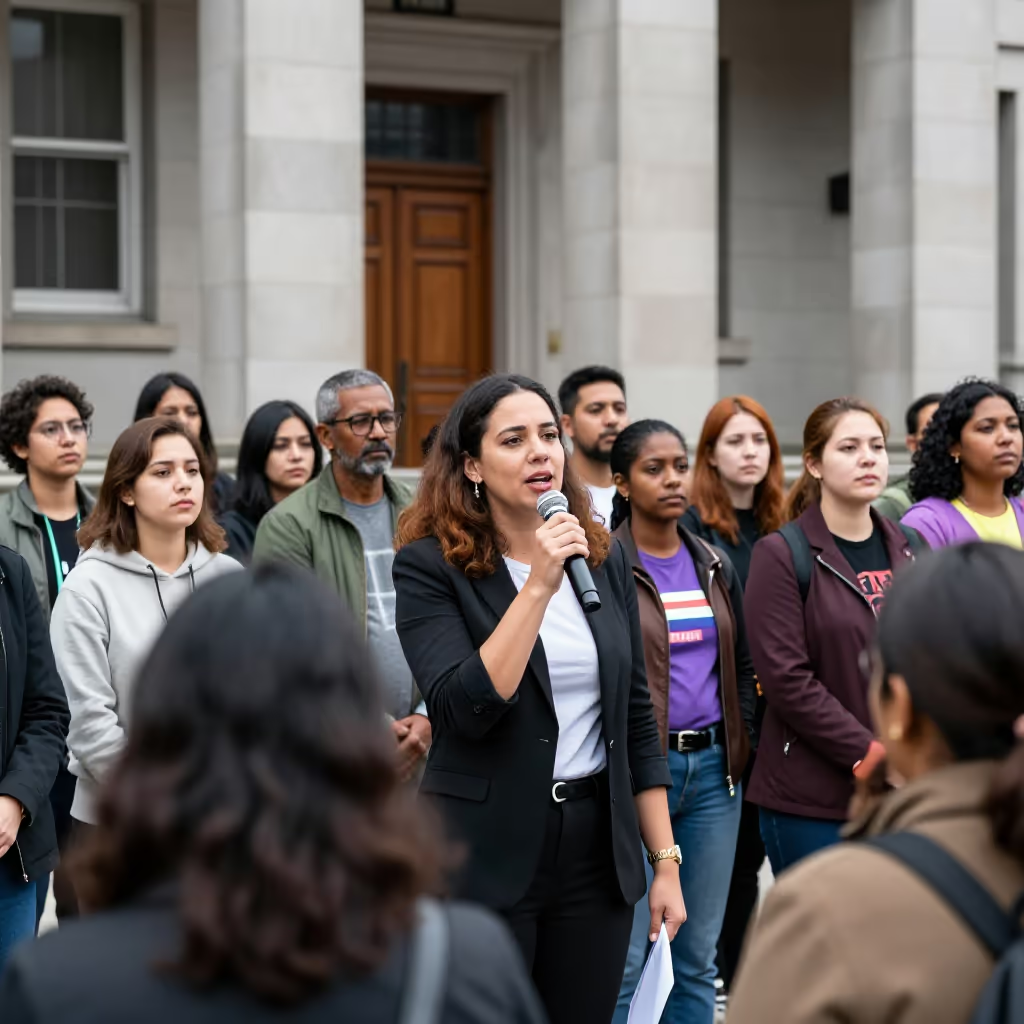
Relating to or supporting feminism; advocating the political, economic, and social equality of the sexes.
example
Sie vertritt eine klar feministische Position in der Debatte um Lohngleichheit.
She takes a clearly feminist position in the debate about equal pay.
Usage tips
Word family
The adjective 'feministisch' (feminist) is derived from the noun 'der Feminismus' (feminism). The ending '-istisch' is often used for adjectives that refer to a worldview or movement.
EXAMPLE
Der Feminismus setzt sich für die Gleichberechtigung der Geschlechter ein.
Feminism advocates for gender equality.
Sentence structure and usage
'Feministisch' (feminist) can stand before a noun, be used as part of the predicate, or be used as an adverb to describe a verb. It then describes the manner of an action.
EXAMPLE
Das ist ein feministischer Roman.
That is a feminist novel.
Typical collocations
The adjective is often combined with nouns from the fields of politics, society, and culture. Typical examples are: 'eine feministische Perspektive' (a feminist perspective), 'eine feministische Bewegung' (a feminist movement), or 'feministische Theorie' (feminist theory).
EXAMPLE
Im Seminar diskutierten wir über feministische Literaturkritik.
In the seminar, we discussed feminist literary criticism.
Compare with
confusable
feministisch vs weiblich
female / feminine
'weiblich' and 'feministisch' can both appear in texts about women or gender, but they do not mean the same thing. 'weiblich' describes a sex/gender or characteristics associated with women or girls. 'feministisch' describes an attitude, idea, or movement that supports gender equality. A person can be female without being feminist, and a man can also be feminist. The words are easy to confuse because both often appear in the same topic area. So 'weiblich' describes sex/gender, while 'feministisch' describes a political or social attitude.
feministisch
Die Gruppe organisiert einen feministischen Vortrag über gleiche Chancen im Beruf.
The group is organizing a feminist lecture about equal opportunities at work.
weiblich
Die Studie fragt, wie viele Teilnehmer weiblich sind.