

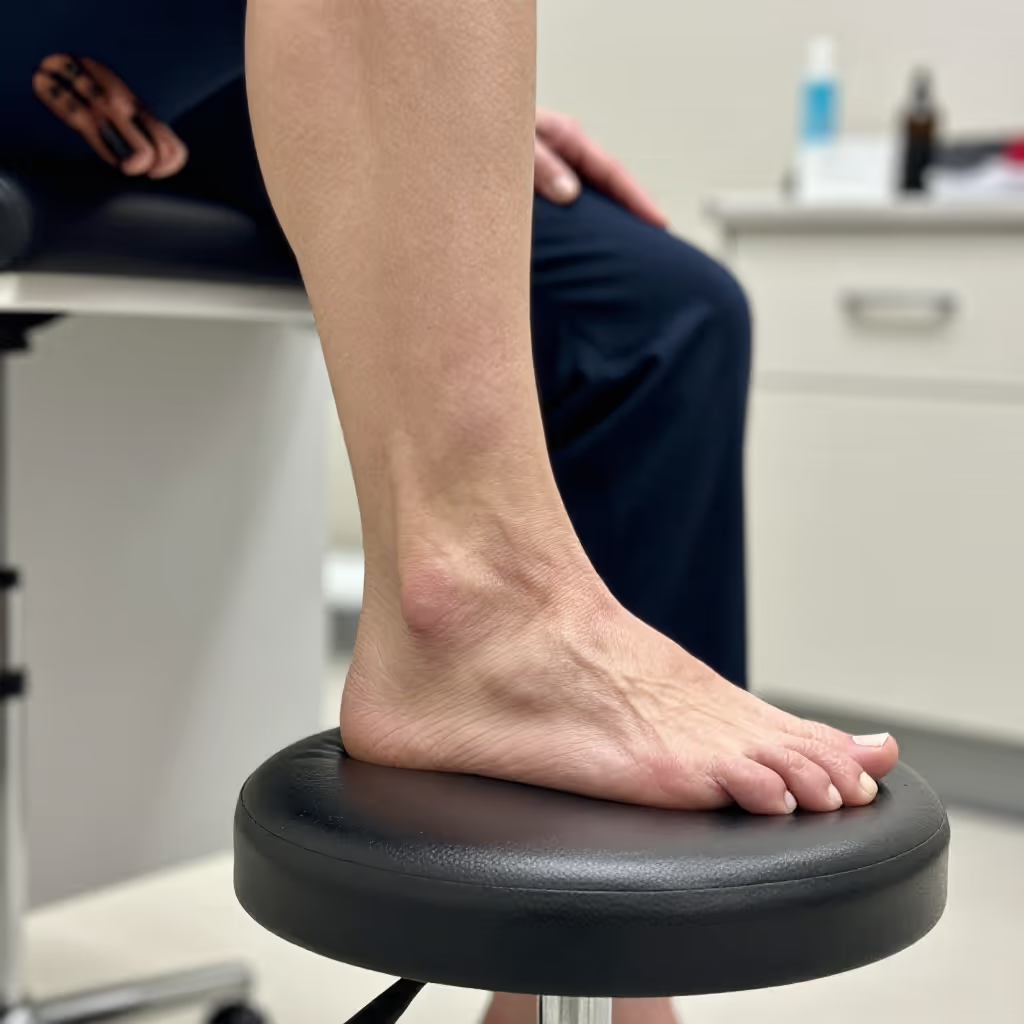
die Ferse
heel
The rear, lower part of the human foot below the ankle.
EXAMPLE
Nach der langen Wanderung schmerzte ihm die Ferse.
After the long hike, his heel hurt.
heel
Loading your saved state.
heel
The rear, lower part of the human foot below the ankle.
Nach der langen Wanderung schmerzte ihm die Ferse.
After the long hike, his heel hurt.

to be on someone's heels
To pursue someone closely or be just behind someone.
Die Polizei war dem flüchtigen Dieb dicht auf den Fersen.
The police were close on the fleeing thief's heels.
The expression 'die Achillesferse' (Achilles' heel) is derived from 'Ferse' (heel) and refers to the only vulnerable spot of a person or system. It comes from Greek mythology and is very common in German.
Seine Unpünktlichkeit ist seine Achillesferse im Berufsleben.
His unpunctuality is his Achilles' heel in his professional life.
In the literal sense, 'Ferse' (heel) is often associated with pain or injuries. You can 'sich die Ferse stoßen' (bump your heel) or 'Schmerzen in der Ferse haben' (have pain in your heel).
Ich habe mir beim Sport die Ferse verletzt.
I injured my heel while playing sports.
The idiom 'jemandem auf den Fersen sein' (to be on someone's heels) is a fixed construction. The person being pursued is always in the dative case.
Die Konkurrenz ist uns dicht auf den Fersen.
The competition is close on our heels.
heel / paragraph / sales
Both Absatz and Ferse are at the back of a shoe, but they do not refer to the same part. The Ferse is the back of the foot, while the Absatz is part of the shoe and is raised beneath the heel. Use Ferse when talking about the foot and Absatz when talking about the shape of the shoe.

Die Ferse tut mir weh, weil der Schuh dort drückt.
My heel hurts because the shoe is pressing against it there.
Der hohe Absatz des Schuhs macht das Gehen anstrengend.
The shoe's high heel makes walking tiring.