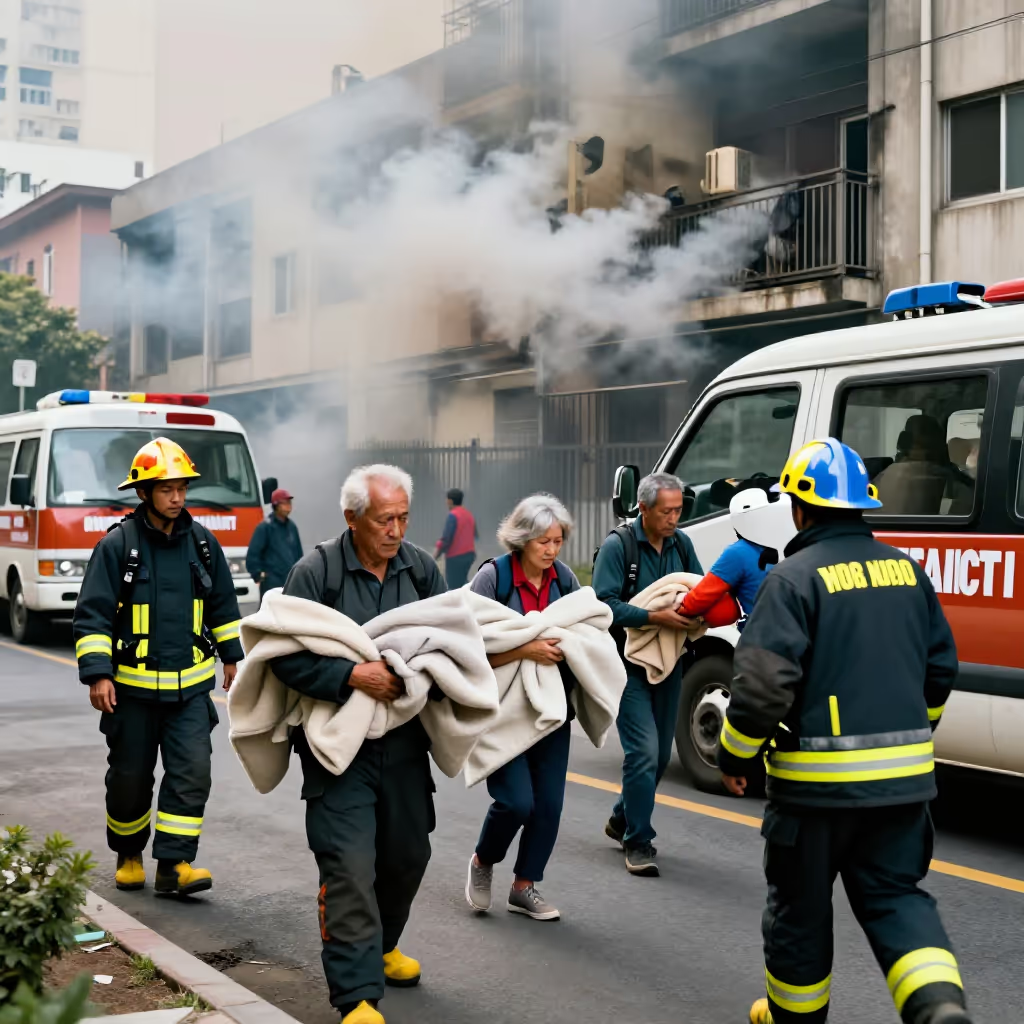
The organized movement of people from a danger zone to a safe place. This typically happens during natural disasters, fires, or bomb threats.
example
Nach dem Fund einer Fliegerbombe wurde die Evakuierung des gesamten Stadtviertels angeordnet.
After an aerial bomb was found, the evacuation of the entire neighborhood was ordered.

Usage tips
Word family
'Die Evakuierung' (evacuation) is the noun formed from the verb 'evakuieren' (to evacuate). The ending '-ung' is often used to form a feminine noun from a verb that describes the action or its result.
EXAMPLE
Die Feuerwehr evakuierte das brennende Gebäude.
The fire department evacuated the burning building.
Register and style
The word 'Evakuierung' (evacuation) belongs to formal language. You mainly find it in official announcements, news reports, or specialized texts.
EXAMPLE
Die Behörden gaben eine Anweisung zur Evakuierung heraus.
The authorities issued an evacuation order.
Typical collocations
In the context of dangerous situations, an evacuation is often 'angeordnet' (ordered), 'durchgeführt' (carried out), or 'eingeleitet' (initiated). People speak of the evacuation of a 'Gebäude' (building), a 'Gebiet' (area), or a 'Stadt' (city).
EXAMPLE
Wegen der Überschwemmung wurde die Evakuierung des Dorfes angeordnet.
Because of the flooding, the evacuation of the village was ordered.
Context clue
You can recognize the technical or medical meaning from the context. If containers, tanks, rooms, or body organs such as the stomach are being discussed, it refers to emptying, not the movement of people.
EXAMPLE
Für das Experiment ist die vollständige Evakuierung des Vakuumspeichers erforderlich.
The complete evacuation of the vacuum reservoir is required for the experiment.
Compare with
confusable
Evakuierung vs Flucht
escape / alignment
'die Flucht' and 'die Evakuierung' both mean that people leave a dangerous place. 'Flucht' often sounds quick, unplanned, and driven by fear. People usually act on their own in order to save themselves. 'Evakuierung' is organized, for example by the police, fire department, or authorities. Learners may confuse the words because both occur in dangerous situations. When people run away chaotically, you are more likely to say 'Flucht'. When they are brought to a safe place in an orderly way, 'Evakuierung' fits better.
Evakuierung
Nach der Bombendrohung begann die Evakuierung des Bahnhofs.
After the bomb threat, the evacuation of the train station began.
Flucht
Als der Rauch dichter wurde, blieb nur noch die Flucht durch den Hinterausgang.
As the smoke grew thicker, the only option left was to escape through the back exit.