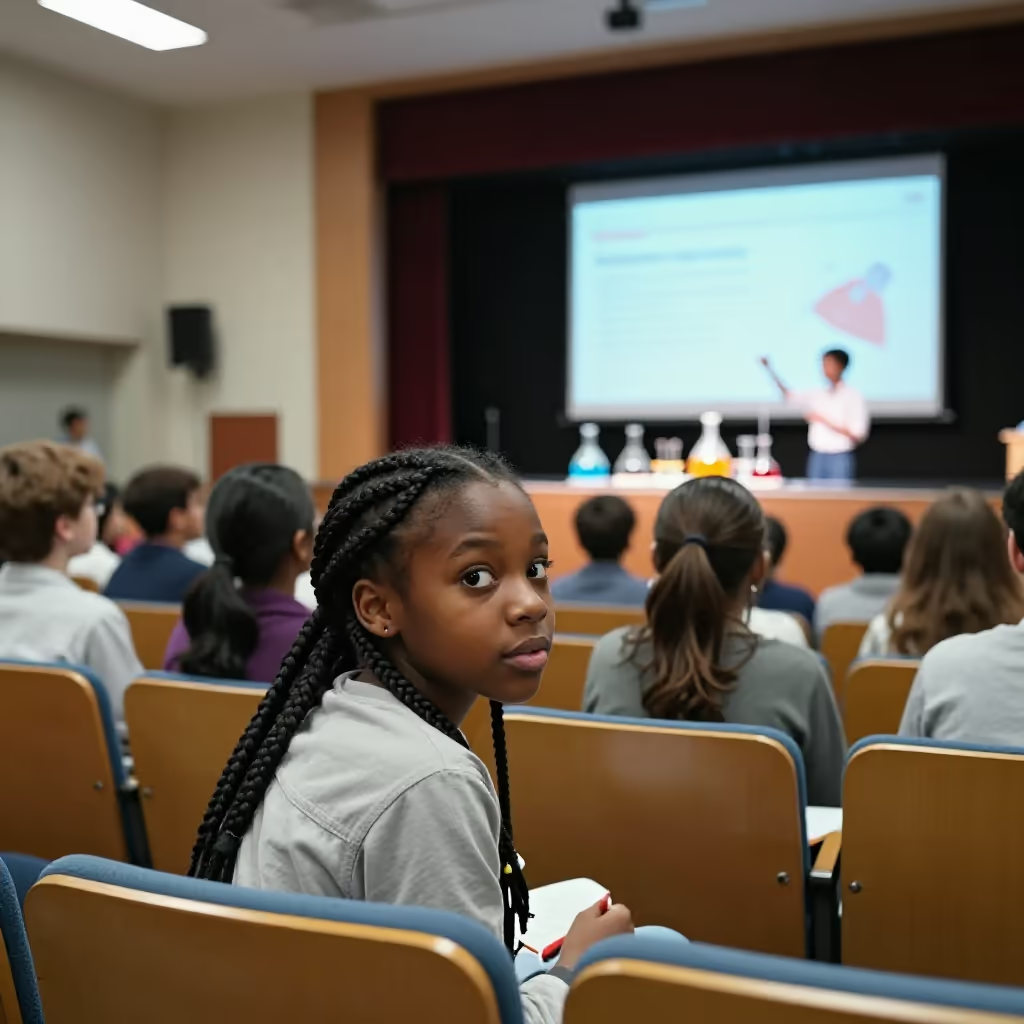
To arouse and hold someone's full attention or interest; to fascinate or excite someone.
example
Die Geschichte war so spannend, dass sie mich von der ersten bis zur letzten Seite fesselte.
The story was so exciting that it captivated me from the first page to the last.

Usage tips
Word family
The verb 'fesseln' (to bind/captivate) is derived from the noun 'die Fessel' (shackle), which is a chain or band used for binding. This connection helps you understand the literal meaning 'jemanden binden' (to bind someone).
EXAMPLE
Der Gefangene trug schwere Fesseln an den Händen.
The prisoner wore heavy shackles on his hands.
Context clues
You can recognize the meaning from the object: a book or story 'fesselt' (captivates). The police 'fesselt' (binds) a perpetrator. An investment 'fesselt' (ties up) capital.
EXAMPLE
Dieser Krimi wird dich von der ersten Seite an fesseln.
This crime novel will captivate you from the very first page.
Participle as adjective
The present participle 'fesselnd' (captivating) is very often used as an adjective to describe something as very exciting or interesting. It then comes before a noun.
EXAMPLE
Es war ein fesselnder Film mit einem überraschenden Ende.
It was a captivating film with a surprising ending.
Sentence structure with preposition
In the literal meaning, the preposition 'an' + accusative is often used to say what someone is tied to.
EXAMPLE
Der Held wurde an einen Baum gefesselt.
The hero was tied to a tree.
Compare with
near_synonym
fesseln vs interessieren
to interest
'interessieren' and 'fesseln' can both mean that something arouses attention. 'interessieren' is more neutral: a topic can make someone curious or be important to them. 'fesseln' is stronger and means that something holds someone's attention for a long time. It is often used with books, films, stories, or lectures. A topic can interest you even if you only briefly want to know more. If you stay completely engaged and do not want to stop, 'fesseln' fits better.
fesseln
Der spannende Krimi fesselt die Eltern bis spät in die Nacht.
The exciting crime novel captivates the parents until late into the night.
interessieren
Der Gast interessiert sich im Gespräch für die neuen Pläne der Firma.
During the conversation, the guest is interested in the company's new plans.