

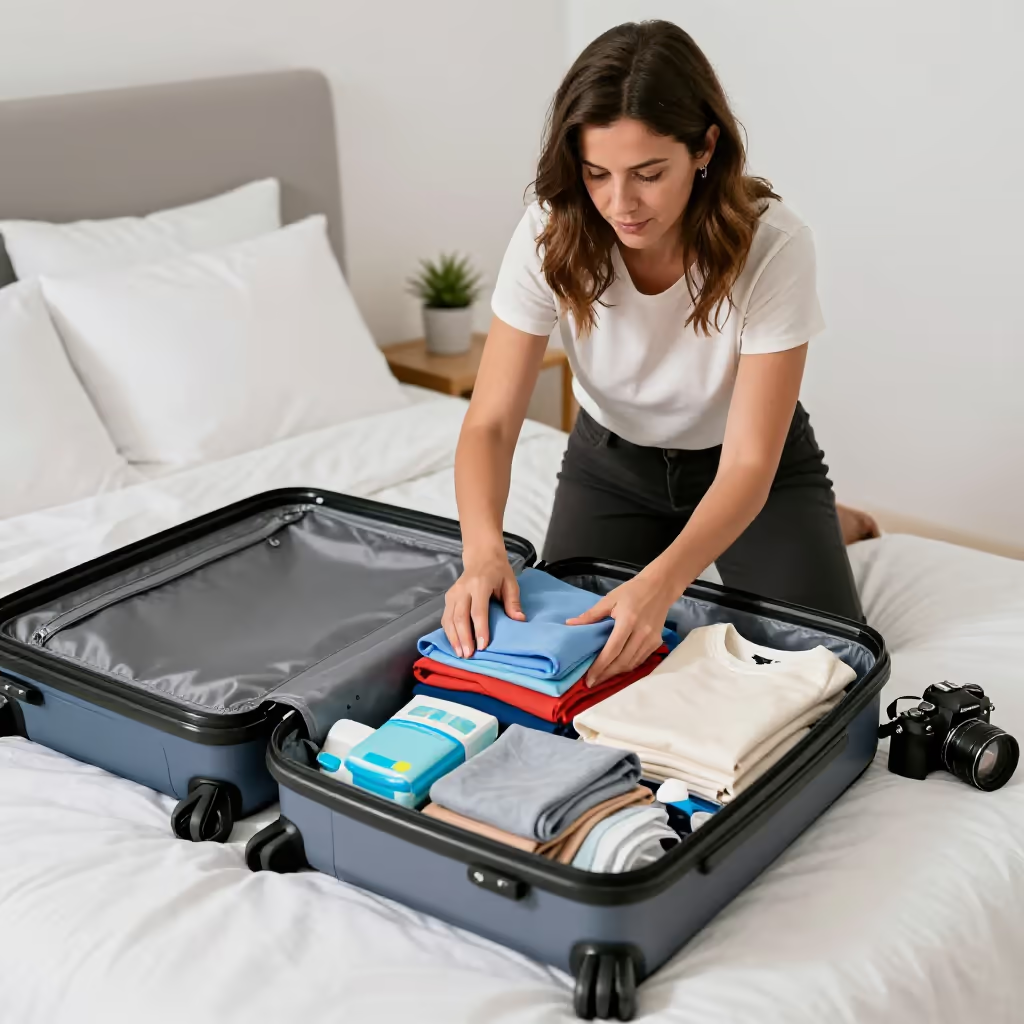
packen
to pack
To put objects into a suitcase, bag, or box in order to transport them or go on a trip.
EXAMPLE
Bevor wir in den Urlaub fahren, muss ich noch meinen Koffer packen.
Before we go on vacation, I still have to pack my suitcase.
to pack / grab / manage
Loading your saved state.
to pack
To put objects into a suitcase, bag, or box in order to transport them or go on a trip.
Bevor wir in den Urlaub fahren, muss ich noch meinen Koffer packen.
Before we go on vacation, I still have to pack my suitcase.
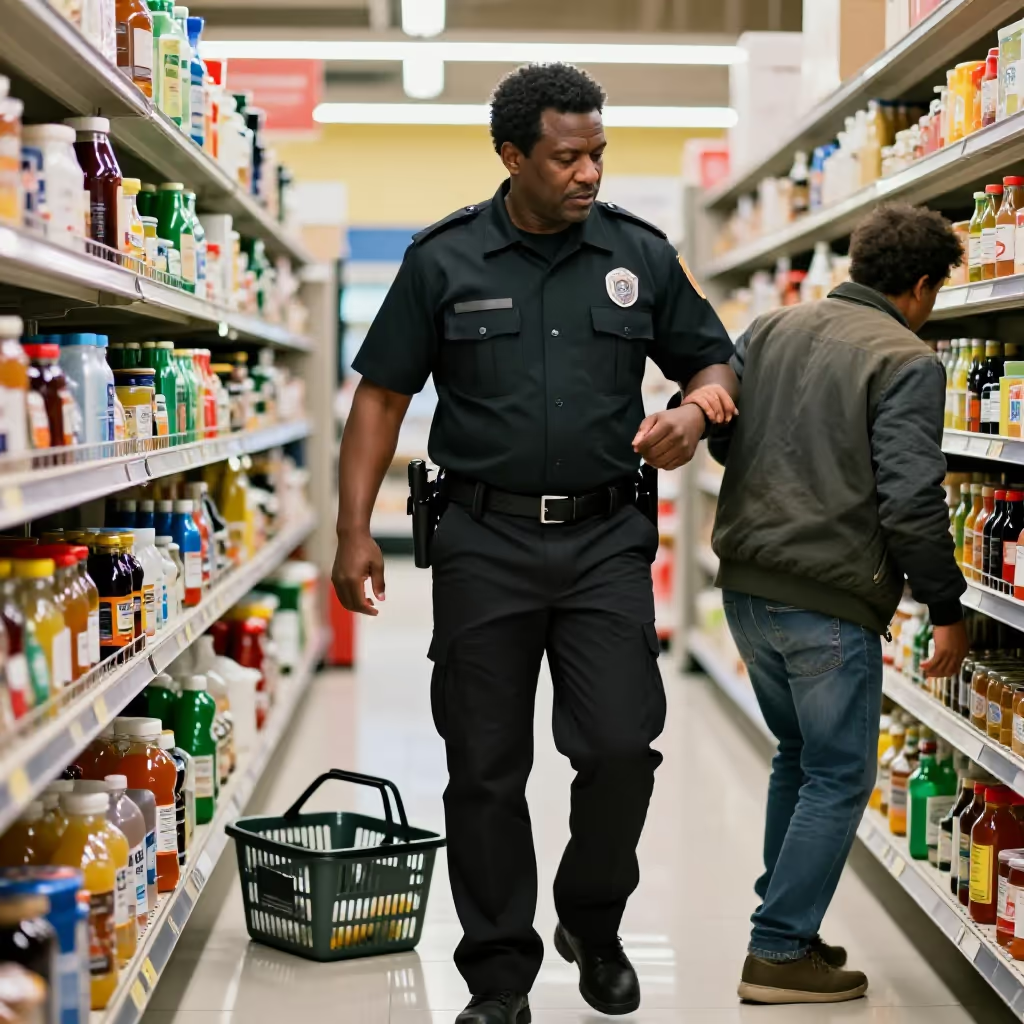
to grab
To take hold of someone or something firmly and hold on to them or it.
Der Polizist packte den Dieb am Arm und führte ihn ab.
The police officer grabbed the thief by the arm and led him away.

to manage
Informal for succeeding at something, handling it, or bringing it to a successful end.
Die Prüfung war schwer, aber ich glaube, ich habe es gepackt.
The exam was hard, but I think I managed it.
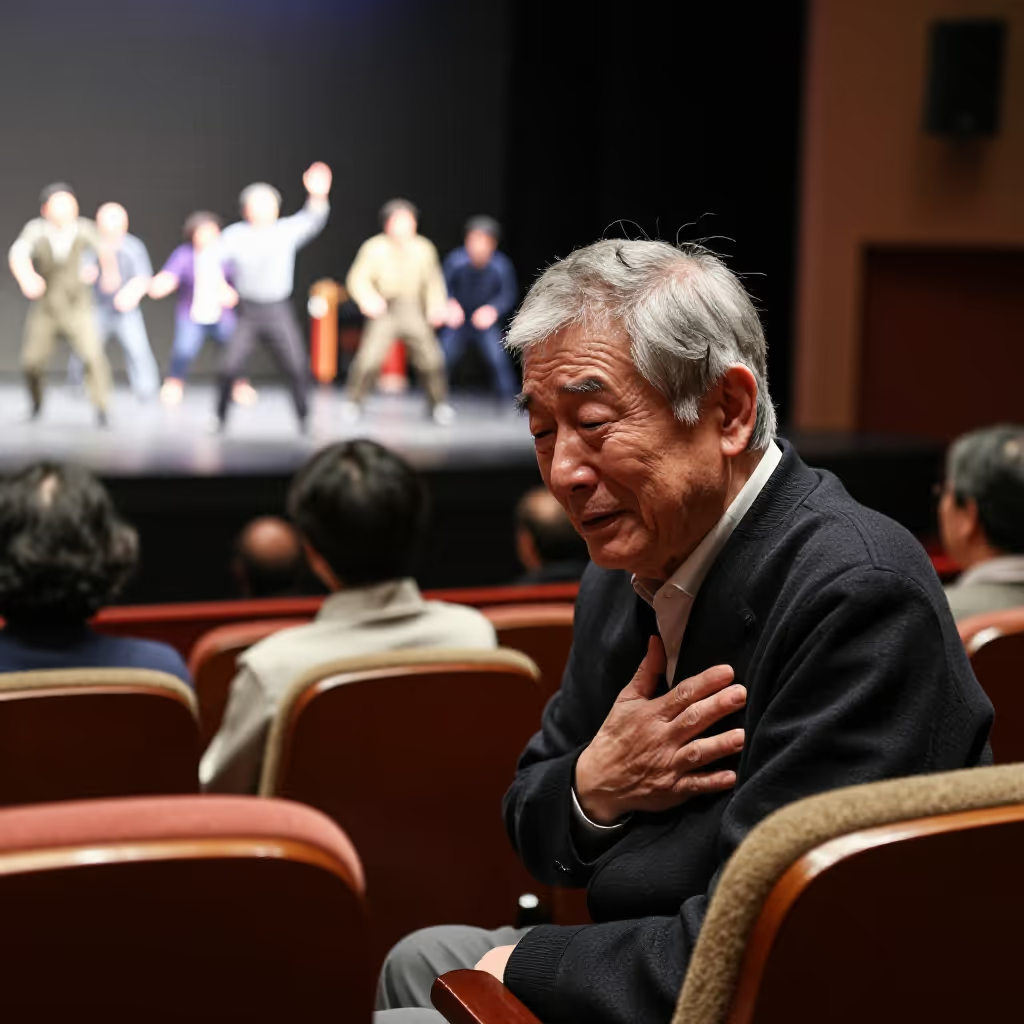
to grip
To strongly move, captivate, or sweep someone along emotionally.
Die Geschichte des Films hat mich von der ersten Minute an gepackt.
The story of the film gripped me from the very first minute.
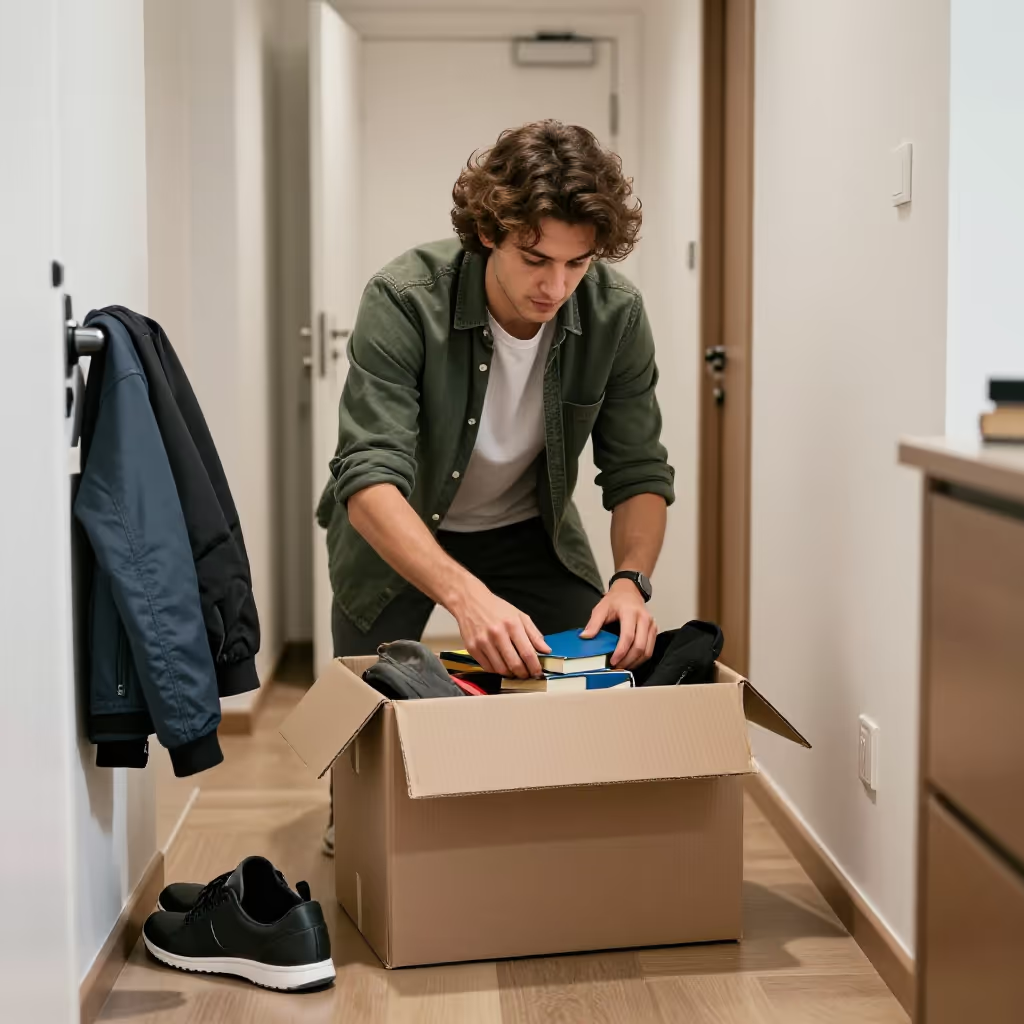
to pack one's things
To gather one's personal belongings in order to leave a place; to go away.
Nach dem lauten Streit hat er sofort seine Sachen gepackt und die Wohnung verlassen.
After the loud argument, he immediately packed his things and left the apartment.
The meaning of 'packen' (to pack / grab / manage) depends heavily on the object. If it refers to an item like 'Koffer' (suitcase) or 'Tasche' (bag), it means 'to put inside'. If it refers to a person, it usually means 'to grab'.
Ich muss noch schnell meine Tasche für die Uni packen.
I still have to quickly pack my bag for university.
When 'packen' (to grab) is used in the sense of 'ergreifen' (to seize/grab), the body part someone is grabbed by often appears with the preposition 'an' and the dative.
Die Mutter packte ihren Sohn an der Hand.
The mother grabbed her son by the hand.
The expression 'es packen' colloquially means 'to manage something' or 'to succeed'. The word 'es' is a fixed part of the idiom here.
Ich lerne viel für die Prüfung und hoffe, dass ich es packe.
I'm studying a lot for the exam and hope that I'll manage it.
In this meaning, the subject of the sentence is often something abstract like a film, a book, or a story. The person who is emotionally moved is in the accusative.
Dieses Lied packt mich jedes Mal wieder.
This song grips me every single time.
The idiom 'seine Sachen packen' means to leave a place, often spontaneously or after a conflict. It is used as a synonym for 'weggehen' (to go away) or 'ausziehen' (to move out).
Wenn du dich nicht an die Regeln hältst, kannst du deine Sachen packen.
If you don't follow the rules, you can pack your things.
to manage / create
Both words can mean that someone successfully manages a task. Schaffen is the neutral and more general form. Packen is colloquial in this meaning and often sounds like casual encouragement or a statement that someone has enough strength to do something. In formal texts, schaffen is usually more appropriate.

Mit guter Vorbereitung packst du die schwierige Prüfung bestimmt.
With good preparation, you’re sure to manage the difficult exam.
Mit guter Vorbereitung schaffte sie die schwierige Prüfung.
With good preparation, she managed the difficult exam.