

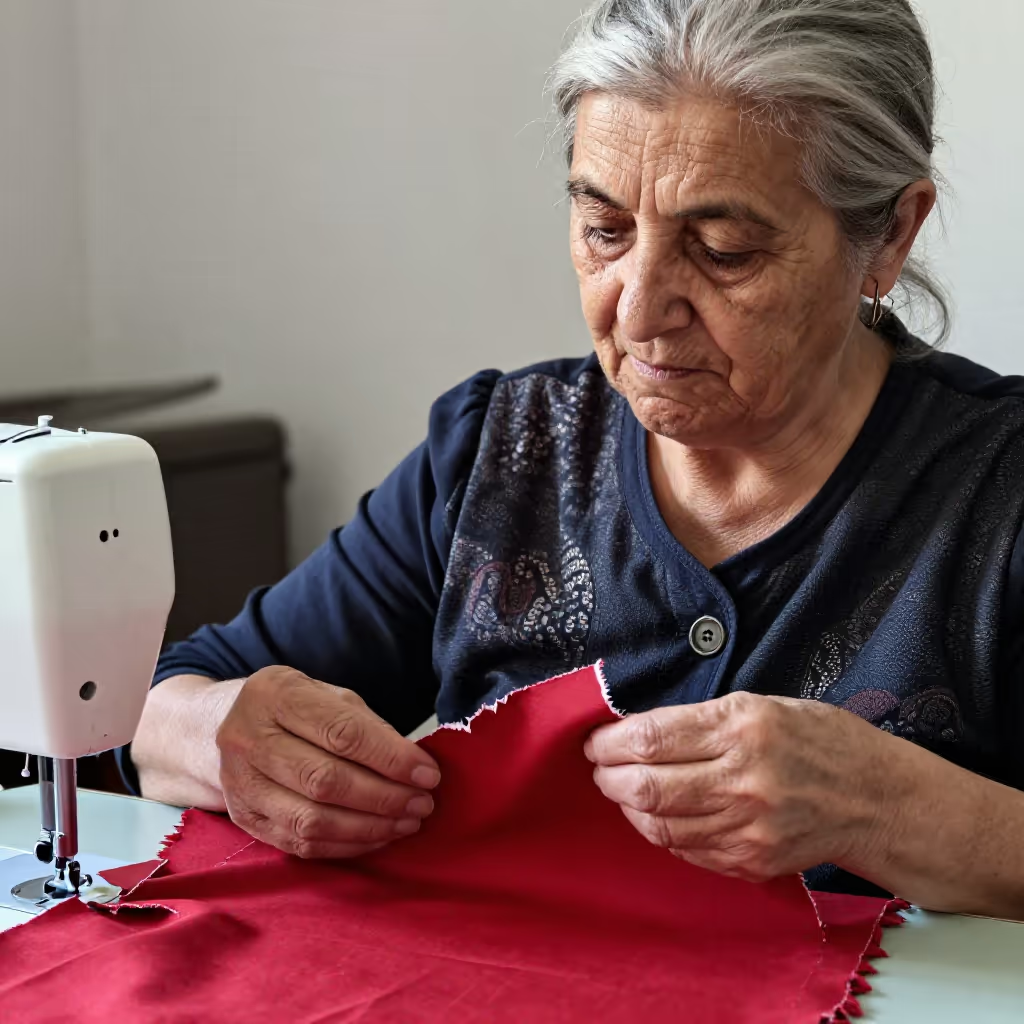
der Fetzen
rag / scrap
A torn-off, irregular piece of something, usually fabric, paper, or leather.
EXAMPLE
Er wischte den Tisch mit einem alten Fetzen sauber.
He wiped the table clean with an old rag.
rag / scrap
Loading your saved state.
rag / scrap
A torn-off, irregular piece of something, usually fabric, paper, or leather.
Er wischte den Tisch mit einem alten Fetzen sauber.
He wiped the table clean with an old rag.

snippet / fragment
A short, incomplete fragment of something heard or read, such as a conversation or a melody.
Ich habe nur einen Fetzen ihres Gesprächs aufgeschnappt.
I only caught a snippet of their conversation.

clothes
Colloquial, usually used in the plural, for clothing.
Für die Party hat sie sich in ihre besten Fetzen geworfen.
For the party, she got dressed up in her best clothes.

drunken state
Regional, especially in Austria and Bavaria, colloquial for being very drunk or in a state of intoxication.
Nach fünf Bier hatte er einen ordentlichen Fetzen.
After five beers, he was properly drunk.
The meaning of 'Fetzen' depends heavily on context. A physical piece (e.g., fabric), a piece of information (e.g., conversation), clothing (only in the plural), or drunkenness are the main distinctions.
Ich habe nur Fetzen des Liedes gehört, aber es gefiel mir.
I only heard snippets of the song, but I liked it.
To name the material of a 'Fetzen' (rag/scrap), German often uses a genitive construction ('ein Fetzen Stoff' — a scrap of fabric) or a compound noun ('ein Stofffetzen' — a fabric scrap).
Ein Fetzen Papier lag auf dem Boden.
A scrap of paper was lying on the floor.
In connection with information or sounds, 'Fetzen' (snippet/fragment) is often combined with verbs like 'aufschnappen' (to catch/overhear) or 'hören' (to hear). It emphasizes that you only caught a small, incomplete part.
Ich konnte durch die dünne Wand nur Fetzen ihres Streits aufschnappen.
Through the thin wall, I could only catch snippets of their argument.
When 'Fetzen' means clothing, it is colloquial and almost always used in the plural. The expression 'sich in die besten Fetzen werfen' means to put on one's nicest clothes.
Für die Hochzeit hat sie sich in ihre besten Fetzen geworfen.
For the wedding, she got dressed up in her best clothes.
The expression 'einen Fetzen haben' for 'to be very drunk' is colloquial and common especially in Austria and Bavaria. In other parts of Germany, it is understood less often.
Er war gestern auf dem Fest und hatte am Ende einen ziemlichen Fetzen.
He was at the festival yesterday and was pretty drunk by the end.
rag / license / wimp
Both words can refer to a piece of cloth used for wiping. Lappen mainly names its function as a cleaning cloth, whereas Fetzen also emphasizes that it is torn, irregular, or seemingly worthless. Lappen fits a normal cleaning cloth; Fetzen is more appropriate for a torn piece of fabric.

Ich wischte den verschütteten Saft mit einem Fetzen aus einem alten Hemd auf.
I wiped up the spilled juice with a scrap of fabric from an old shirt.
Ich wischte den verschütteten Saft schnell mit einem Lappen auf.
I quickly wiped up the spilled juice with a rag.