A state of drunkenness or stupor caused by the consumption of alcohol or drugs, affecting perception and behavior.
example
Er wurde wegen Fahrens im Rausch von der Polizei angehalten.
He was stopped by the police for driving while intoxicated.

Usage tips
Word family
The noun 'Rausch' is closely related to the verb 'rauschen' (to roar/rustle). This verb describes a strong, often unclear sound, like water or wind, and this idea of an overwhelming, intense state appears in all meanings of 'Rausch'.
EXAMPLE
Der Bach rauschte nach dem starken Regen.
The stream roared after the heavy rain.
Fixed preposition
To describe a state, 'Rausch' is almost always used with the preposition 'in' and the dative. You are 'im Rausch' (in a rush/intoxicated state) or get 'in einen Rausch' (into a rush/intoxicated state).
EXAMPLE
Im Rausch der Geschwindigkeit bemerkte er die Gefahr nicht.
In the rush of speed, he did not notice the danger.
Typical combinations
In connection with alcohol or drugs, 'Rausch' is often used with certain verbs. Typical phrases are 'sich in einen Rausch trinken' (to drink oneself into a state of intoxication), 'einen Rausch ausschlafen' (to sleep off intoxication), or 'im Rausch Auto fahren' (to drive while intoxicated).
EXAMPLE
Er musste seinen Rausch erstmal ausschlafen.
He first had to sleep off his intoxication.
Common compounds
In the meaning 'euphoria,' 'Rausch' is a very productive word element. It is often combined with another noun to describe an intense, almost ecstatic form of that activity.
EXAMPLE
Nach dem Sieg feierte die Mannschaft im Siegesrausch.
After the victory, the team celebrated in a rush of triumph.
Context clue
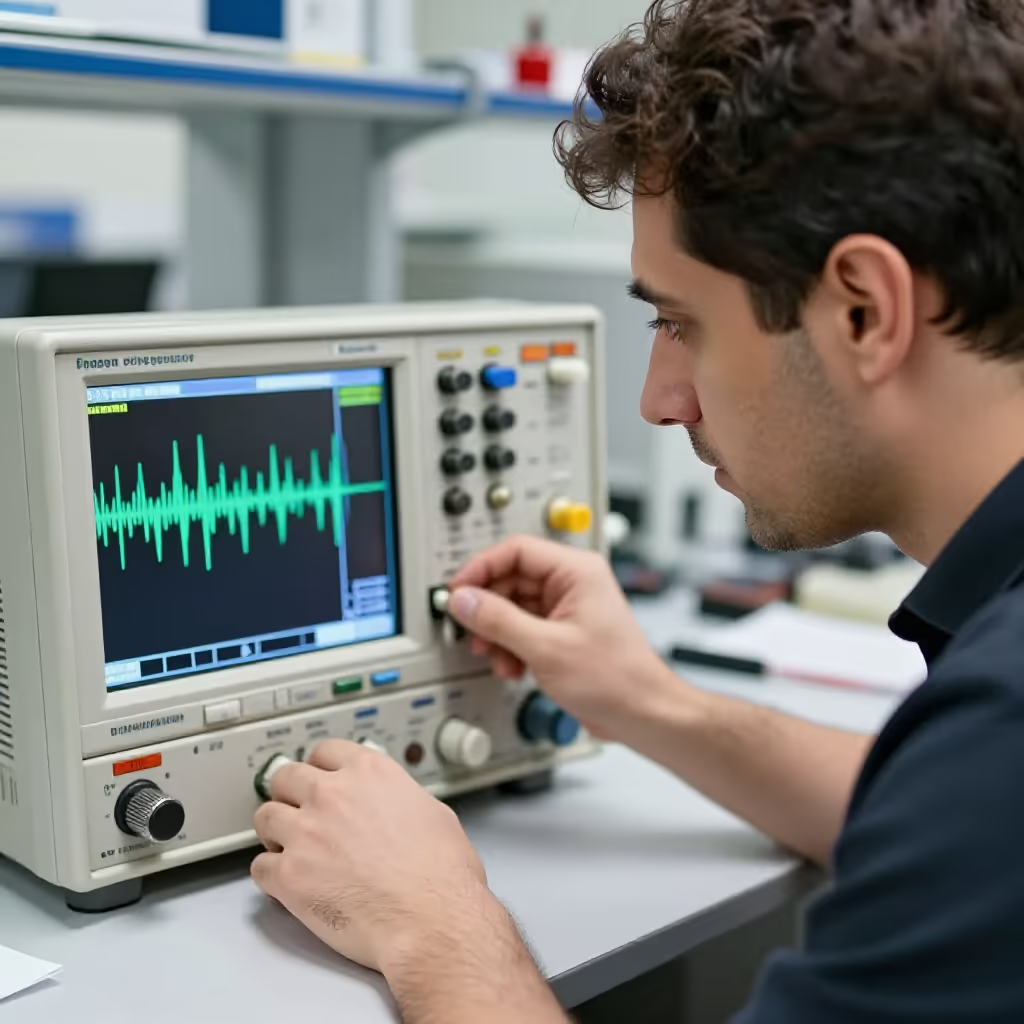
You can recognize the technical meaning from words in the fields of physics, acoustics, or electronics. Typical signal words are 'Signal' (signal), 'Hintergrund' (background), 'Frequenz' (frequency), or 'Tonaufnahme' (audio recording).
EXAMPLE
Das leise Rauschen störte die Aufnahmequalität.
The soft noise interfered with the recording quality.
Compare with
near_synonym · confusable
Rausch vs Alkohol
alcohol
'der Alkohol' and 'der Rausch' are both connected to drunkenness. 'Alkohol' means the drink or the substance that can have an effect. 'Rausch' means the state in which perception and behavior are altered by alcohol or drugs. The words can be confused because alcohol can cause a Rausch. Still, they are not the same: you drink Alkohol, but you have or get a Rausch. 'Unter Alkohol stehen' (to be under the influence of alcohol) describes the influence; 'Rausch' often sounds stronger and more clearly describes a state.
Rausch
Nach dem Rausch konnte sich Tom kaum noch an den Abend erinnern.
After the intoxication wore off, Tom could hardly remember the evening.
Alkohol
Bei der Firmenfeier wurde nur wenig Alkohol ausgeschenkt.
Only a small amount of alcohol was served at the company party.