

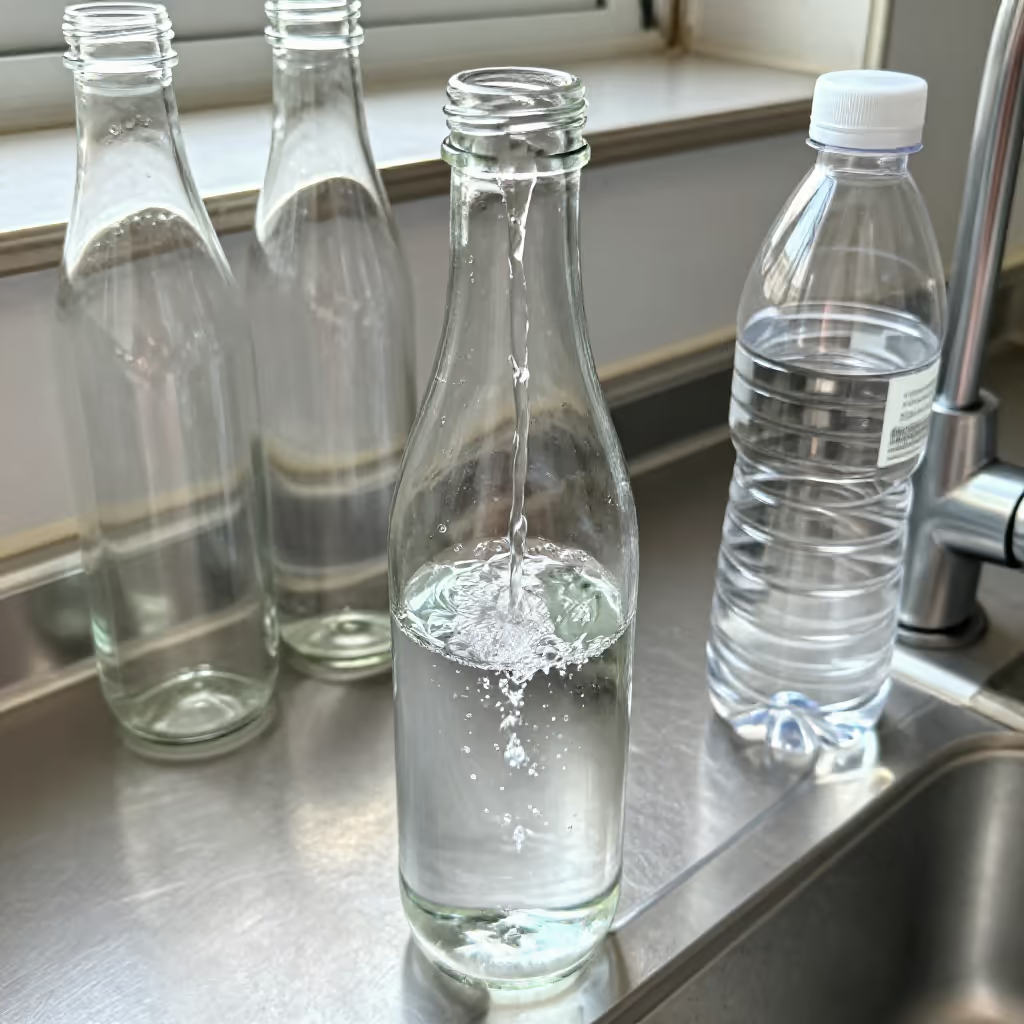
die Flasche
bottle
A container, usually made of glass or plastic, with a narrow neck, used for storing liquids.
EXAMPLE
Könntest du mir bitte eine Flasche Wasser aus dem Kühlschrank holen?
Could you please get me a bottle of water from the fridge?
bottle
Loading your saved state.
bottle
A container, usually made of glass or plastic, with a narrow neck, used for storing liquids.
Könntest du mir bitte eine Flasche Wasser aus dem Kühlschrank holen?
Could you please get me a bottle of water from the fridge?

loser / useless person
A colloquial insult for an incapable, clumsy, or unsuccessful person.
Er hat das einfachste Tor nicht getroffen, so eine Flasche!
He missed the easiest goal—what a loser!

cylinder / tank
A sturdy metal container that holds gas under high pressure, e.g. an oxygen cylinder or gas cylinder.
Beim Tauchen muss man immer den Druck in der Flasche im Auge behalten.
When diving, you always have to keep an eye on the pressure in the tank.
You can recognize the meaning from the context. Most of the time, it means the container for liquids. If someone is talking about a person and the tone is negative, it is the insult. Words like 'Gas' (gas), 'Sauerstoff' (oxygen), or 'Druck' (pressure) point to the container for gas.
Stell die Flasche Milch bitte zurück in den Kühlschrank.
Please put the bottle of milk back in the fridge.
Using 'Flasche' (bottle/loser) to refer to a person is very colloquial and insulting. It means calling someone a failure or an incapable person.
Nimm den Ball weg, du Flasche, du triffst ja nicht mal das Tor!
Give up the ball, you loser—you can't even hit the goal!
The insult became very well known through the football coach Giovanni Trapattoni. In a famous press conference, he shouted about a player: 'Flasche leer!' (Bottle empty!). Since then, the expression 'Flasche' (loser/useless person) has been very popular for a bad player in sports.
Seit seinem Fehler im Spiel wird er von den Fans als „Flasche“ beschimpft.
Since his mistake in the game, the fans have been insulting him by calling him a 'Flasche' (loser).
In the meaning of 'container for gas,' 'Flasche' (cylinder) is often used as part of a compound noun, e.g. 'Gasflasche' (gas cylinder), 'Sauerstoffflasche' (oxygen cylinder), or 'Druckluftflasche' (compressed-air cylinder).
Für den Campingausflug brauchen wir eine neue Gasflasche.
We need a new gas cylinder for the camping trip.
loser
Flasche and Loser are colloquial insults. Flasche mainly criticizes a lack of skill or clumsiness, whereas Loser portrays someone as unsuccessful or a failure. The key question is therefore whether the emphasis is on performance or lack of success.

Beim Reparieren stellt er sich so ungeschickt an, dass sein Kollege ihn eine Flasche nennt.
He is so clumsy when repairing it that his colleague calls him a klutz.
Nach seiner erneuten Niederlage nennt ihn sein Kollege einen Loser.
After his latest defeat, his colleague calls him a loser.