
Describes a person who works or studies a lot and with dedication; diligent and ambitious.
example
Sie ist eine fleißige Mitarbeiterin, die immer ihre Aufgaben pünktlich erledigt.
She is a hardworking employee who always completes her tasks on time.
Usage tips
Word family
'Fleißig' (hardworking) belongs to the word family of 'der Fleiß' (diligence). Someone who has 'Fleiß' is 'fleißig'. The noun describes the quality of industriousness and dedication.
EXAMPLE
Sein Fleiß hat ihn zum besten Studenten des Jahres gemacht.
His diligence made him the best student of the year.
Use as an adverb
'Fleißig' (hardworking / diligently) can describe not only a person, but also the way in which an action is carried out. In this function as an adverb, the form of the word remains unchanged.
EXAMPLE
Er lernt fleißig für seine Deutschprüfung.
He is studying diligently for his German exam.
Typical collocation
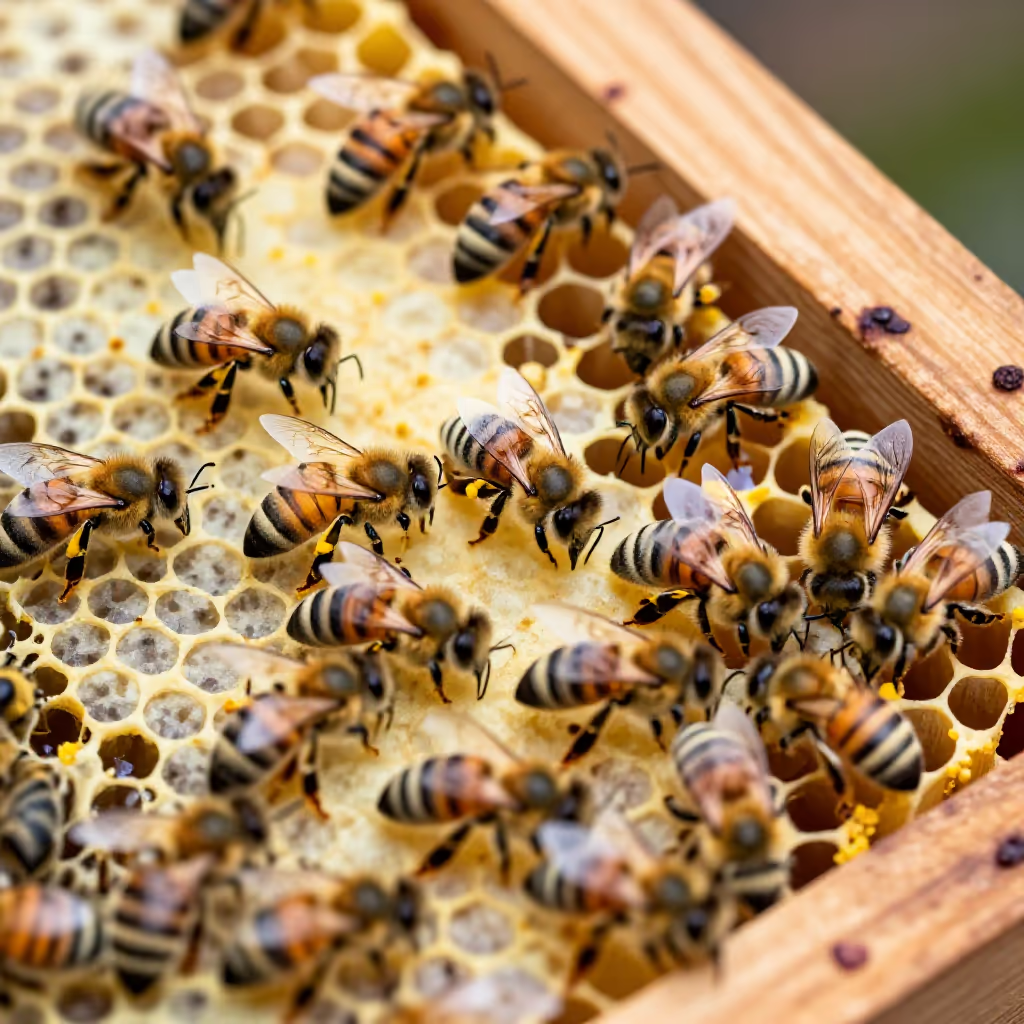
'Fleißig' (industrious) is used especially often in connection with bees or ants. The expression 'fleißig wie eine Biene' (as busy as a bee) is a very common comparison for a hardworking person.
EXAMPLE
Die Kinder halfen fleißig wie die Bienen beim Aufräumen des Gartens.
The children helped industriously, as busy as bees, with tidying up the garden.
Compare with
antonym
fleißig vs faul
lazy / rotten
'fleißig' and 'faul' are opposites when it comes to work, studying, or effort. A hardworking person works a lot and makes an effort. A lazy person has little desire to do something and avoids effort. 'fleißig' is usually praise. 'faul' is more negative and can quickly sound unfriendly when you say it about a person. The important meaning here is only 'faul' for people, not the meaning used for spoiled food.
fleißig
Vor der Prüfung war Lena besonders fleißig und lernte jeden Abend.
Before the exam, Lena was especially hardworking and studied every evening.
faul
Am Sonntag bin ich manchmal faul und bleibe lange auf dem Sofa.
On Sundays, I am sometimes lazy and stay on the sofa for a long time.