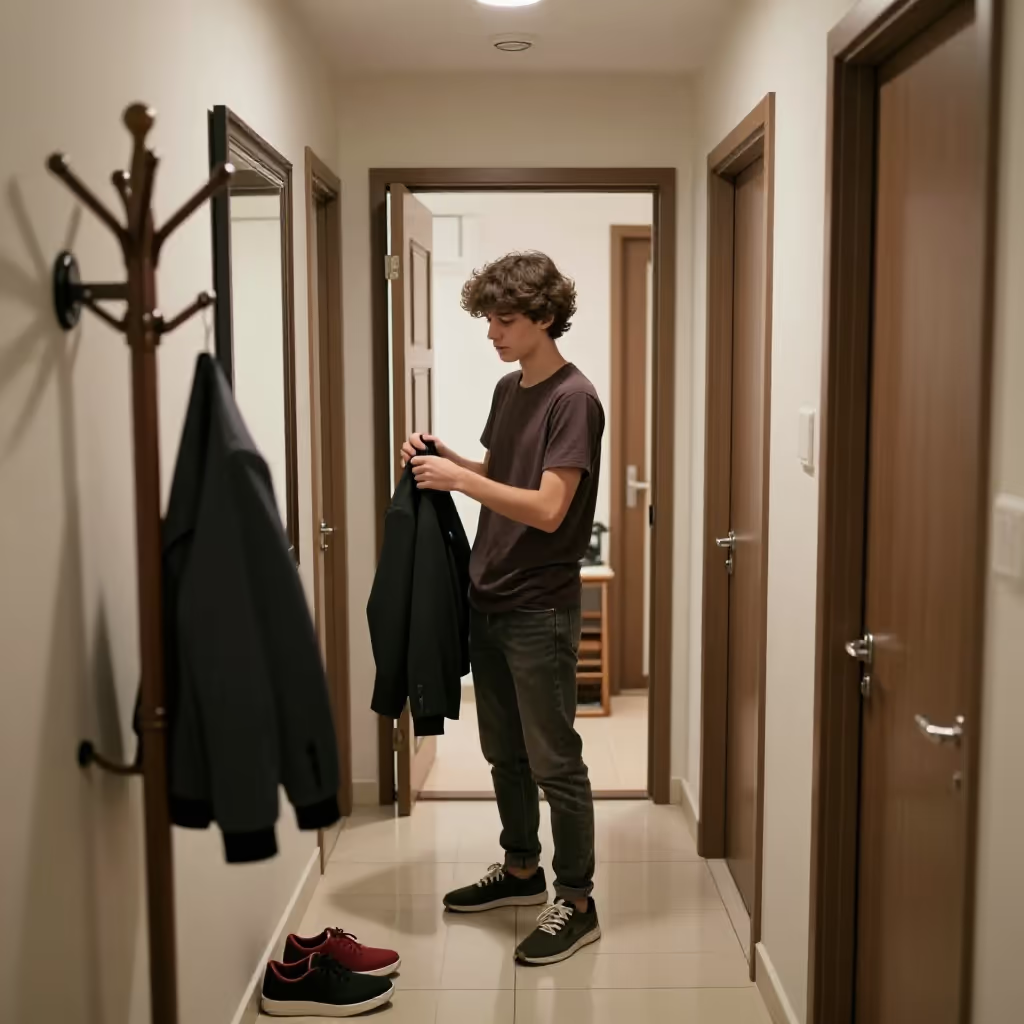
A room or passage in a building from which other rooms are accessible. It often refers to the entrance area of an apartment or house, or to a corridor.
example
Häng deinen Mantel bitte im Flur an die Garderobe.
Please hang your coat on the coat rack in the hallway.
Usage tips
Gender and meaning
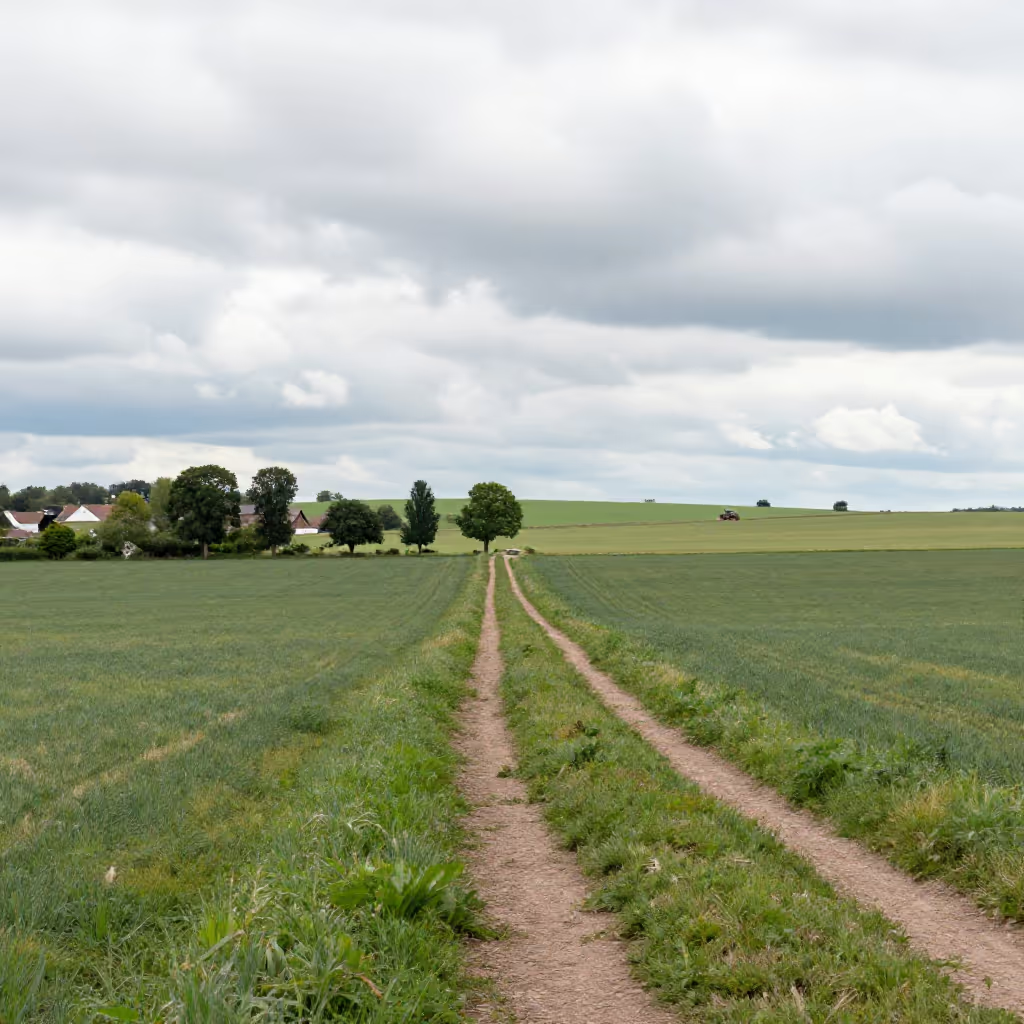
Pay close attention to the article, because it completely changes the meaning. 'Der Flur' (masculine) is the hallway in a building, while 'die Flur' (feminine) refers to an open landscape.
EXAMPLE
Der Flur in unserer neuen Wohnung ist sehr hell.
The hallway in our new apartment is very bright.
Prepositions
For the hallway in a house, 'der Flur', the preposition 'in' is used. To describe a position, you use the dative ('im Flur' = in the hallway); for a direction, the accusative ('in den Flur' = into the hallway).
EXAMPLE
Die Schuhe stehen im Flur.
The shoes are in the hallway.
Register and plural
The word 'die Flur' (open fields/open countryside) is rather elevated or literary. It is very often used in the plural 'die Fluren' to describe wide landscapes.
EXAMPLE
Der Wanderweg führt durch die grünen Fluren des Tals.
The hiking trail leads through the green fields of the valley.
Compare with
synonym
Flur vs Gang
hallway / course / gear
'der Gang' and 'der Flur' often mean almost the same thing in buildings: an area from which you can get to other rooms. 'Gang' tends to emphasize the long, narrow passage between rooms, for example in a school, hotel, or office. 'Flur' is especially common in apartments and houses and can also mean the entrance area. In many everyday situations, you can use both words. But when you mean the area directly behind the apartment door, 'Flur' often sounds more natural.
Flur
Fiona stellt ihre nassen Schuhe im Flur ab.
Fiona leaves her wet shoes in the hallway.
Gang
Die Kinder warten vor dem Klassenzimmer im Gang.
The children are waiting in the hallway in front of the classroom.