der Gang
hallway / corridor
A long, narrow space in a building that connects different rooms; a hall or corridor.
Die Toiletten befinden sich am Ende des Ganges auf der linken Seite.
The restrooms are at the end of the hallway on the left-hand side.

hallway / course / gear
Loading your saved state.
hallway / corridor
A long, narrow space in a building that connects different rooms; a hall or corridor.
Die Toiletten befinden sich am Ende des Ganges auf der linken Seite.
The restrooms are at the end of the hallway on the left-hand side.

The noun 'der Gang' is derived directly from the verb 'gehen' (to go/walk). Almost all meanings have to do with some form of movement, progress, or course, which makes it easier to understand.
Der Gang der Geschichte lässt sich nicht aufhalten.
The course of history cannot be stopped.
The expression 'in Gang kommen/bringen' is very common. 'Etwas in Gang bringen' means that a person actively starts something. 'Etwas kommt in Gang' describes a process beginning to run by itself.
Ein Investor hat das Projekt mit einer Spende in Gang gebracht.
An investor got the project going with a donation.
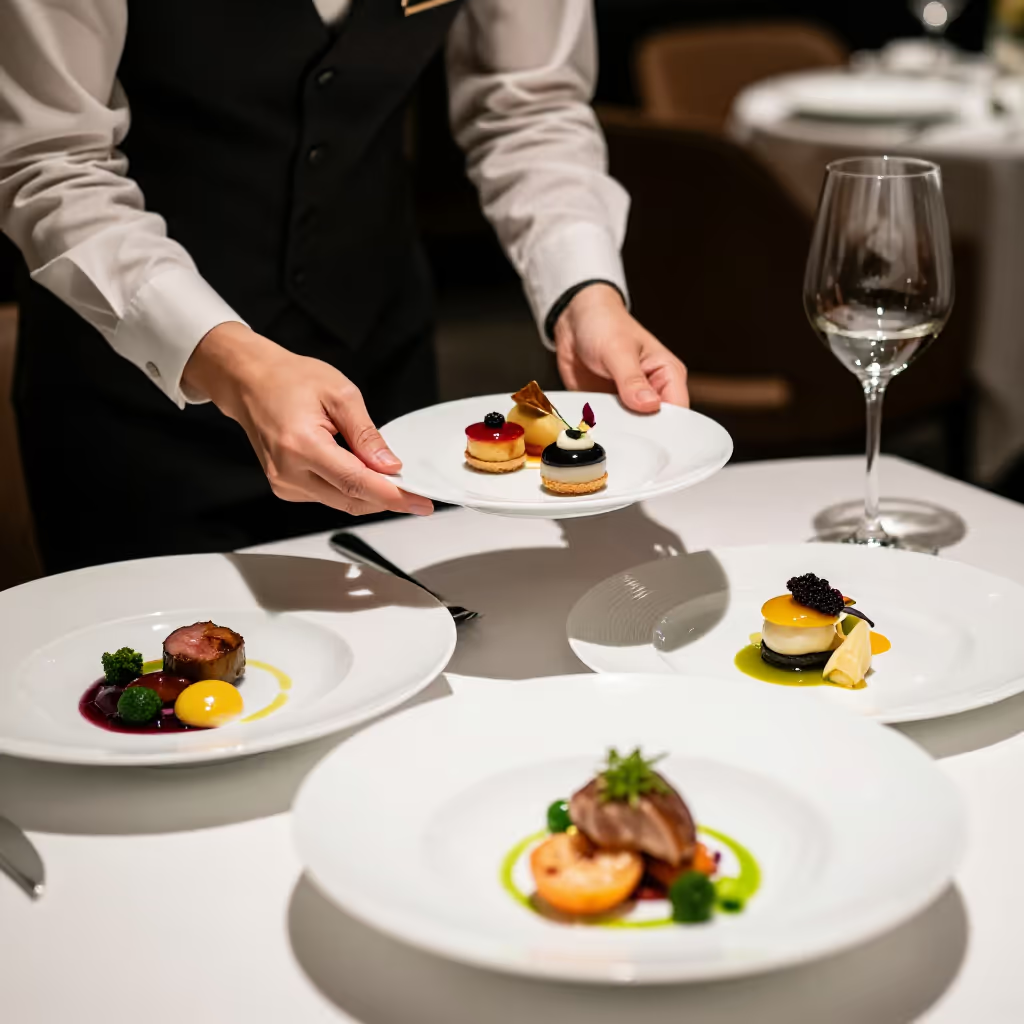
In the context of food and restaurants, 'Gang' refers to one part of a menu. It is often used with ordinal numbers (first, second course) or in compounds like 'Hauptgang' (main course) or 'Vorspeise' (appetizer).
Das Menü besteht aus vier Gängen.
The menu consists of four courses.
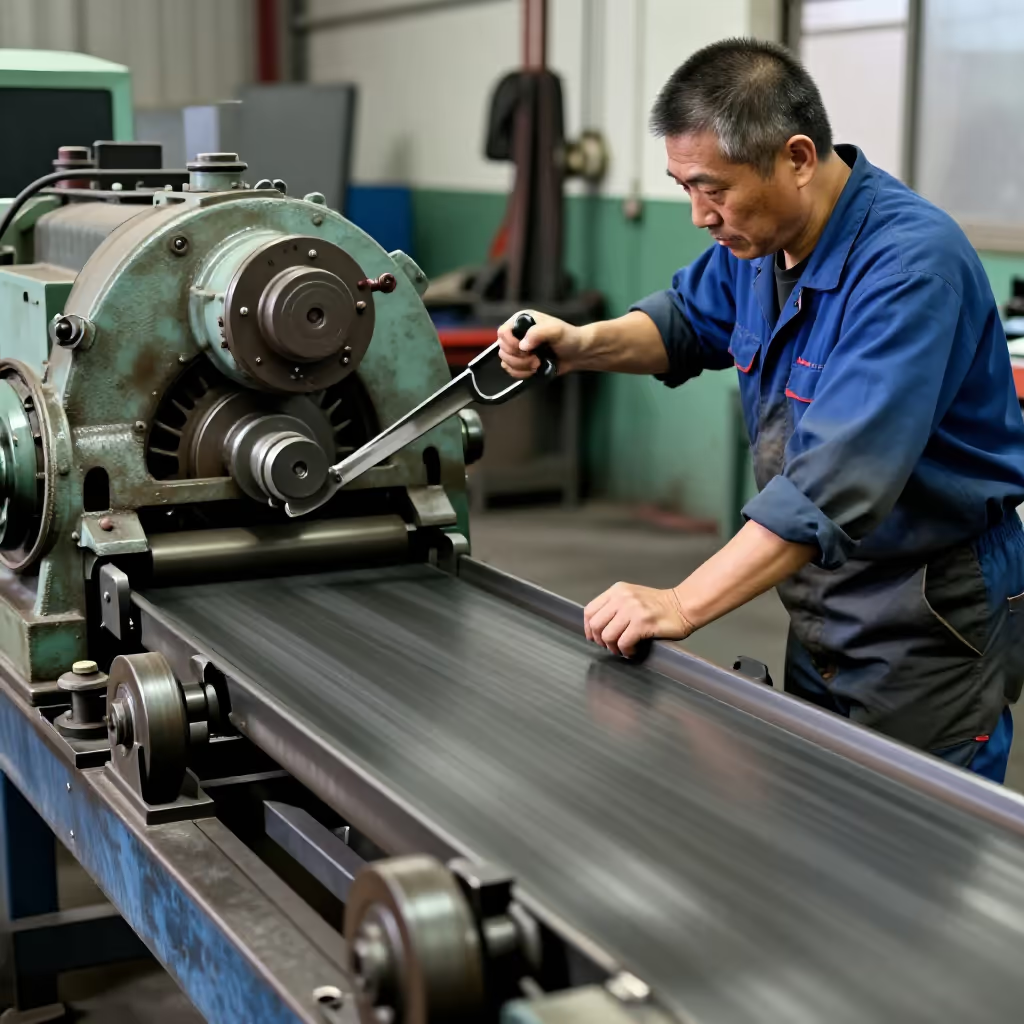
When talking about cars or bicycles, 'der Gang' is the gear. Typical verbs in this context are 'schalten' (to shift/change gears) and 'einlegen' (to put into gear).
Du musst den Gang wechseln, wenn der Motor zu laut wird.
You have to change gear when the engine gets too loud.
In an abstract, often formal meaning, 'Gang' describes the course of events. A very typical expression is 'der Gang der Dinge' (the course of things/events).
Wir können den Gang der Ereignisse nicht mehr beeinflussen.
We can no longer influence the course of events.
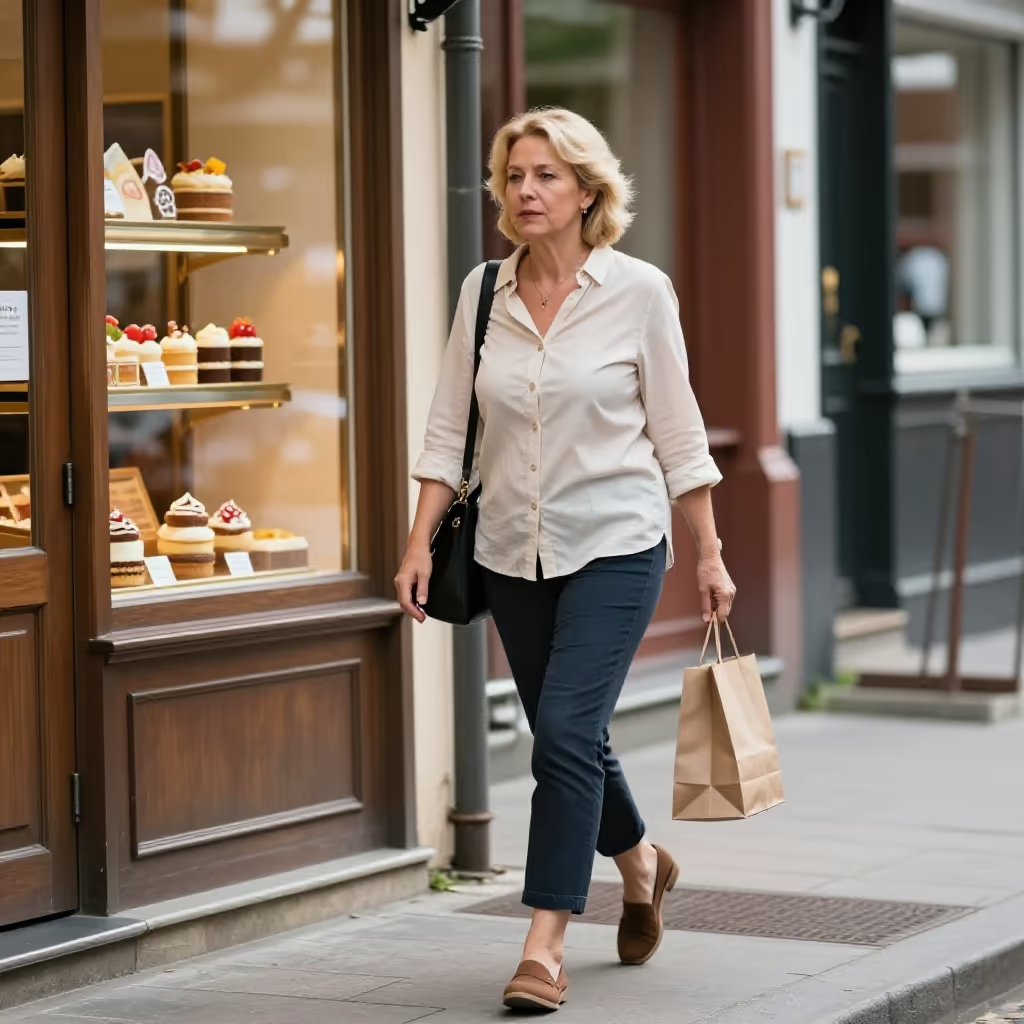
When 'Gang' describes a short trip on foot, it is usually about taking care of something. It is often combined with 'machen' (to make/do) or 'erledigen' (to take care of) and a destination.
Ich mache nur schnell einen Gang zum Supermarkt.
I'm just making a quick trip to the supermarket.
In buildings, 'der Gang' is always a hall or corridor. Typical prepositions are 'im Gang' (in the hallway; position) or 'den Gang entlang' (down/along the hallway; direction).
Bitte warten Sie einen Moment im Gang.
Please wait a moment in the hallway.
development
'die Entwicklung' and 'der Gang' can both refer to the course of events or processes. 'Entwicklung' emphasizes that something changes, grows, or reaches a new state. 'Gang' describes more how something proceeds or what course a process takes. That is why you say, for example, 'die Entwicklung der Preise' (the development of prices) when you mean the change, but 'der Gang der Verhandlungen' (the course of the negotiations) when you mean the sequence and direction of events.

Der Gang der Gespräche war ruhig, aber am Ende gab es keine Lösung.
The course of the talks was calm, but in the end there was no solution.
Der Lehrer erklärt, warum die Entwicklung der Stadt so schnell war.
The teacher explains why the city's development was so fast.