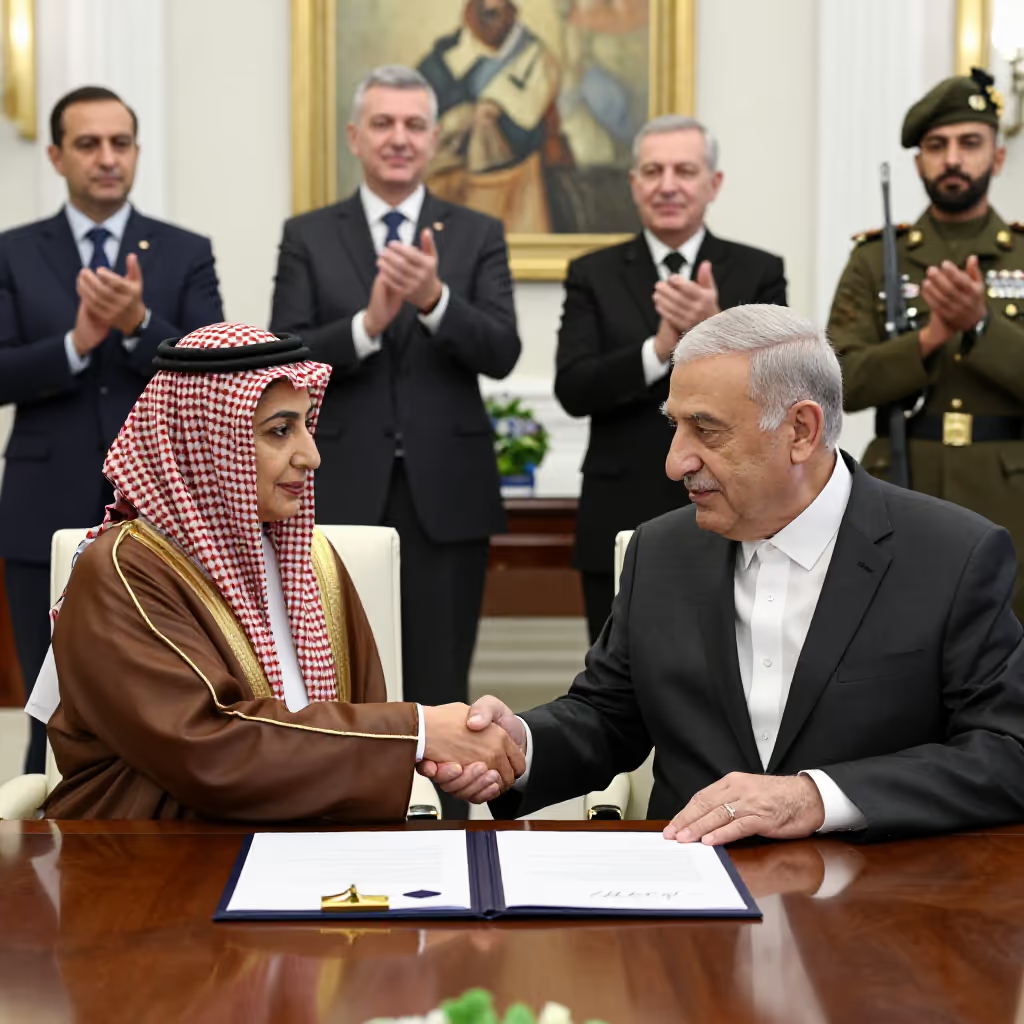
A state without war or armed conflicts, especially between states or peoples. This form is often used in an elevated, solemn, or poetic context.
example
Nach langen Verhandlungen wurde endlich der Friede zwischen den beiden Ländern wiederhergestellt.
After long negotiations, peace between the two countries was finally restored.

Usage tips
Register and style
The form 'der Friede' (peace, with '-e' in the nominative) is mainly used in an elevated, solemn, or poetic style. You often find it in literature, speeches, or religious texts.
EXAMPLE
Der Dichter schrieb über den ewigen Frieden der Natur.
The poet wrote about the eternal peace of nature.
Use in a sentence
Although the nominative is 'der Friede' (peace), in most cases (dative, accusative) and in many fixed expressions the form 'Frieden' is used. This form is part of the word's declension.
EXAMPLE
Lass mich bitte in Frieden arbeiten!
Please let me work in peace!
Typical collocations
In a political context, the most important phrases are 'Frieden schließen' (to make peace/end a war) and 'den Frieden wahren' or 'sichern' (to preserve or secure peace/avoid conflicts).
EXAMPLE
Die Diplomaten arbeiteten hart, um den Frieden zu wahren.
The diplomats worked hard to preserve peace.
Typical collocation
When it is about emotional calm, the most common combination is 'seinen inneren Frieden finden' (to find one's inner peace). The adjective 'innerer' (inner) is a clear signal for this meaning.
EXAMPLE
Nach der Trennung brauchte er lange, um seinen inneren Frieden wiederzufinden.
After the breakup, it took him a long time to find his inner peace again.
Fixed expression
The idiom 'um des lieben Friedens willen' (for the sake of peace) means that you avoid an argument by giving in, even if you disagree. It is often used to preserve harmony.
EXAMPLE
Ich habe ihm zugestimmt, einfach nur um des lieben Friedens willen.
I agreed with him simply for the sake of peace.
Ironic expression
The expression 'Friede, Freude, Eierkuchen' (literally: peace, joy, pancakes; meaning: all peace and harmony) is almost always used ironically. It describes a superficial harmony that ignores real problems or conflicts.
EXAMPLE
Auf ihrem Instagram-Profil sieht alles nach Friede, Freude, Eierkuchen aus, aber die Realität ist anders.
On her Instagram profile, everything looks like peace and harmony, but the reality is different.
Compare with
antonym
Friede vs Krieg
war
'der Krieg' and 'der Friede' are clear opposites when it comes to states or peoples. 'Krieg' means armed conflict. 'Friede' means a state without war and without armed fighting. 'Friede' often sounds somewhat elevated or solemn; in everyday language, you also often hear 'Frieden'. But the idea behind the contrast remains simple: Krieg is fighting, Friede is the end or absence of that fighting.
Friede
Nach langen Verhandlungen hofften alle auf einen dauerhaften Frieden.
After long negotiations, everyone hoped for lasting peace.
Krieg
Viele Menschen mussten wegen des Krieges ihre Heimat verlassen.
Many people had to leave their homeland because of the war.