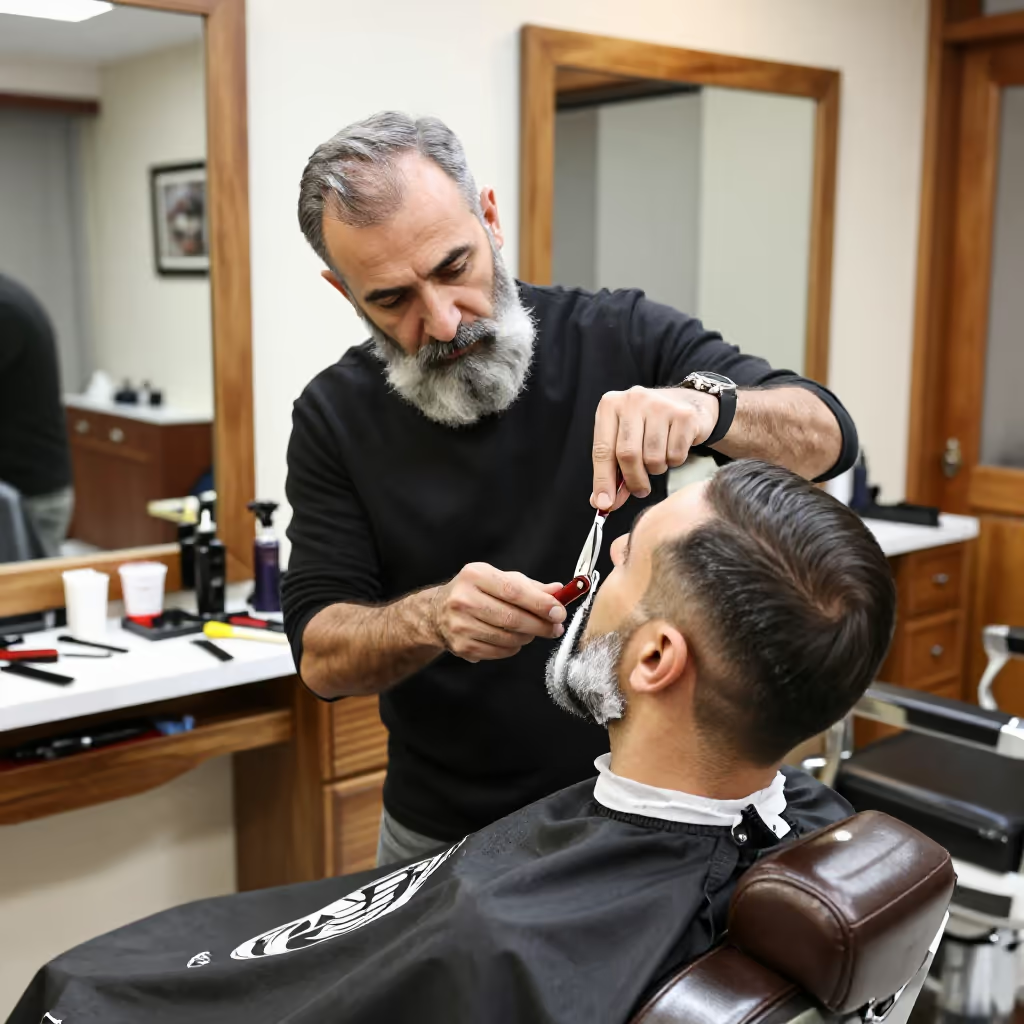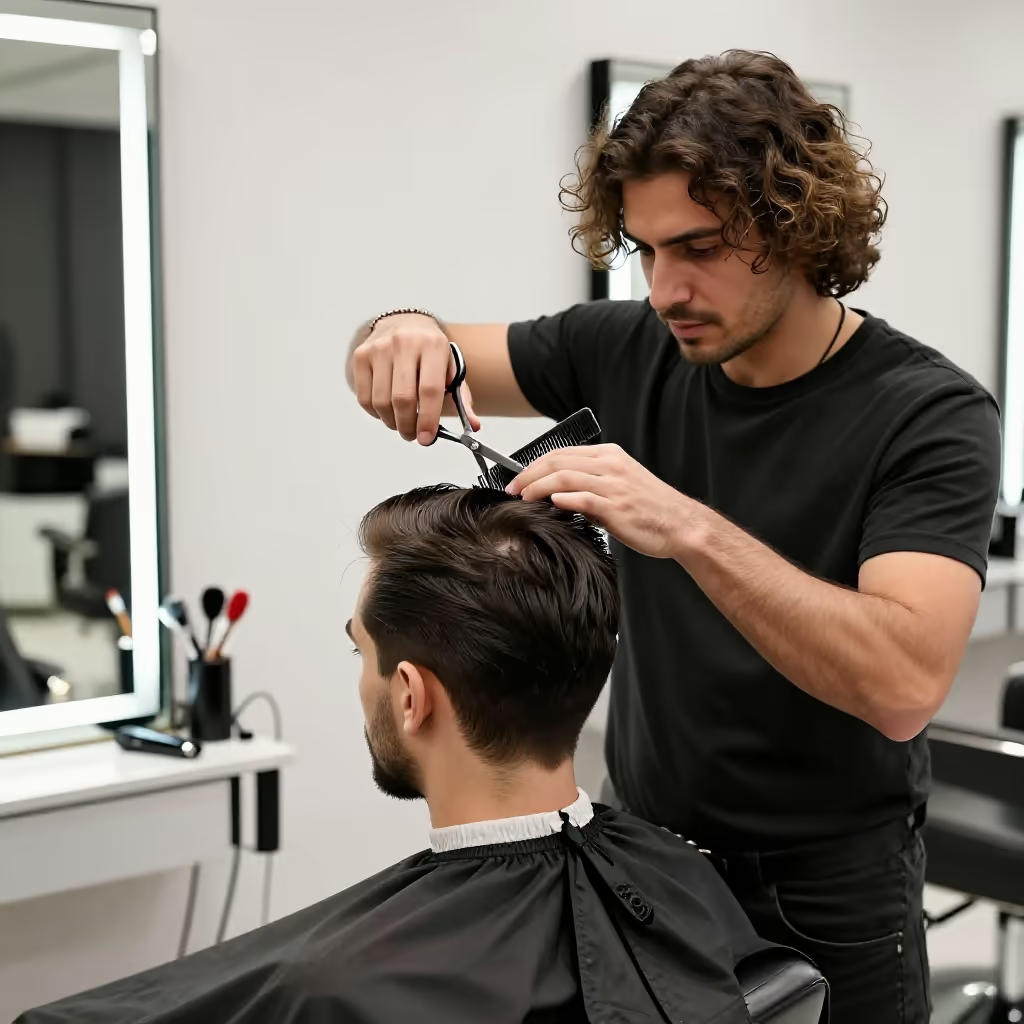
A person whose job is to cut, style, and care for hair. This spelling is an accepted but less common variant of 'Friseur'.
example
Ich muss dringend zum Frisör, meine Haare sind viel zu lang geworden.
I urgently need to go to the hairdresser; my hair has gotten much too long.
Usage tips
Person or place?
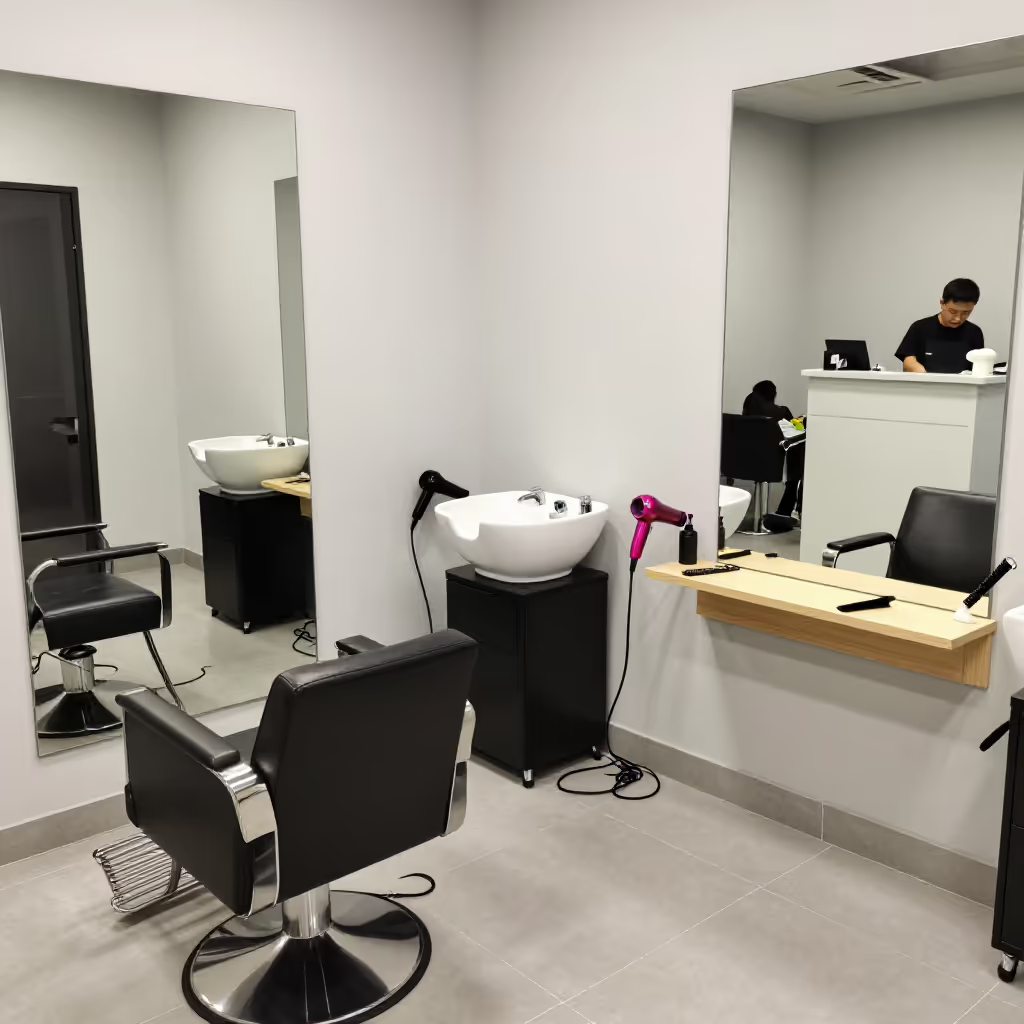
The word 'Frisör' (hairdresser / hair salon) can refer both to the person and to the salon. The sentence context usually makes clear what is meant. The verbs and prepositions often help distinguish the meaning.
EXAMPLE
Mein Frisör kennt meinen Haarschnitt genau.
My hairdresser knows my haircut exactly.
Important prepositions
To talk about visiting the hairdresser, you usually use the prepositions 'zu' (to, for movement there) and 'bei' (at, for being there). The question is 'Wohin?' (Where to?) or 'Wo?' (Where?).
EXAMPLE
Ich gehe morgen zum Frisör.
I'm going to the hairdresser tomorrow.
Spelling
The spelling 'Frisör' with 'ö' is correct, but it is used less often than the variant 'Friseur'. In Austria, 'Frisör' is more common than in Germany.
EXAMPLE
Auf dem Schild stand „Herren-Frisör“.
The sign said 'men's hairdresser.'
Compare with
synonym · confusable
Frisör vs Friseur
hairdresser
'der Friseur' and 'der Frisör' mean the same thing. Both words can mean the person who cuts and cares for hair, and colloquially also the salon. The difference is mainly in the spelling. 'Friseur' is the more common spelling; 'Frisör' is also correct, but less common. Learners can easily confuse the words because they are pronounced the same and have the same meaning. In most texts, 'Friseur' is the more natural choice.
Frisör
Auf dem Schild vor dem Laden steht noch die ältere Schreibweise „Frisör“.
The sign in front of the shop still uses the older spelling 'Frisör'.
Friseur
Nach der Arbeit geht Lisa zum Friseur und lässt sich die Spitzen schneiden.
After work, Lisa goes to the hairdresser and has her ends trimmed.