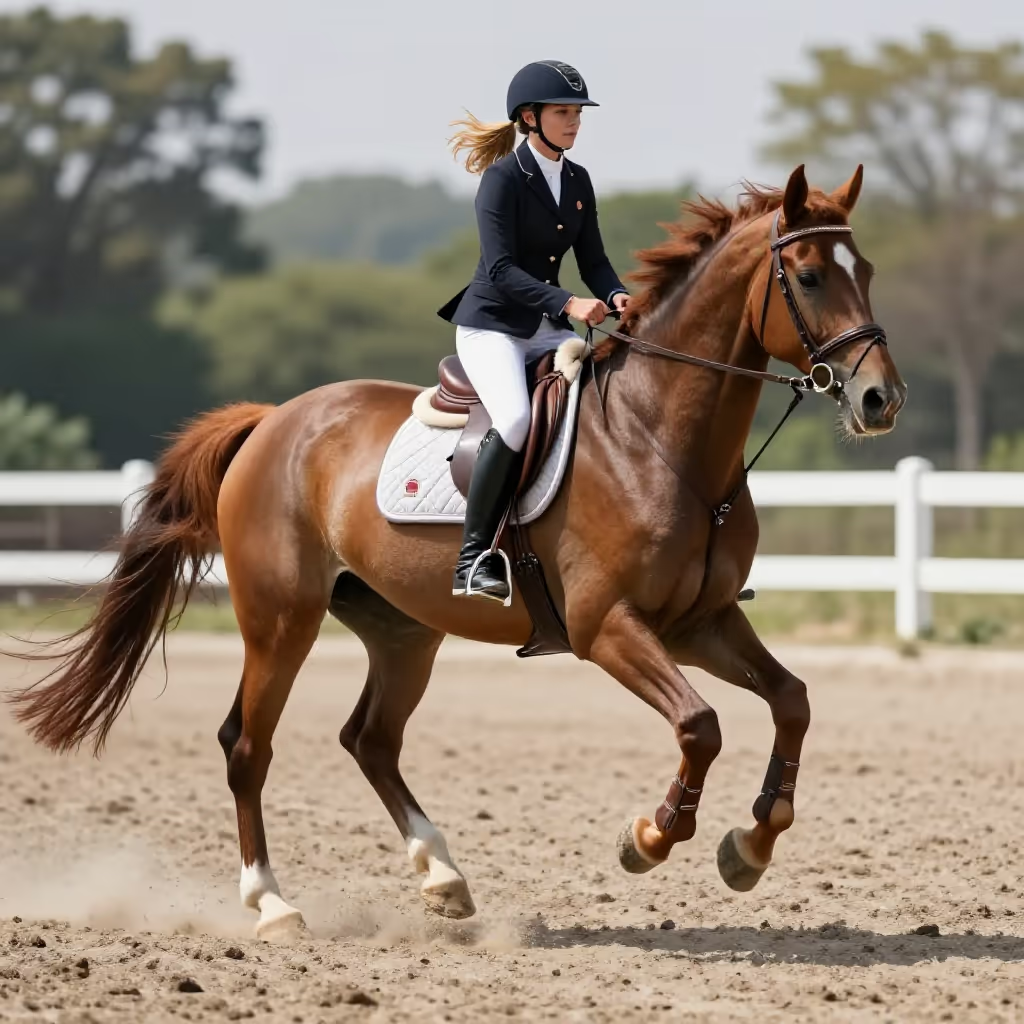
The characteristic way in which a person or animal, especially a horse, moves when walking. This includes rhythm, stride length, and posture.
example
Das Pferd zeigte im Trab eine sehr elegante Gangart.
At a trot, the horse displayed a very elegant gait.

Usage tips
Compound word
The word is made up of 'der Gang' (walk/gait) and 'die Art' (type/way). So it literally describes the 'way of walking.'
EXAMPLE
Man erkannte ihn schon von Weitem an seiner seltsamen Gangart.
You could recognize him from far away by his strange gait.
Context clue
The literal meaning refers to the movement of people or animals. The figurative meaning describes an approach in politics or business and is often combined with adjectives such as 'hart' (hard/tough) or 'sanft' (gentle/soft).
EXAMPLE
Die Tänzerin hatte eine sehr leichte und anmutige Gangart.
The dancer had a very light and graceful gait.
Context: animals
In connection with animals, especially horses, 'Gangart' (gait) is a technical term. Specific gaits of a horse include 'Schritt' (walk), 'Trab' (trot), and 'Galopp' (canter/gallop), for example.
EXAMPLE
Der Reitlehrer erklärte die verschiedenen Gangarten des Pferdes.
The riding instructor explained the different gaits of the horse.
Fixed expression
In the figurative meaning, the phrase 'eine (bestimmte) Gangart einlegen' is often used. It means to begin acting in a new, usually tougher way.
EXAMPLE
Nach wochenlangen Protesten legte die Opposition eine schärfere Gangart ein.
After weeks of protests, the opposition adopted a sharper approach.
Compare with
near_synonym
Gangart vs Schritt
step
'der Schritt' and 'die Gangart' can both describe how someone walks. 'der Schritt' refers more to the manner or speed of walking, for example slowly, quickly, or unsteadily. 'die Gangart' describes the typical way of moving more precisely, meaning rhythm, posture, and stride length. With people, you can use both words, but 'Gangart' sounds more precise and is also used especially often for animals, for example horses. 'Schritt' is usually simpler and more natural in everyday language.
Gangart
Die Ärztin beobachtet die Gangart des Patienten nach der Operation.
The doctor observes the patient's gait after the operation.
Schritt
An seinem schnellen Schritt merkte ich, dass er es eilig hatte.
I could tell from his quick pace that he was in a hurry.