

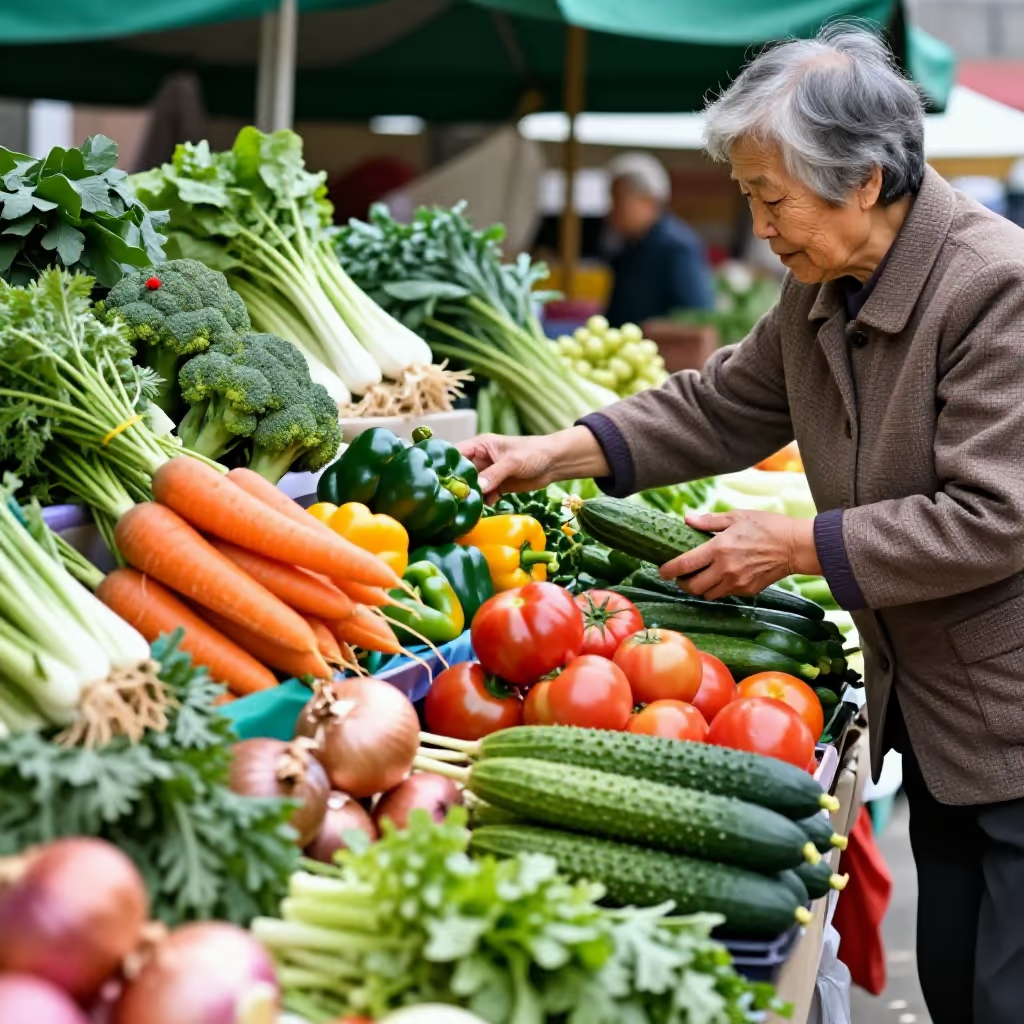
das Gemüse
vegetables
Edible parts of plants that are usually eaten as a side dish or main component of meals.
EXAMPLE
Zum Abendessen gibt es Fisch mit Reis und frischem Gemüse.
For dinner, there is fish with rice and fresh vegetables.
vegetables
Loading your saved state.
vegetables
Edible parts of plants that are usually eaten as a side dish or main component of meals.
Zum Abendessen gibt es Fisch mit Reis und frischem Gemüse.
For dinner, there is fish with rice and fresh vegetables.
'Gemüse' (vegetables) is a collective noun and is almost always used in the singular, even when talking about many different kinds. The plural form 'die Gemüse' is very rare and is only used in specialist language, such as biology.
Ich kaufe auf dem Markt viel frisches Gemüse.
I buy a lot of fresh vegetables at the market.
The word 'Gemüse' (vegetables) is the first part of many useful compound nouns. Examples include 'die Gemüsesuppe' (vegetable soup), 'die Gemüsepfanne' (vegetable stir-fry), 'der Gemüseladen' (vegetable shop), or 'das Wurzelgemüse' (root vegetables).
An kalten Tagen esse ich gerne eine heiße Gemüsesuppe.
On cold days, I like eating a hot vegetable soup.
Common verbs used in connection with vegetables are 'Gemüse anbauen' (to grow vegetables), 'Gemüse putzen' (to clean/prepare vegetables), 'Gemüse schneiden' (to cut vegetables), and 'Gemüse kochen/braten/dünsten' (to boil/fry/steam vegetables).
Bevor du das Gemüse kochst, musst du es gründlich waschen und schneiden.
Before you cook the vegetables, you have to wash and cut them thoroughly.
fruit
Gemüse and Obst are both plant-based foods, but in German they are usually distinguished according to their typical use and characteristics. Gemüse is often eaten as part of a savory meal; Obst usually refers to sweet, juicy fruits from trees and bushes.
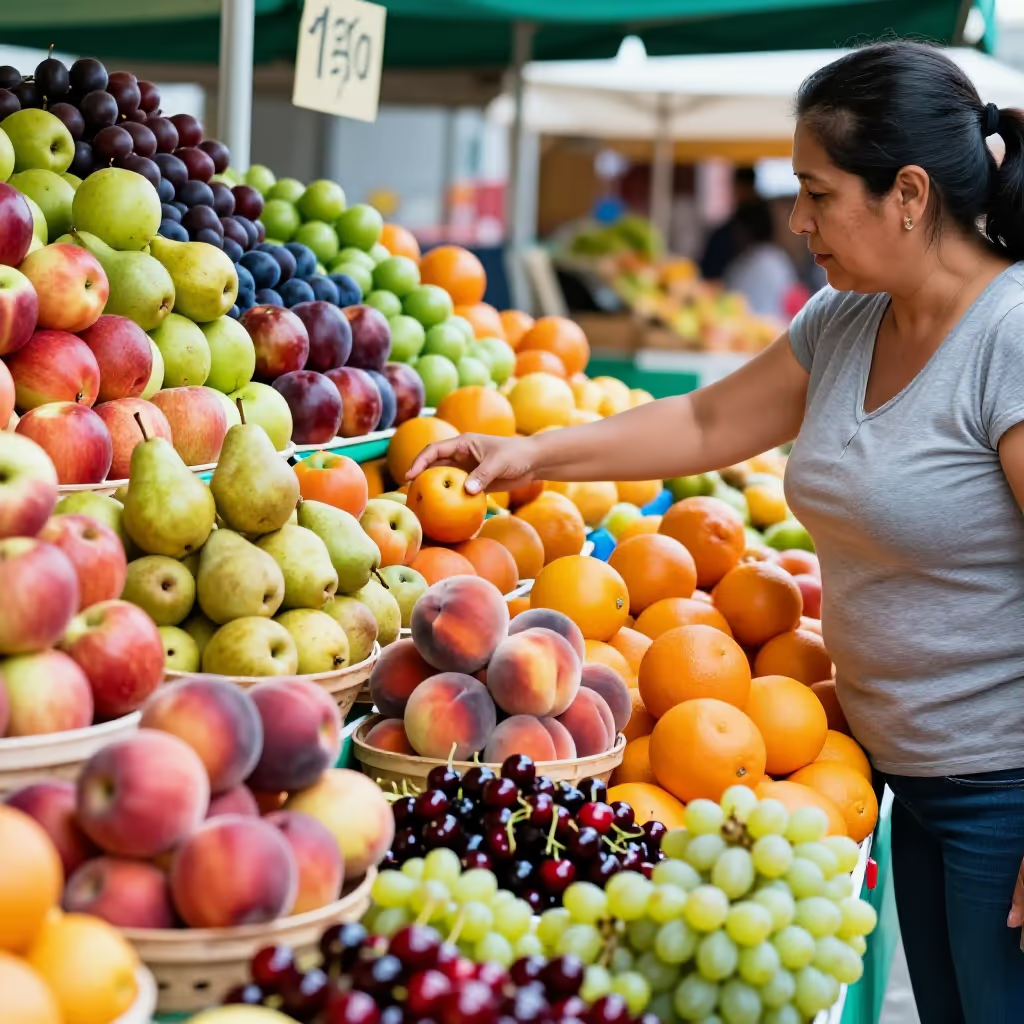
Für den herzhaften Salat verwendet Lea Tomaten als Gemüse.
For the savory salad, Lea uses tomatoes as a vegetable.
Für den süßen Obstsalat verwendet Lea Äpfel als Obst.
For the sweet fruit salad, Lea uses apples as fruit.