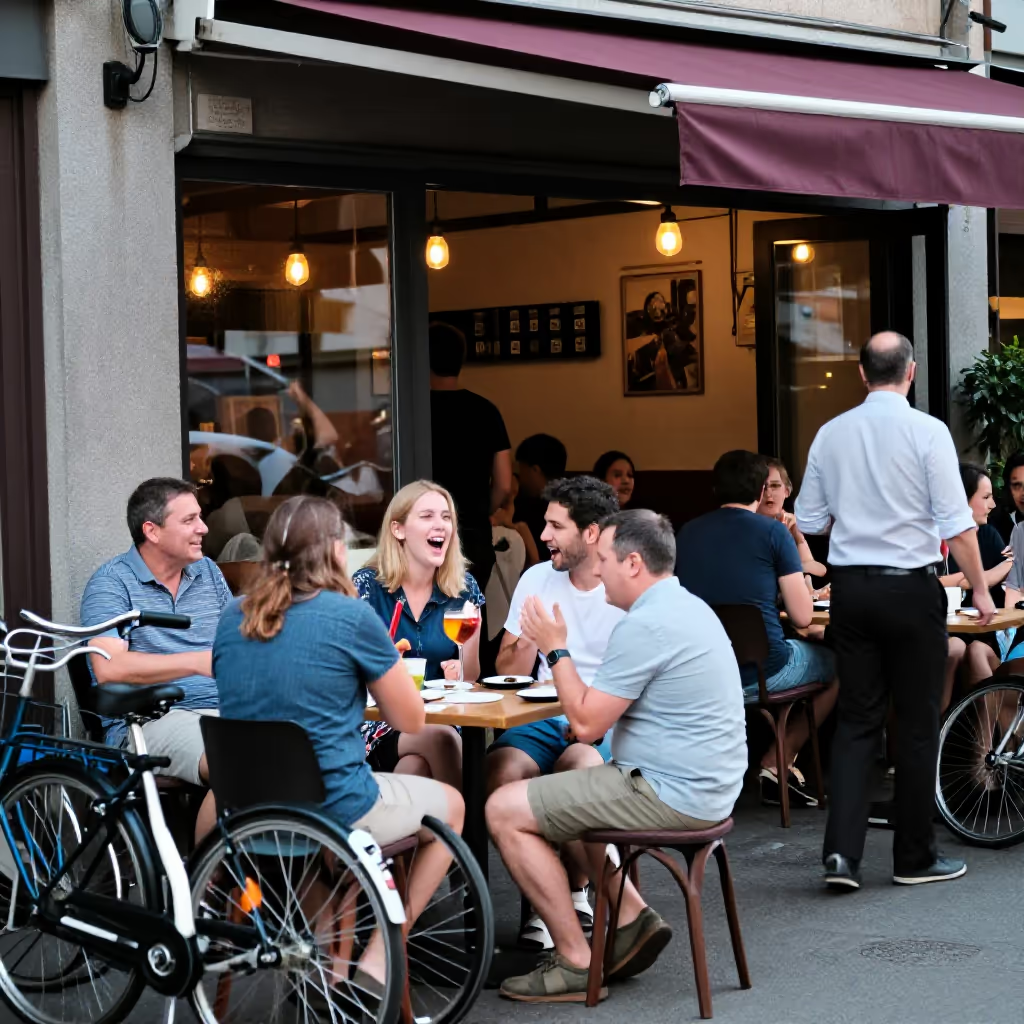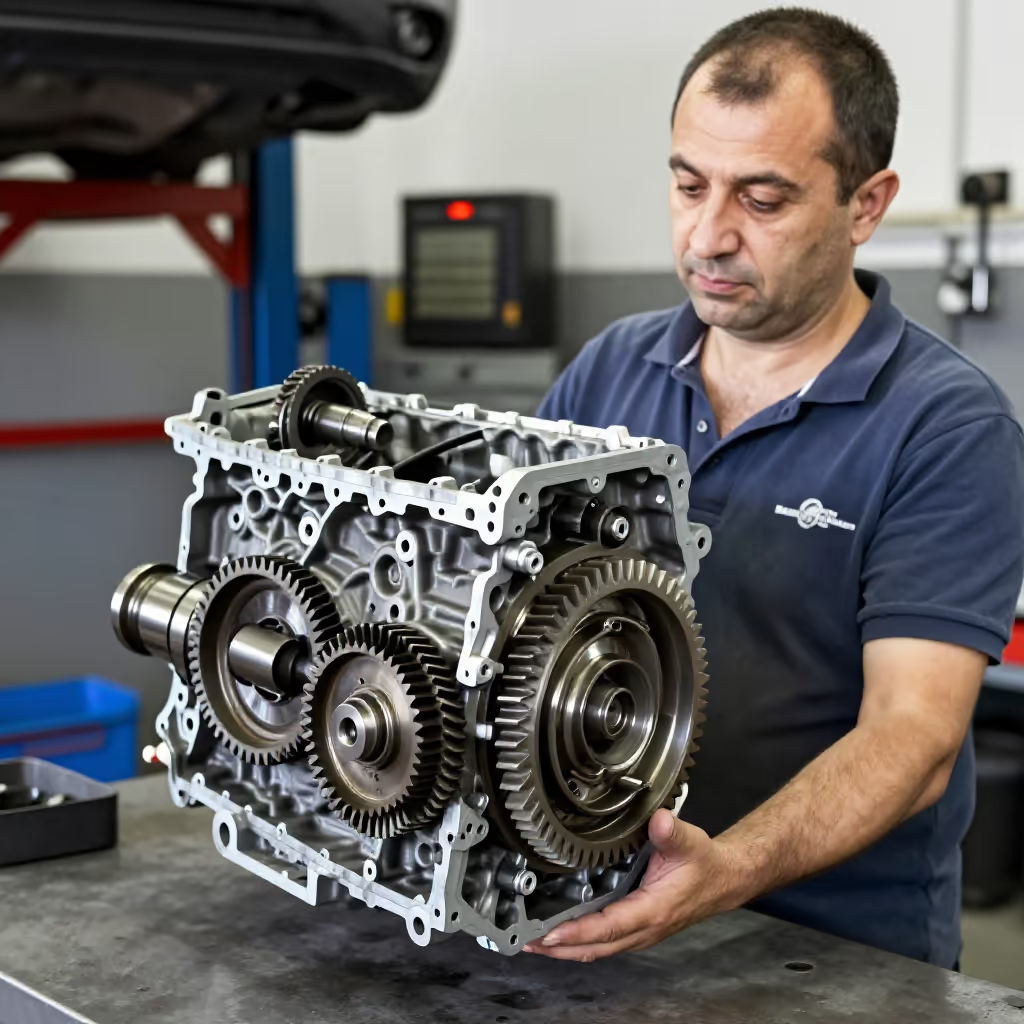
A mechanical device in vehicles or machines that serves to transmit and convert torque and rotational speed. In everyday language, the gearshift or transmission of a car is often referred to this way.
example
Bei dem alten Auto macht das Getriebe seltsame Geräusche.
In the old car, the gearbox is making strange noises.

Usage tips
Word structure
'Das Getriebe' (gearbox/transmission; bustle) is derived from the verb 'treiben' (to drive, propel, move). The prefix 'Ge-' forms a collective word here for the parts that drive something.
EXAMPLE
Ohne ein funktionierendes Getriebe kann der Motor die Räder nicht antreiben.
Without a functioning gearbox, the engine cannot drive the wheels.
Context clue
You can recognize the meaning from the context: if it is about cars, machines, or technology, the mechanical device is meant. If it is about crowds of people, cities, or festivals, the lively, noisy activity is meant.
EXAMPLE
Das Getriebe des alten Traktors muss repariert werden.
The gearbox of the old tractor needs to be repaired.
Typical collocations
In a technical context, typical combinations are 'manuelles Getriebe' (manual gearbox), 'Automatikgetriebe' (automatic transmission), or the statement that the gearbox 'kaputt ist' (is broken) or 'Geräusche macht' (makes noises).
EXAMPLE
Moderne Autos haben oft ein Automatikgetriebe.
Modern cars often have an automatic transmission.
Typical collocations
In the figurative meaning, 'Getriebe' (bustle) is often combined with adjectives such as 'hektisch' (hectic), 'laut' (loud), or 'bunt' (colorful). A common phrase is 'das Getriebe der Großstadt' (the bustle of the big city).
EXAMPLE
Er zog aufs Land, um dem hektischen Getriebe der Großstadt zu entkommen.
He moved to the countryside to escape the hectic bustle of the big city.
Compare with
antonym
Getriebe vs Ruhe
quiet / calm
'die Ruhe' and 'das Getriebe' form an opposition when 'Getriebe' means the hectic movement of many people. 'Ruhe' describes quiet, relaxation, or a calm state. Here, 'Getriebe' means lively, often noisy commotion, for example in a city, at a market, or in a train station. Important: 'das Getriebe' can also be a machine part, but in this contrast the figurative meaning is meant. 'Ruhe' fits relaxation and distance from activity; 'Getriebe' fits hustle and bustle, movement, and busy activity.
Getriebe
Nach zehn Minuten im Getriebe der Innenstadt wollte Tom nur noch nach Hause.
After ten minutes in the bustle of the city center, Tom just wanted to go home.
Ruhe
Im kleinen Garten hinter dem Haus findet Mila nach der Arbeit Ruhe.
In the small garden behind the house, Mila finds calm after work.