

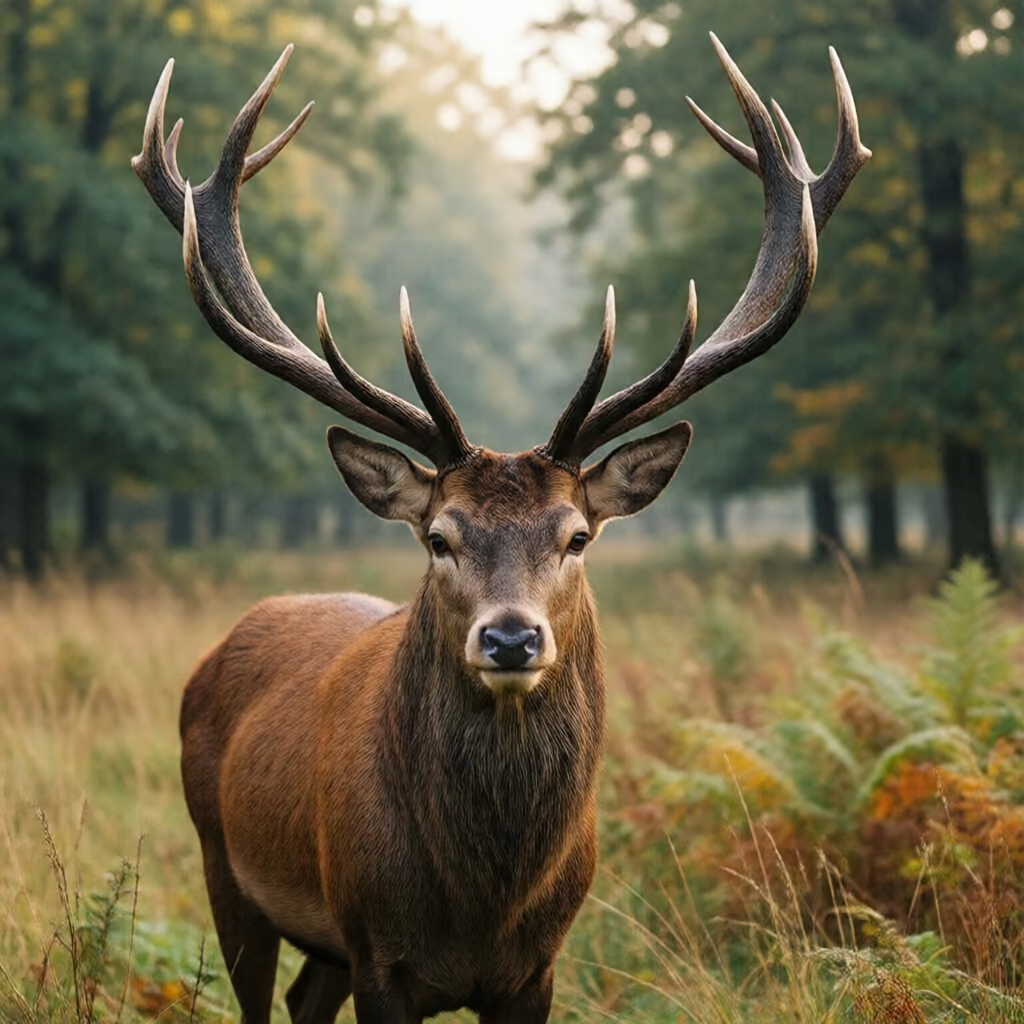
das Geweih
antlers
Branched bony growths on the heads of male deer and other animals from the deer family. Antlers are shed regularly and grow back.
EXAMPLE
Der Hirsch trägt ein großes Geweih.
The stag has large antlers.
antlers
das Geweih, die Geweihe
Loading your saved state.
antlers
Branched bony growths on the heads of male deer and other animals from the deer family. Antlers are shed regularly and grow back.
Der Hirsch trägt ein großes Geweih.
The stag has large antlers.
| gender | neuter das |
|---|---|
| plural | die Geweihe |
| genitive | des Geweihes |
| singular | plural | |
|---|---|---|
| nominative | das Geweih | die Geweihe |
| accusative | das Geweih | die Geweihe |
| dative | dem Geweih | den Geweihen |
| genitive | des Geweihes des Geweihs | der Geweihe |
The article changes with the case; it is shown in colour.
The word 'Geweih' (antlers) is often used with verbs such as 'tragen' (to carry / to have), 'abwerfen' (to shed), and 'nachwachsen' (to grow back). These combinations describe the stag's natural yearly cycle.
Im Frühjahr wirft der Hirsch sein altes Geweih ab.
In spring, the stag sheds its old antlers.
Antlers are often described with adjectives that emphasize their size or shape, such as 'groß' (large), 'verzweigt' (branched), 'prächtig' (magnificent), or 'stattlich' (impressive).
Der Förster bewunderte das mächtige, weit verzweigte Geweih des Hirsches.
The forester admired the stag's mighty, widely branched antlers.
The word occurs especially often in texts about wild animals, forests, and hunting. These texts often describe how an animal develops, carries, or sheds its antlers.
In dem Naturfilm wurde gezeigt, wie das Geweih eines jungen Hirsches jedes Jahr größer wurde.
The nature documentary showed how a young stag's antlers grew larger every year.