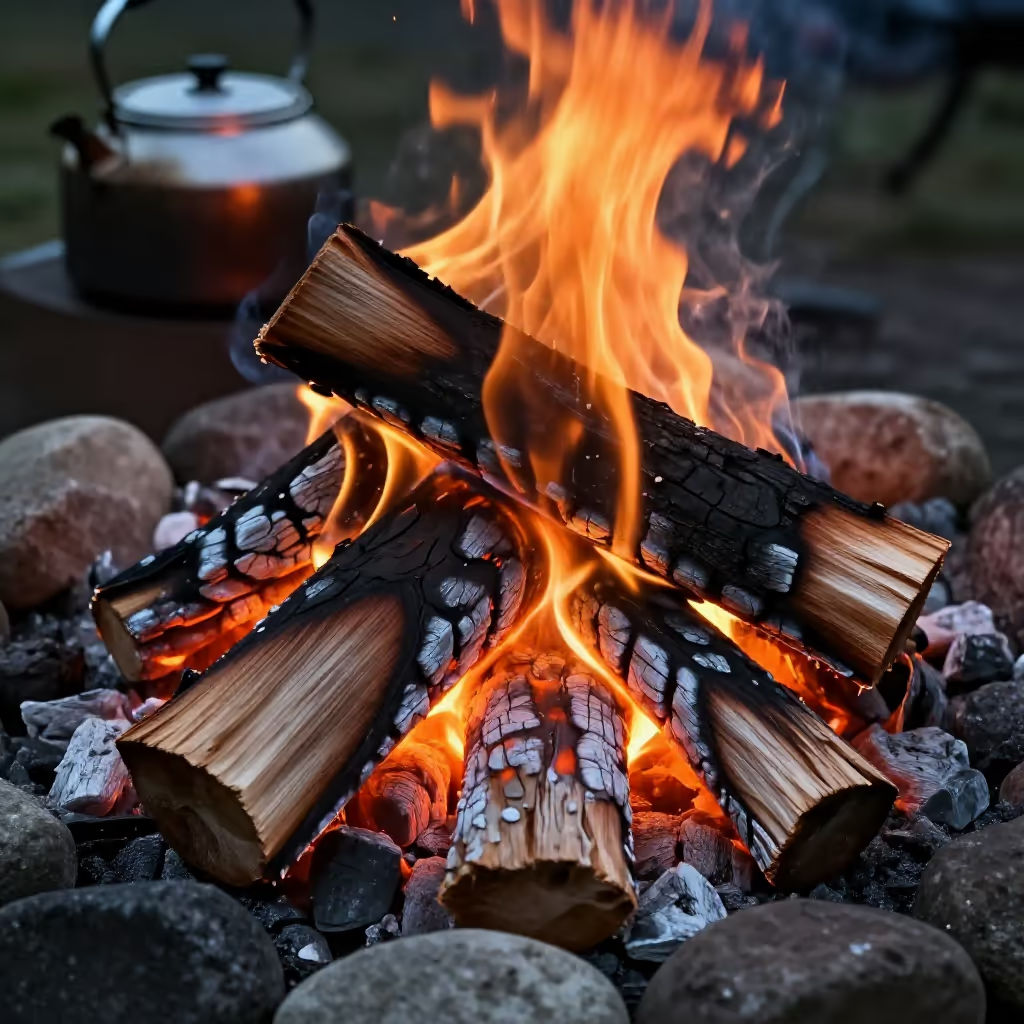
A mass of burning material such as coal or wood that glows intensely without flames and gives off heat. It is what remains of a fire.
example
Die Glut im Kamin wärmte noch stundenlang den Raum.
The embers in the fireplace warmed the room for hours.

Usage tips
Word family
The noun 'die Glut' (embers / ardor) is closely related to the verb 'glühen' (to glow). Something that glows produces embers. This connection helps you remember the meaning of intense, flameless heat.
EXAMPLE
Die Kohlen glühten noch lange in der Dunkelheit.
The coals glowed for a long time in the darkness.
Typical collocations
In the literal sense, 'Glut' (embers) is often used in connection with fire and grilling. Typical verbs are 'die Glut schüren' (to stir up / fan the embers) or 'in der Glut garen' (to cook in the embers).
EXAMPLE
Wir haben die Würstchen direkt in der Glut des Lagerfeuers gegrillt.
We grilled the sausages directly in the embers of the campfire.
Context clue
You can recognize the figurative meaning by the fact that 'Glut' (ardor) is combined with strong feelings. Look for words like 'Leidenschaft' (passion), 'Hass' (hatred), 'Liebe' (love), or 'Zorn' (anger) in the same sentence.
EXAMPLE
In ihren Augen lag die Glut des Hasses.
In her eyes lay the ardor of hatred.
Elevated style
Using 'Glut' (ardor) for feelings is typical of poetic or elevated language. In normal everyday speech, it is used less often for emotions.
EXAMPLE
Der Roman beschreibt die Glut ihrer ersten Liebe mit vielen Details.
The novel describes the ardor of her first love in great detail.
Compare with
near_synonym · confusable
Glut vs Feuer
fire
'das Feuer' and 'die Glut' both have to do with burning, heat, and also strong feelings. 'Feuer' usually means visible flames. 'Glut' refers more to the hot material that continues to burn without flames, for example after a campfire or when grilling. You can confuse the words because both are hot and can burn. As a practical rule: if you see flames, 'Feuer' usually fits. If something is glowing red and hot but has hardly any flames, 'Glut' fits. Figuratively, 'Feuer' can emphasize enthusiasm, while 'Glut' sounds more like deep, intense passion.
Glut
Nach dem Grillen war die Glut noch so heiß, dass niemand sie anfassen durfte.
After the barbecue, the embers were still so hot that no one was allowed to touch them.
Feuer
Wegen des kalten Wetters machten wir zu Hause ein kleines Feuer im Kamin.
Because of the cold weather, we made a small fire in the fireplace at home.