


der Grund
reason
The cause, occasion, or justification for an action, event, or state.
EXAMPLE
Der wahre Grund für seine Kündigung ist immer noch unklar.
The real reason for his resignation is still unclear.
reason / ground
Loading your saved state.
reason
The cause, occasion, or justification for an action, event, or state.
Der wahre Grund für seine Kündigung ist immer noch unklar.
The real reason for his resignation is still unclear.
land
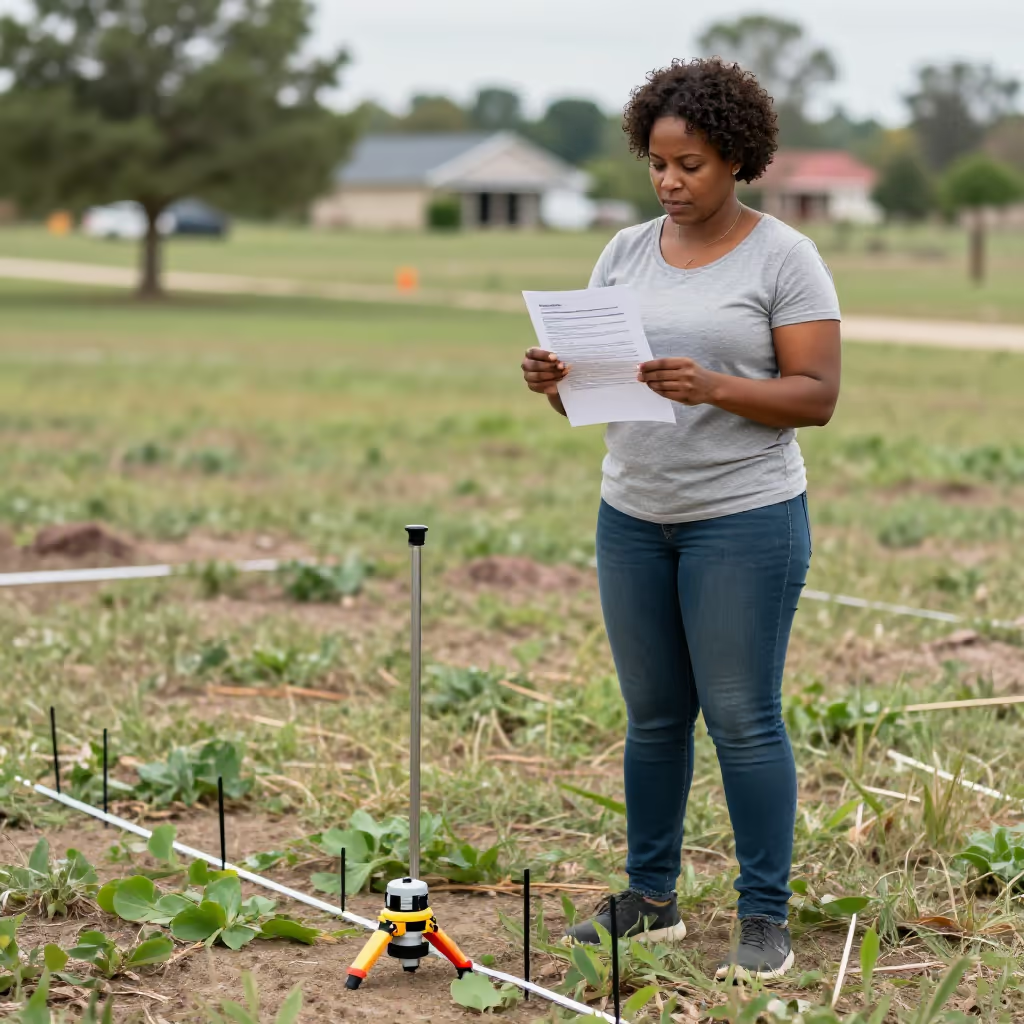
A piece of land or ground, especially as property. Often in the expression 'Grund und Boden'.
Die Familie besitzt ein großes Haus auf eigenem Grund.
The family owns a large house on their own land.

basically
A fixed expression that means 'actually' or 'essentially'.
Im Grunde ist es eine einfache Aufgabe, aber der Teufel steckt im Detail.
Basically, it’s a simple task, but the devil is in the details.

bottom
The lowest part or bottom of something, especially of a body of water such as a lake or the sea.
Das Wrack des Schiffes liegt auf dem Grund des Ozeans.
The wreck of the ship lies at the bottom of the ocean.
from the ground up
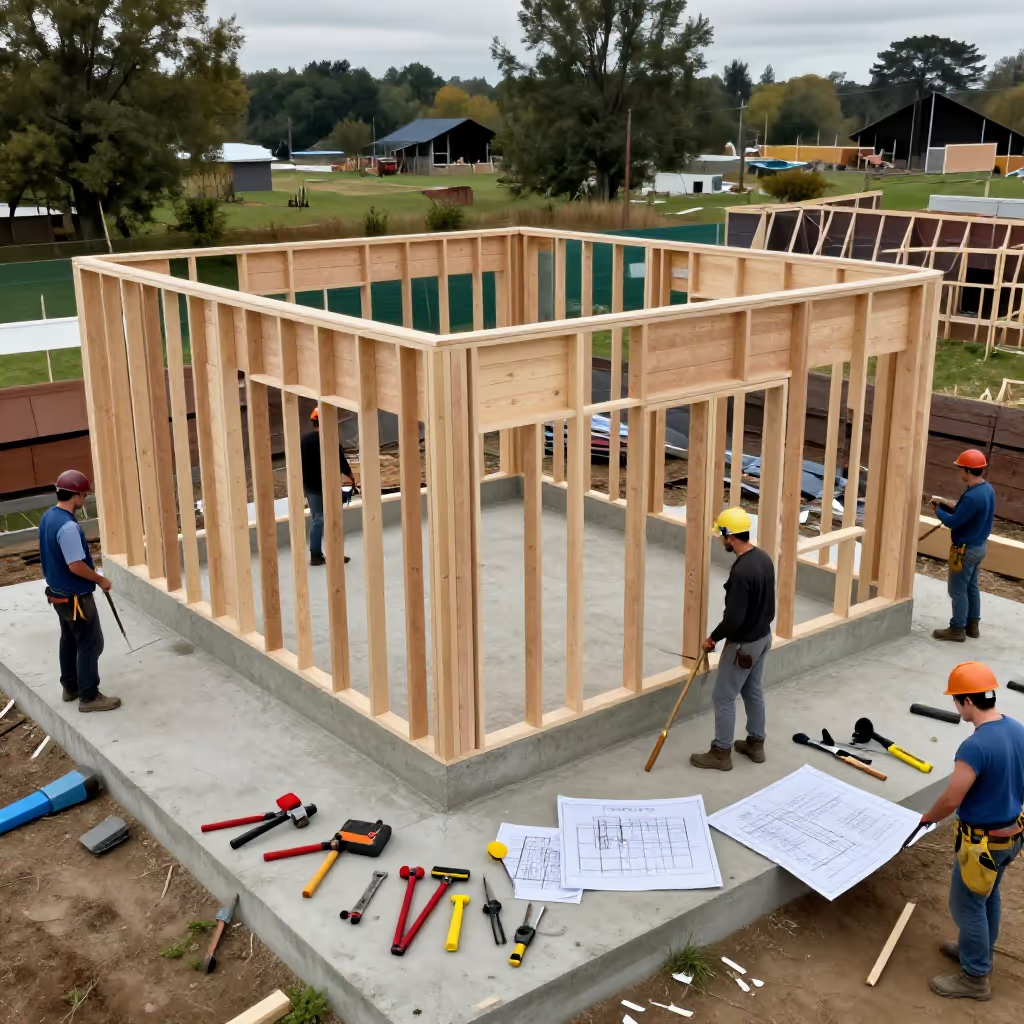
A fixed expression that means 'completely', 'from the beginning', or 'from the ground up'.
Nach dem Brand musste das Haus von Grund auf neu aufgebaut werden.
After the fire, the house had to be rebuilt from the ground up.
to run aground
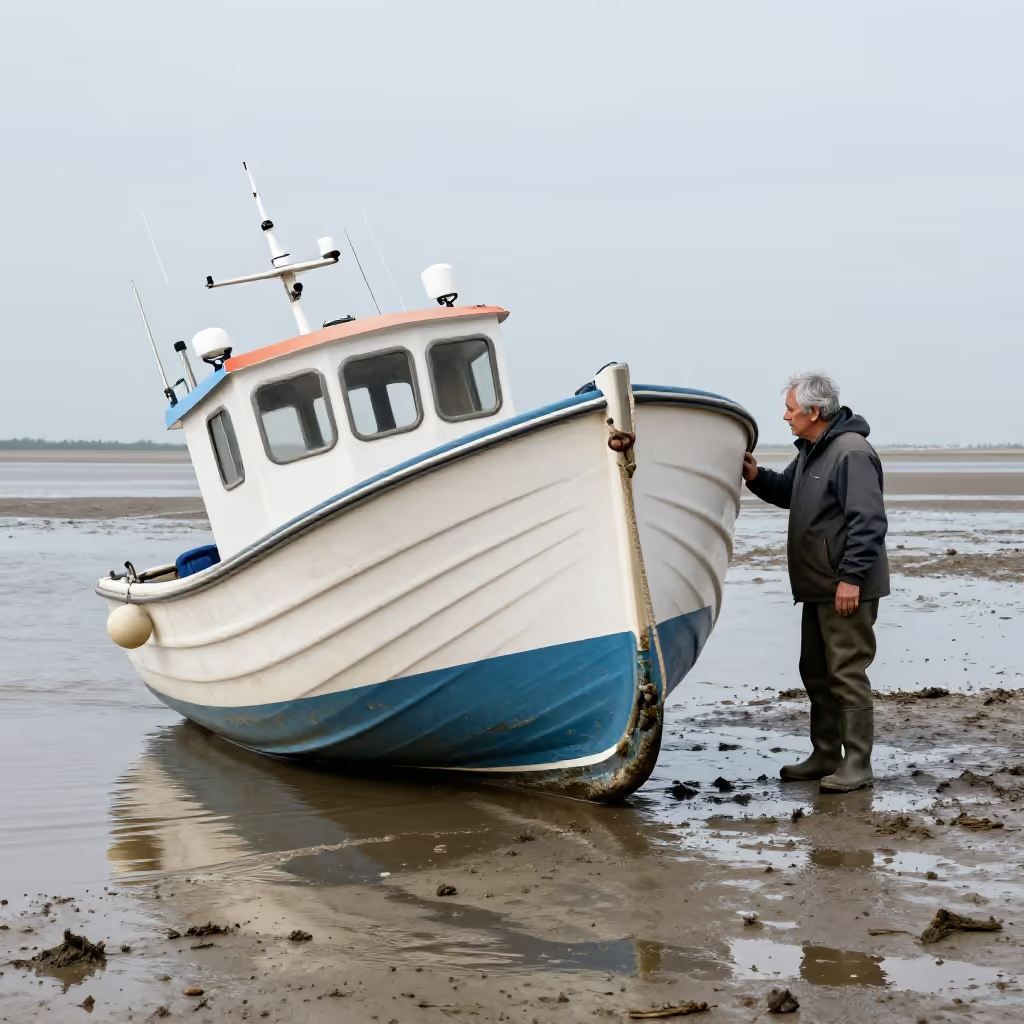
A fixed expression describing that a ship touches the bottom of a body of water and gets stuck.
Bei Ebbe ist der Frachter auf Grund gelaufen.
At low tide, the freighter ran aground.
'Grund' (reason/ground) is the basis for words like 'gründen' (to establish something on a foundation), 'begründen' (to give a reason), and 'gründlich' (thorough, going down to the bottom). The idea of a base or foundation connects all the meanings.
Bitte begründen Sie Ihre Entscheidung.
Please justify your decision.
You can easily recognize the different meanings of 'Grund' from context: 'Grund für' is the cause, 'Grund und Boden' is land ownership, and 'Grund des Meeres' is the lowest part of a body of water.
Was ist der Grund für deine schlechte Laune?
What is the reason for your bad mood?
When 'Grund' (reason) describes a cause, it is almost always used with the preposition 'für' followed by the accusative. The pattern is: der Grund + für + accusative object.
Es gibt keinen Grund für Panik.
There is no reason to panic.
In the meaning of 'Ursache' (cause), 'Grund' appears in many fixed expressions, for example 'aus diesem Grund' (for this reason), 'aus gutem Grund' (for good reason), or 'Grund zur Freude haben' (to have reason to be happy).
Er hat seine Arbeit gekündigt, und das aus gutem Grund.
He quit his job, and for good reason.
The expression 'im Grunde' (basically) is a modal adverb and means 'im Wesentlichen' (essentially) or 'eigentlich' (actually). It is used to reduce a statement to its core.
Im Grunde genommen ist die Idee gut, aber die Umsetzung ist schwierig.
Basically, the idea is good, but the implementation is difficult.
To describe the lowest part of a body of water, the preposition 'auf' is always used with the dative: 'auf dem Grund' (at/on the bottom).
Am Grund des Sees fand man einen alten Schatz.
An old treasure was found at the bottom of the lake.
The expression 'von Grund auf' (from the ground up) means 'from the beginning', 'completely', or 'fundamentally'. It is often used in connection with learning, building, or renovating.
Er hat das Handwerk von Grund auf gelernt.
He learned the craft from the ground up.
country / countryside / land
Das Land refers generally to an area or solid ground, for example for agricultural use. Der Grund refers more specifically to a piece of land as property. When the focus is on using the area, Land is appropriate; when ownership is central, Grund is more precise.

Der Grund am Ortsrand gehört der Familie seit vielen Jahren.
The land on the edge of town has belonged to the family for many years.
Die Familie nutzt das Land am Ortsrand für den Gemüseanbau.
The family uses the land on the edge of town to grow vegetables.