

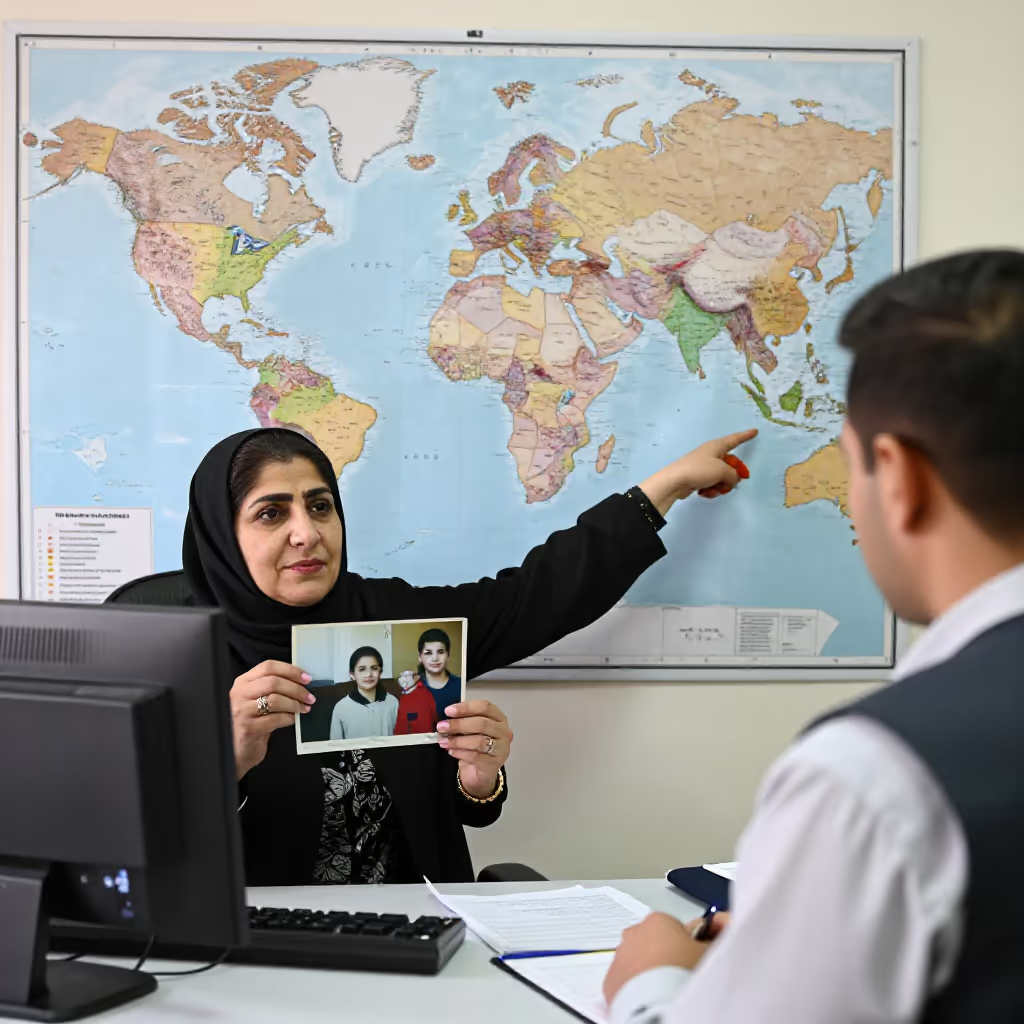
das Herkunftsland
country of origin
The country a person originally comes from or where they were born.
EXAMPLE
In ihrem Antrag musste sie ihr Herkunftsland angeben.
In her application, she had to state her country of origin.
country of origin
Loading your saved state.
country of origin
The country a person originally comes from or where they were born.
In ihrem Antrag musste sie ihr Herkunftsland angeben.
In her application, she had to state her country of origin.

country of origin
The country in which goods were manufactured or a product was produced.
Auf dem Etikett muss das Herkunftsland des Weines angegeben sein.
The country of origin of the wine must be stated on the label.
The word is made up of 'Herkunft' (origin) and 'Land' (country). 'Herkunft' itself is derived from the verb 'herkommen' (to come from). The 'Herkunftsland' (country of origin) is therefore literally the country from which someone or something comes.
Sein Herkunftsland ist Italien, aber er lebt schon seit 20 Jahren in Deutschland.
His country of origin is Italy, but he has been living in Germany for 20 years.
'Herkunftsland' (country of origin) is a typical word used in official language and formal trade. In everyday life, one would often simply ask: 'Woher kommst du?' (Where are you from?) or 'Wo wurde das hergestellt?' (Where was that made?).
Bitte tragen Sie Ihr Herkunftsland in das Formular ein.
Please enter your country of origin in the form.
When referring to people, 'Herkunftsland' (country of origin) is often used with verbs like 'angeben' (to state), 'verlassen' (to leave), or in the combination 'aus einem Land stammen' (to come from a country).
Viele Flüchtlinge können nicht in ihr Herkunftsland zurückkehren.
Many refugees cannot return to their country of origin.
For products and goods, the country of origin is important information for consumers. It is often found on the label or packaging.
Das Herkunftsland dieser Bananen ist Ecuador.
The country of origin of these bananas is Ecuador.
home country
Herkunftsland is an objective statement of where a person originally comes from or was born. Heimatland often refers to the same country, but also emphasizes a personal or emotional connection to it. Herkunftsland is appropriate for neutral information; when the relationship to the country is important, Heimatland is more suitable.

Im Formular muss jeder Bewerber sein Herkunftsland angeben.
Every applicant must state their country of origin on the form.
Nach vielen Jahren im Ausland besucht Maria wieder ihr Heimatland.
After many years abroad, Maria is visiting her home country again.