

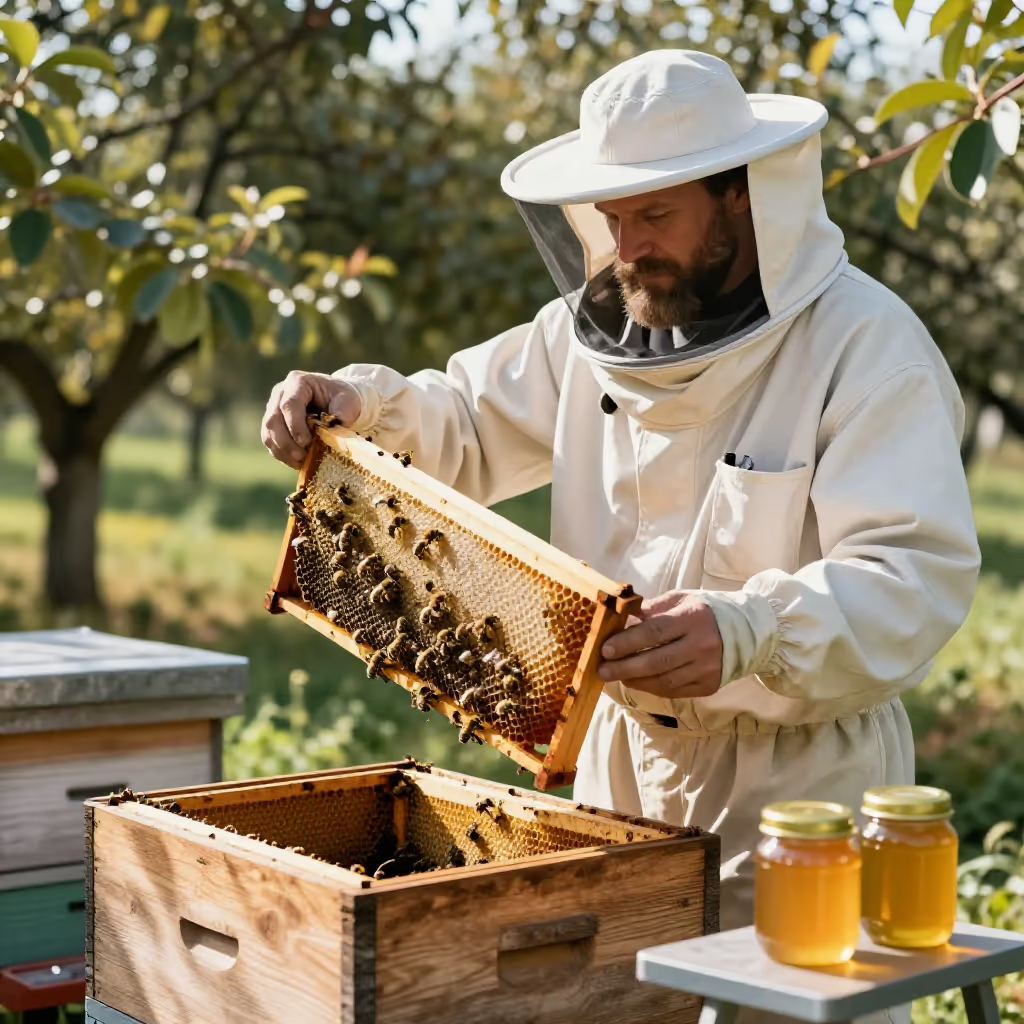
A person who breeds and keeps bees in order to obtain honey and other bee products.
example
Der Imker aus dem Nachbardorf verkauft seinen Honig auf dem Wochenmarkt.
The beekeeper from the neighboring village sells his honey at the weekly market.
Usage tips
Word formation
The word 'Imker' (beekeeper) is derived from the old German word 'Imbe' for 'Bienenschwarm' (swarm of bees). An 'Imker' is therefore literally someone who takes care of swarms of bees.
EXAMPLE
Ein guter Imker muss viel über das Verhalten von Bienen wissen.
A good beekeeper has to know a lot about the behavior of bees.
Word family
The word family includes the verb 'imkern' (to keep bees) and the noun 'die Imkerei' (beekeeping, or the place where bees are kept).
EXAMPLE
Mein Onkel hat vor zwei Jahren angefangen zu imkern und hat jetzt drei Bienenvölker.
My uncle started keeping bees two years ago and now has three bee colonies.
Typical activities
Typical verbs associated with an 'Imker' (beekeeper) describe his work. These include 'Bienen halten' (to keep bees), 'Bienenvölker betreuen' (to care for bee colonies), and 'Honig schleudern' (to extract honey).
EXAMPLE
Im Spätsommer schleudert der Imker den gesammelten Honig.
In late summer, the beekeeper extracts the collected honey.
Compare with
confusable
Imker vs Imkerei
beekeeping / apiary
'der Imker' and 'die Imkerei' belong to the same topic: bees and honey. The difference is simple: 'der Imker' is the person who keeps and cares for bees. 'die Imkerei' is either this activity or the place or business with the beehives. Learners may confuse the words because they have the same root. Memory tip: 'der Imker' is the person; 'die Imkerei' is the work or the place.
Imker
Der Imker kontrolliert heute die Bienenstöcke hinter dem Haus.
The beekeeper is checking the beehives behind the house today.
Imkerei
Am Wochenende besuchen wir eine kleine Imkerei und kaufen dort Honig.
At the weekend, we are visiting a small apiary and buying honey there.