

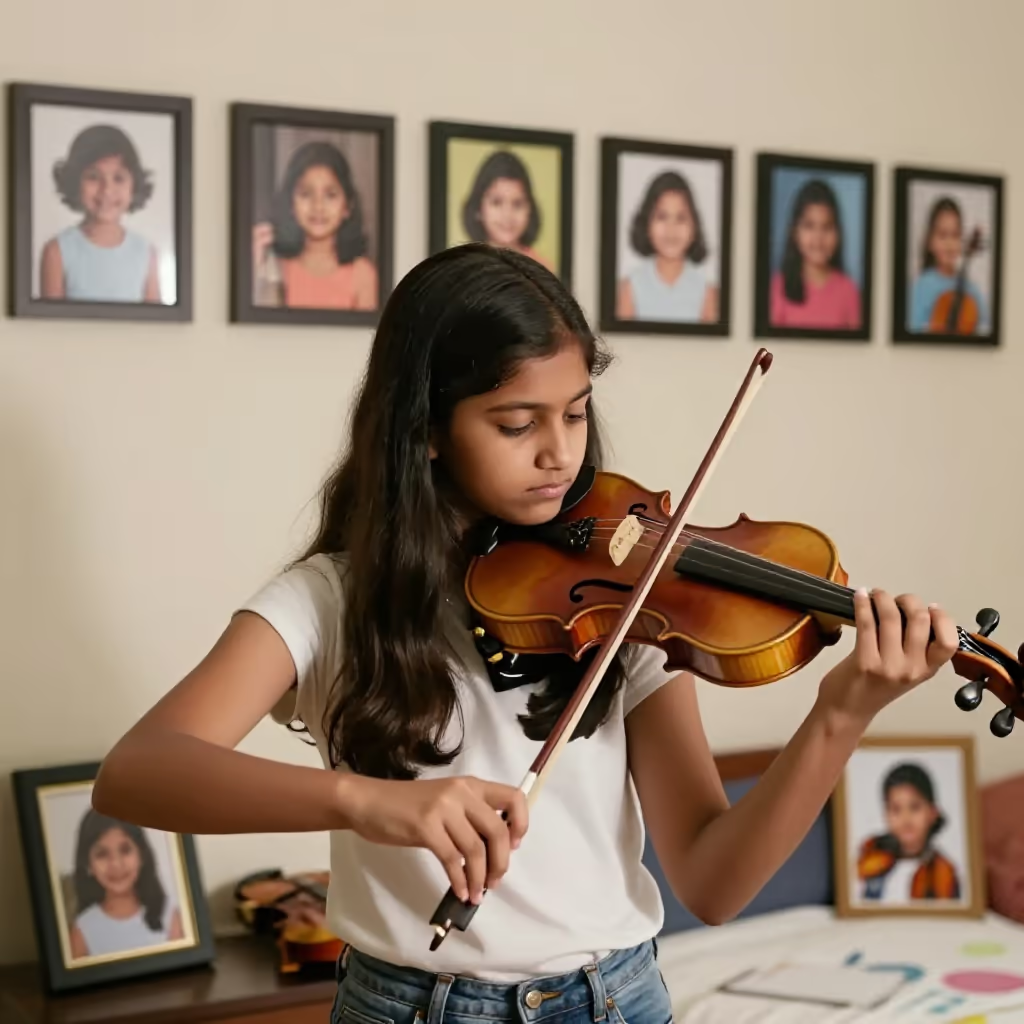
jahrelang
for years
Continuing over a period of several years.
EXAMPLE
Sie haben jahrelang für dieses Haus gespart.
They saved for years for this house.
for years
Loading your saved state.
for years
Continuing over a period of several years.
Sie haben jahrelang für dieses Haus gespart.
They saved for years for this house.
The word is made up of 'Jahre' (years, plural of 'das Jahr') and 'lang' (long). So the meaning is literally 'the length of years'.
Die Renovierung des alten Hauses dauerte jahrelang.
The renovation of the old house took years.
'Jahrelang' (lasting for years) can also stand before a noun as an adjective. In that case, it has to be declined like any other adjective.
Nach einer jahrelangen Freundschaft haben sie geheiratet.
After a friendship that had lasted for years, they got married.
The structure '[unit of time] + lang' is very productive in German for describing periods of time. Other examples include 'tagelang' (for days), 'wochenlang' (for weeks), 'monatelang' (for months), or 'stundenlang' (for hours).
Wegen des Streiks mussten wir stundenlang am Bahnhof warten.
Because of the strike, we had to wait at the train station for hours.
long-standing
Jahrelang directly indicates how long an action lasts. Langjährig, on the other hand, describes a person, relationship, or position that has existed for many years. Someone can therefore work at a place jahrelang, but be a langjährige Mitarbeiterin there.

Nina arbeitete jahrelang in derselben Bibliothek.
Nina worked at the same library for years.
Nina ist eine langjährige Mitarbeiterin dieser Bibliothek.
Nina is a long-standing employee of this library.