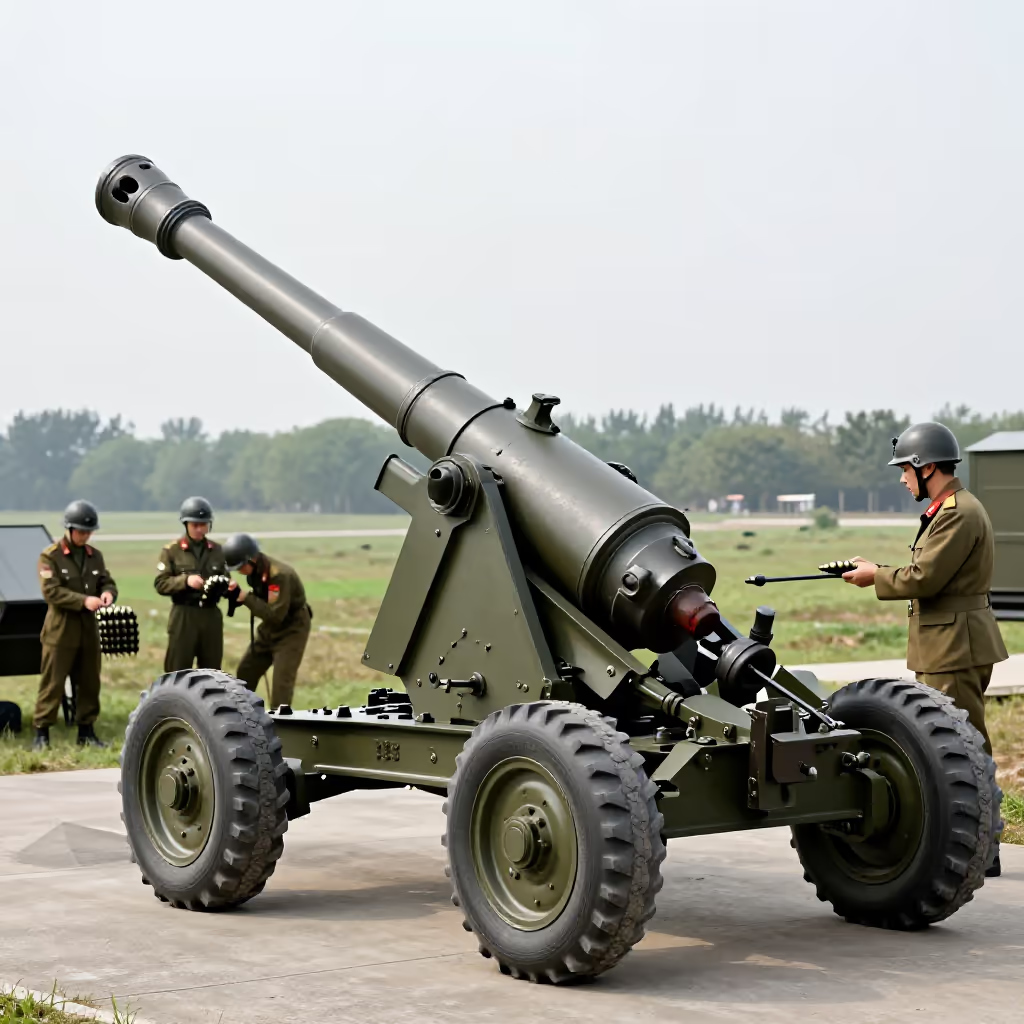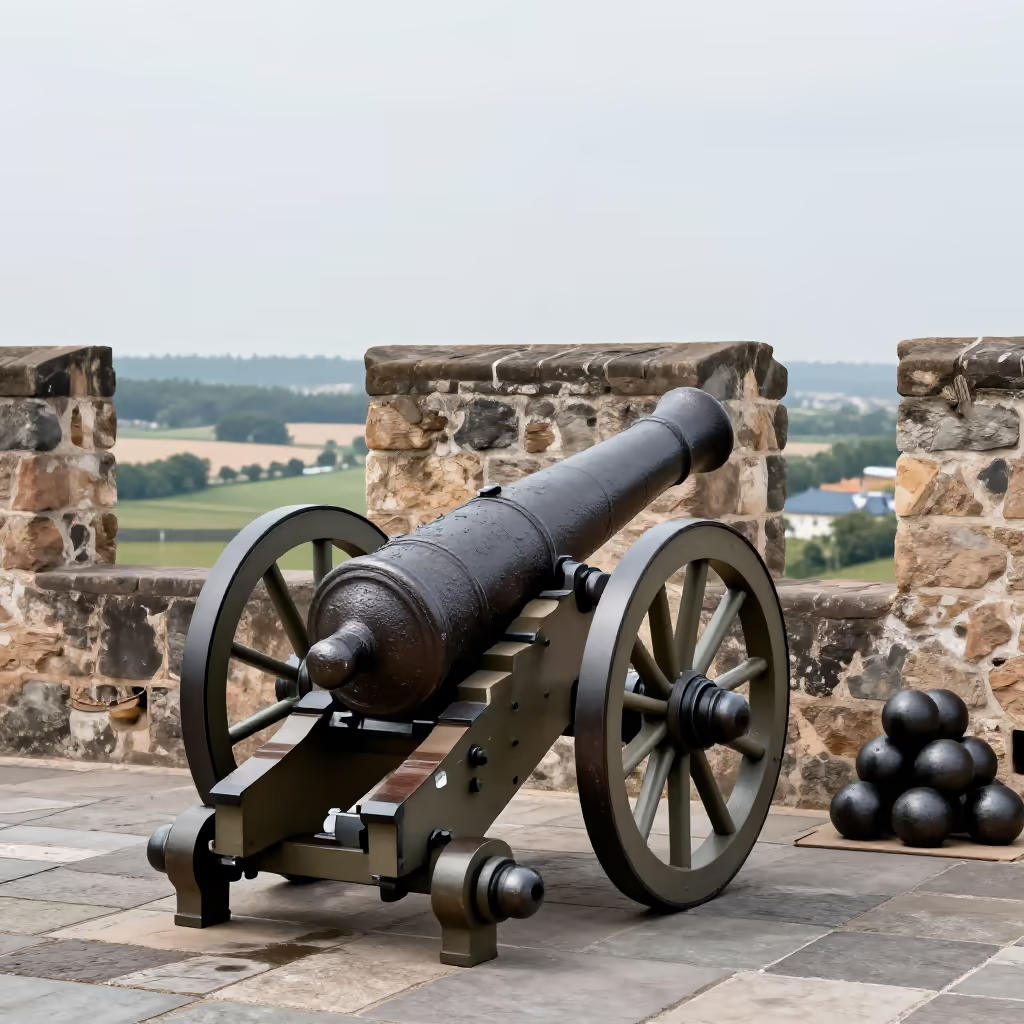
A large, heavy gun that was formerly used mainly in wars and for defending fortresses to fire projectiles over long distances.
example
Auf der alten Burgmauer stehen noch mehrere historische Kanonen.
Several historic cannons are still standing on the old castle wall.

Usage tips
Context clue
You can tell from the context whether the literal or a figurative meaning is intended. If the topic is history or the military, it usually refers to the weapon. In everyday, colloquial situations, it is often one of the idioms.
EXAMPLE
Auf der Festung kann man noch alte Kanonen besichtigen.
At the fortress, you can still view old cannons.
Typical verbs
In the literal sense, 'Kanone' (cannon) is often used with verbs such as 'abfeuern' (to fire), 'laden' (to load), or 'richten auf' (to aim at), which describe a military or historical action.
EXAMPLE
Die Soldaten luden die Kanone für den Salutschuss.
The soldiers loaded the cannon for the salute.
Use for an expert
The expression 'eine Kanone sein' (to be a whiz) is used with the preposition 'in' followed by the dative to name the area of expertise. The person is always the subject of the sentence.
EXAMPLE
Mein Bruder ist in Mathe eine echte Kanone.
My brother is a real whiz at math.
Fixed expression: poor quality
The expression 'unter aller Kanone' (absolutely terrible) is a fixed idiom and is not changed. As a predicative noun phrase, it describes a thing or performance that is extremely bad.
EXAMPLE
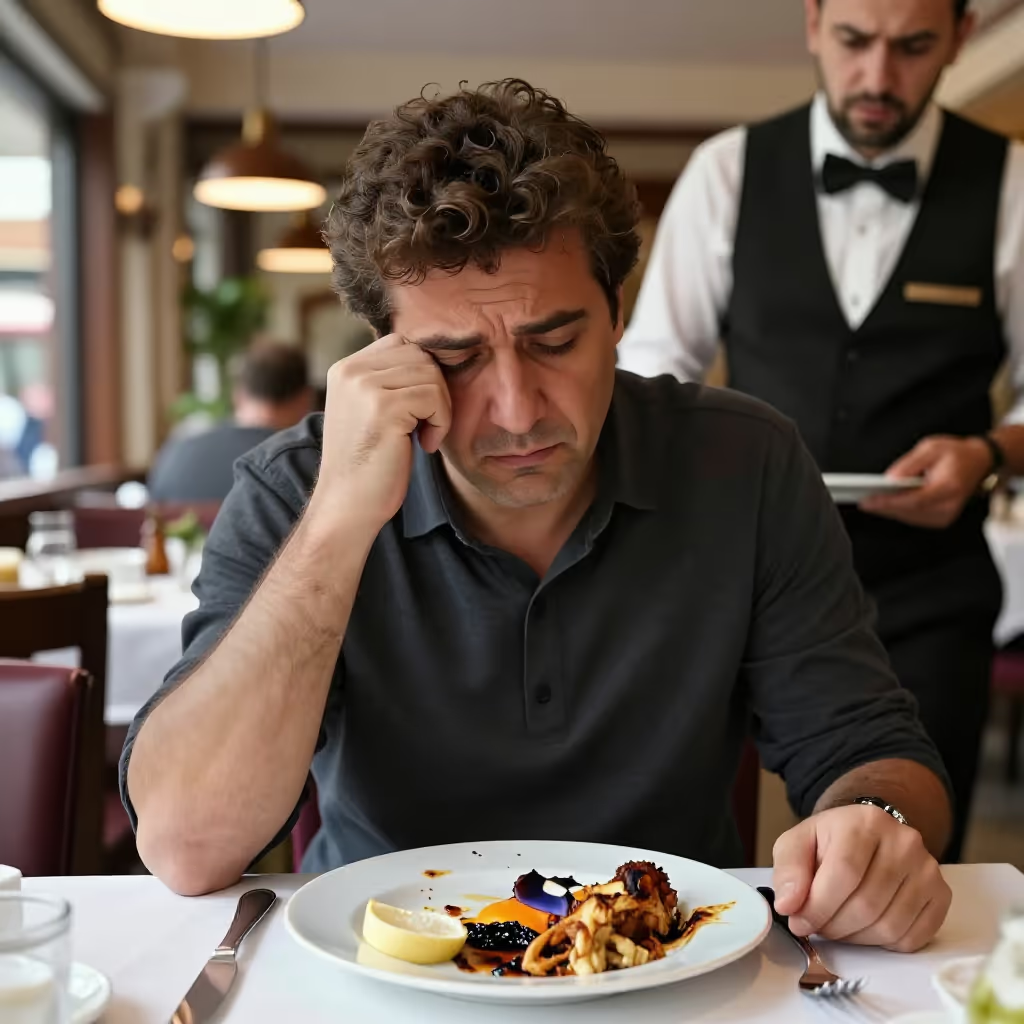
Das Essen in der Kantine war heute unter aller Kanone.
The food in the cafeteria was absolutely terrible today.
Fixed expression: exaggeration
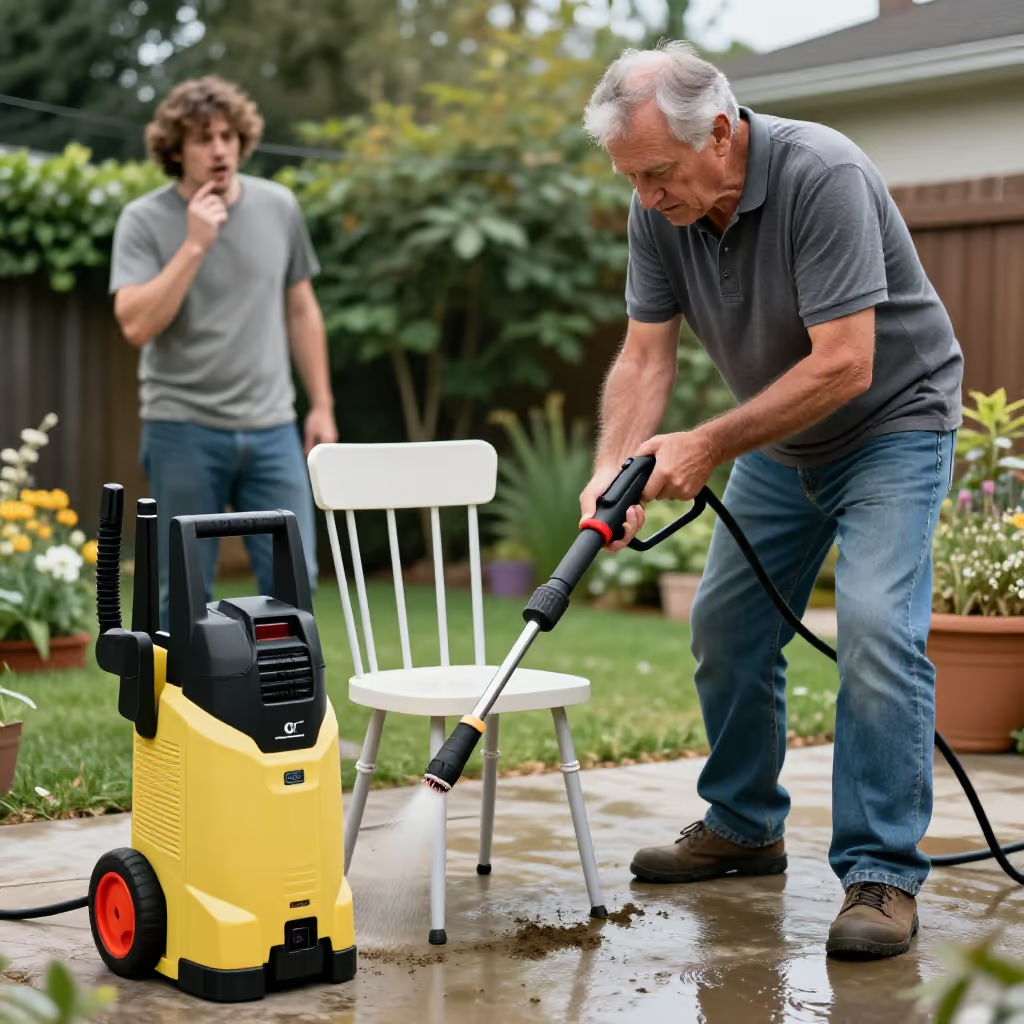
The idiom 'mit Kanonen auf Spatzen schießen' (to use a sledgehammer to crack a nut) works like a normal verb in a sentence. It describes someone reacting to a small problem with excessive effort.
EXAMPLE
Für diese einfache Aufgabe ein ganzes Team einzusetzen, heißt mit Kanonen auf Spatzen schießen.
Using an entire team for this simple task means using a sledgehammer to crack a nut.
Compare with
near_synonym · confusable
Kanone vs Experte
expert
'der Experte' and 'eine Kanone sein' can both express that someone is very good in a particular area. 'der Experte' is neutral and fits factual situations, for example at work, in the media, or when dealing with specialist questions. 'eine Kanone sein' (to be a whiz) is colloquial and stronger: it sounds admiring and means that someone is exceptionally good. Learners may confuse the words because both describe a capable person. If you want to talk neutrally about specialist knowledge, use 'Experte'. If you are speaking casually and very positively about strong performance, 'Kanone' is more likely to fit.
Kanone
Im Schach ist Lena wirklich eine Kanone.
Lena is a real whiz at chess.
Experte
Nach dem Vortrag beantwortet der Experte noch Fragen zum neuen Gesetz.
After the talk, the expert answers more questions about the new law.