

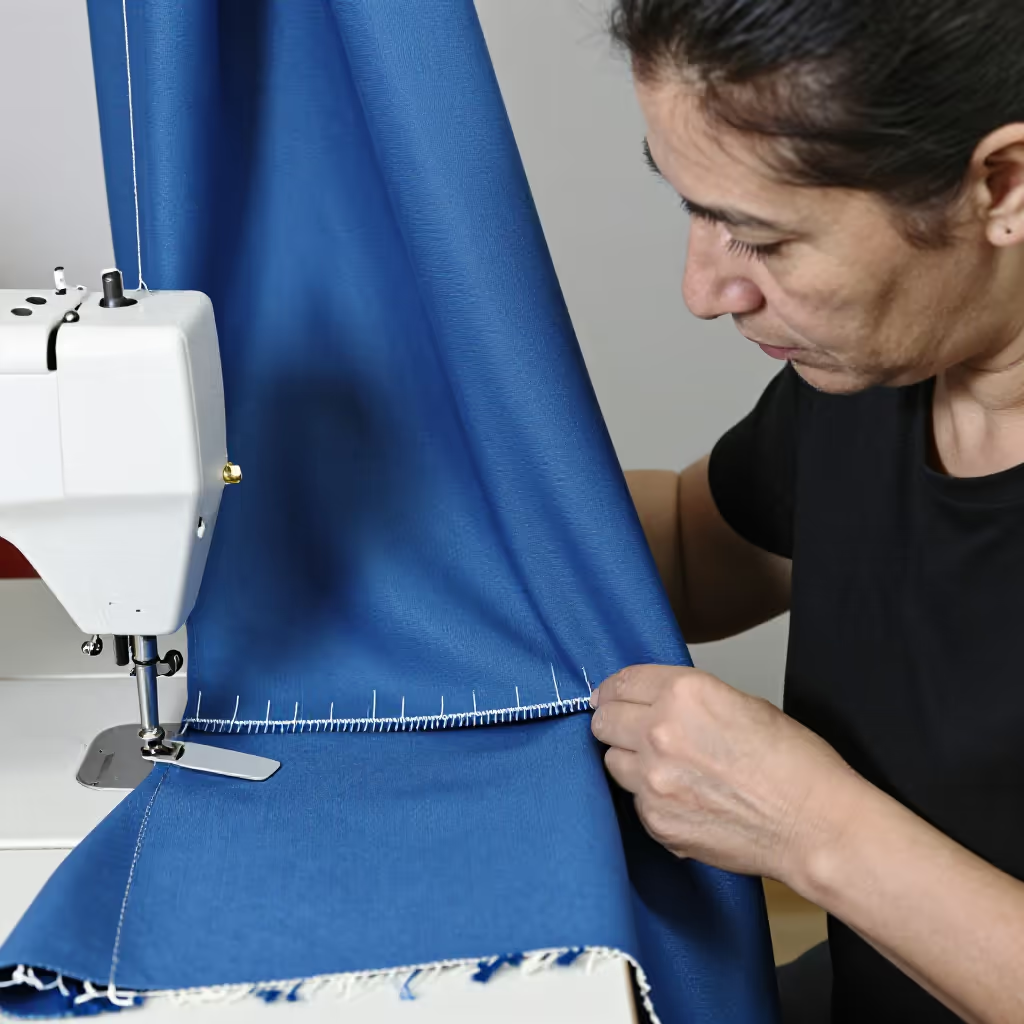
der Saum
hem
The sewn-over edge of a piece of fabric, for example on clothing or curtains, which prevents fraying.
Der Saum an ihrem Rock war aufgegangen und musste neu genäht werden.
The hem of her skirt had come undone and had to be sewn again.
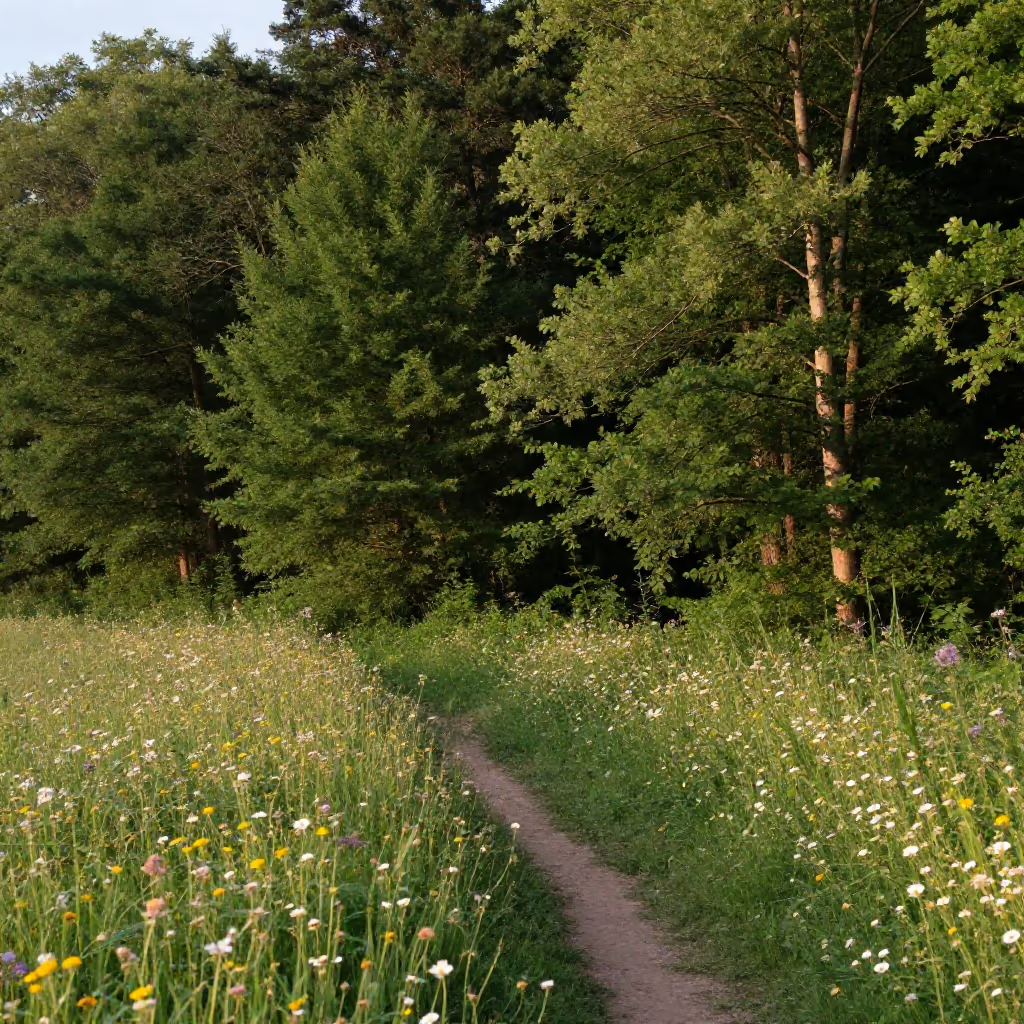

hem / edge
Loading your saved state.
hem
The sewn-over edge of a piece of fabric, for example on clothing or curtains, which prevents fraying.
Der Saum an ihrem Rock war aufgegangen und musste neu genäht werden.
The hem of her skirt had come undone and had to be sewn again.

The noun 'der Saum' (hem / edge) is closely related to the verb 'säumen'. 'Säumen' means to create an edge or to surround something, which fits both meanings of the noun: sewing a fabric edge or forming the edge of a landscape.
Die Schneiderin säumt das Kleid sorgfältig.
The tailor hems the dress carefully.
You can easily tell from context whether it is about fabric or a landscape. Words like 'Kleid' (dress), 'Hose' (pants), 'nähen' (to sew), or 'Stoff' (fabric) point to the edge of textiles. Words like 'Wald' (forest), 'Wiese' (meadow), or 'Wüste' (desert) point to the edge of an area.
Der Saum des Vorhangs war ausgefranst.
The hem of the curtain was frayed.
In connection with clothing, 'Saum' (hem) is often used with the verbs 'kürzen' (to shorten) or 'verlängern' (to lengthen). A very common phrase is also that a hem 'aufgeht', which means that the seam comes undone.
Kannst du mir bitte den Saum an meiner Hose kürzen?
Could you please shorten the hem of my pants?
When 'Saum' (edge) describes the edge of a landscape, the preposition 'an' with the dative is almost always used, often in the form 'am Saum'. This describes a position directly at the boundary of the area.
Wir machten ein Picknick am Saum einer großen Wiese.
We had a picnic at the edge of a large meadow.
border / limit
'die Grenze' and 'der Saum' can both refer to the edge of an area. 'Grenze' is the general word and can be used politically, geographically, or figuratively. It clearly separates two countries, areas, or fields. 'Saum' means more the outer edge of a landscape, for example the edge of a forest or the edge of a meadow. It sounds more figurative and is not as clear-cut as a political border. Learners may confuse the words because both refer to a kind of edge. For countries and clear limits, say 'Grenze'. For the natural edge of an area, 'Saum' often fits.

Am Saum des Waldes wachsen im Frühling viele Blumen.
Many flowers grow at the edge of the forest in spring.
An der Grenze mussten alle Reisenden ihre Ausweise zeigen.
At the border, all travelers had to show their IDs.