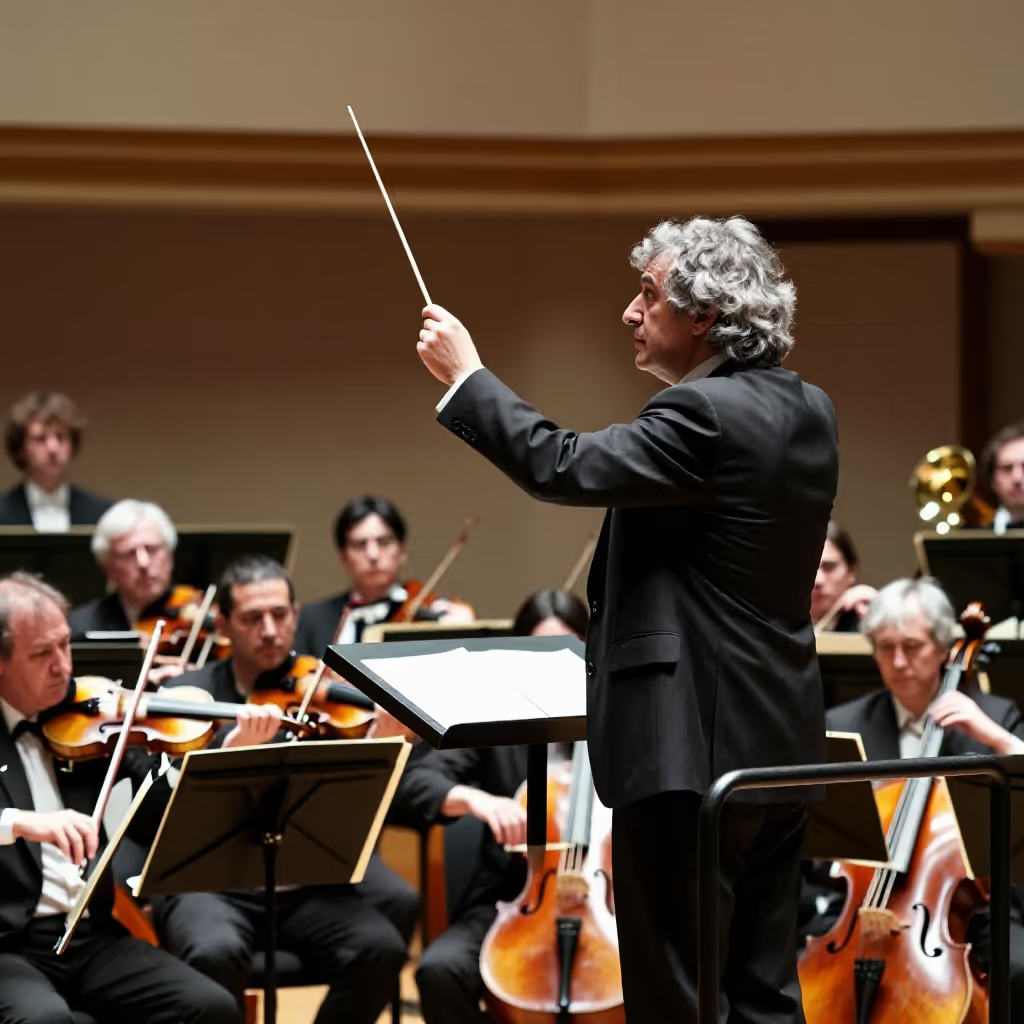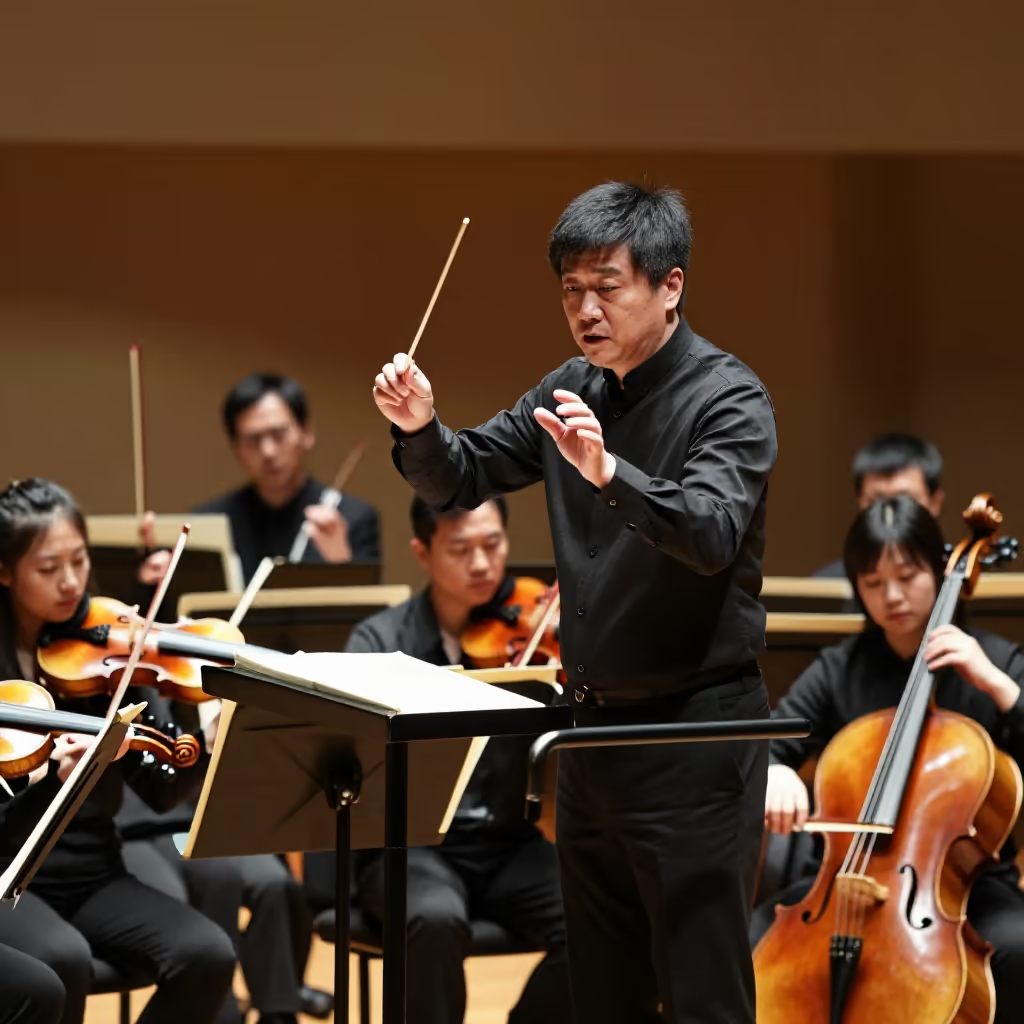
A person who leads an orchestra, choir, or other musical group and uses hand movements to indicate the beat, tempo, and entries.
example
Der Dirigent hob den Taktstock und das Orchester begann zu spielen.
The conductor raised the baton, and the orchestra began to play.

Usage tips
Word family
'Der Dirigent' (the conductor) belongs to the verb 'dirigieren' (to conduct/direct), which means 'leiten' (to lead) or 'lenken' (to steer/direct). If you know the verb, you can easily understand the role of the conductor—whether in music or figuratively.
EXAMPLE
Herbert von Karajan hat viele Jahre die Berliner Philharmoniker dirigiert.
Herbert von Karajan conducted the Berlin Philharmonic for many years.
Context clue
You can tell from the context whether the literal or figurative meaning is intended. Words like 'Orchester' (orchestra), 'Chor' (choir), or 'Musik' (music) point to the musician (m01). Words like 'Projekt' (project), 'Team' (team), or 'Unternehmen' (company) point to the coordinator (m02).
EXAMPLE
Der Dirigent gab dem Orchester mit einer kleinen Handbewegung den Einsatz.
The conductor gave the orchestra its entry with a small hand movement.
Typical collocations
In a musical context, the conductor is often associated with certain objects and actions. Typical phrases are: 'vor dem Orchester stehen' (to stand in front of the orchestra), 'den Taktstock heben' (to raise the baton), and 'den Einsatz geben' (to give the entry/cue).
EXAMPLE
Alle Augen waren auf den Dirigenten gerichtet, der den Taktstock hob.
All eyes were on the conductor, who raised the baton.
Compare with
near_synonym · confusable
Dirigent vs Leiter
leader / conductor
'der Leiter' and 'der Dirigent' can both mean a person who leads or coordinates others. 'der Leiter' is general and fits many groups or tasks. 'der Dirigent' is mainly the person who conducts an orchestra or choir. Sometimes 'Dirigent' is also used figuratively for someone who coordinates many parts of a project precisely. The words can be confused because both involve leading. But in music, 'Dirigent' is more precise; for an ordinary group or department, you would more likely say 'Leiter'.
Dirigent
Vor dem Konzert hebt der Dirigent die Hand, und das Orchester wird still.
Before the concert, the conductor raises his hand, and the orchestra falls silent.
Leiter
Mia spricht bei der Bewerbung mit dem Leiter der Sportgruppe.
During the application process, Mia speaks with the leader of the sports group.