

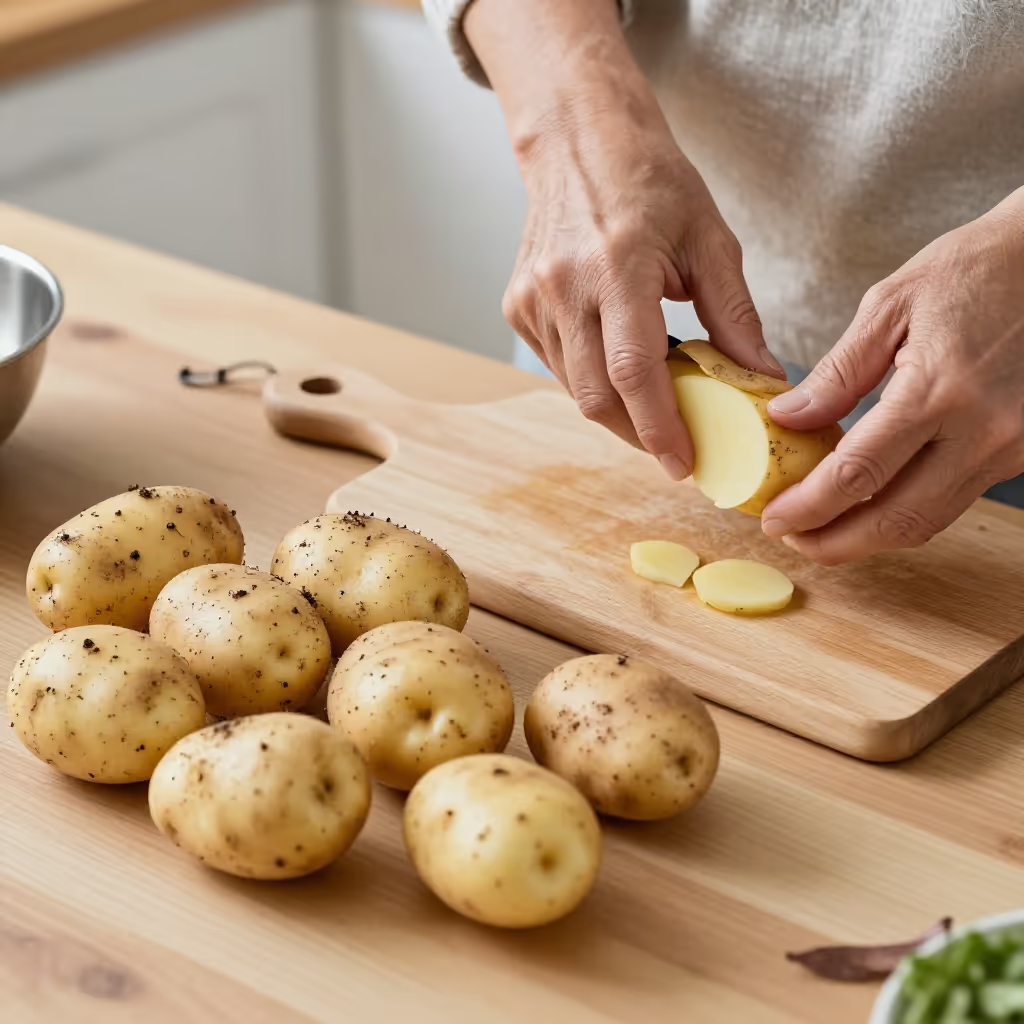
die Kartoffel
potato
An edible tuber that is prepared in many different ways as a vegetable and is a staple food in many countries.
EXAMPLE
Heute Abend gibt es Bratkartoffeln mit Spiegelei.
Tonight we're having fried potatoes with a fried egg.
potato
Loading your saved state.
potato
An edible tuber that is prepared in many different ways as a vegetable and is a staple food in many countries.
Heute Abend gibt es Bratkartoffeln mit Spiegelei.
Tonight we're having fried potatoes with a fried egg.

German person
A colloquial term, often used disparagingly or jokingly, for a person of German origin, usually to refer to stereotypical characteristics.
In seiner Comedy-Show macht er viele Witze über 'typisch deutsche Kartoffeln'.
In his comedy show, he makes a lot of jokes about 'typical German potatoes'.
In Austria and southern Germany, you often hear the word 'der Erdapfel' (potato). In parts of Austria, 'die Grundbirne' (potato) is also common.
Zum Abendessen gibt es heute Erdäpfel mit Quark.
For dinner today, there are potatoes with quark.
In German, there are many compound words for potato dishes. Common ones are 'Salzkartoffeln' (potatoes boiled in salted water), 'Bratkartoffeln' (fried potatoes), and 'Pellkartoffeln' (potatoes boiled with their skins on).
Ich muss für das Abendessen noch die Kartoffeln schälen.
I still have to peel the potatoes for dinner.
This meaning is strongly colloquial and, depending on context and intention, can be joking, neutral, or also derogatory. It is often used in discussions about national identity and clichés.
Er lacht über sich selbst und sagt, er sei eben eine richtige Kartoffel.
He laughs at himself and says he's just a real potato.