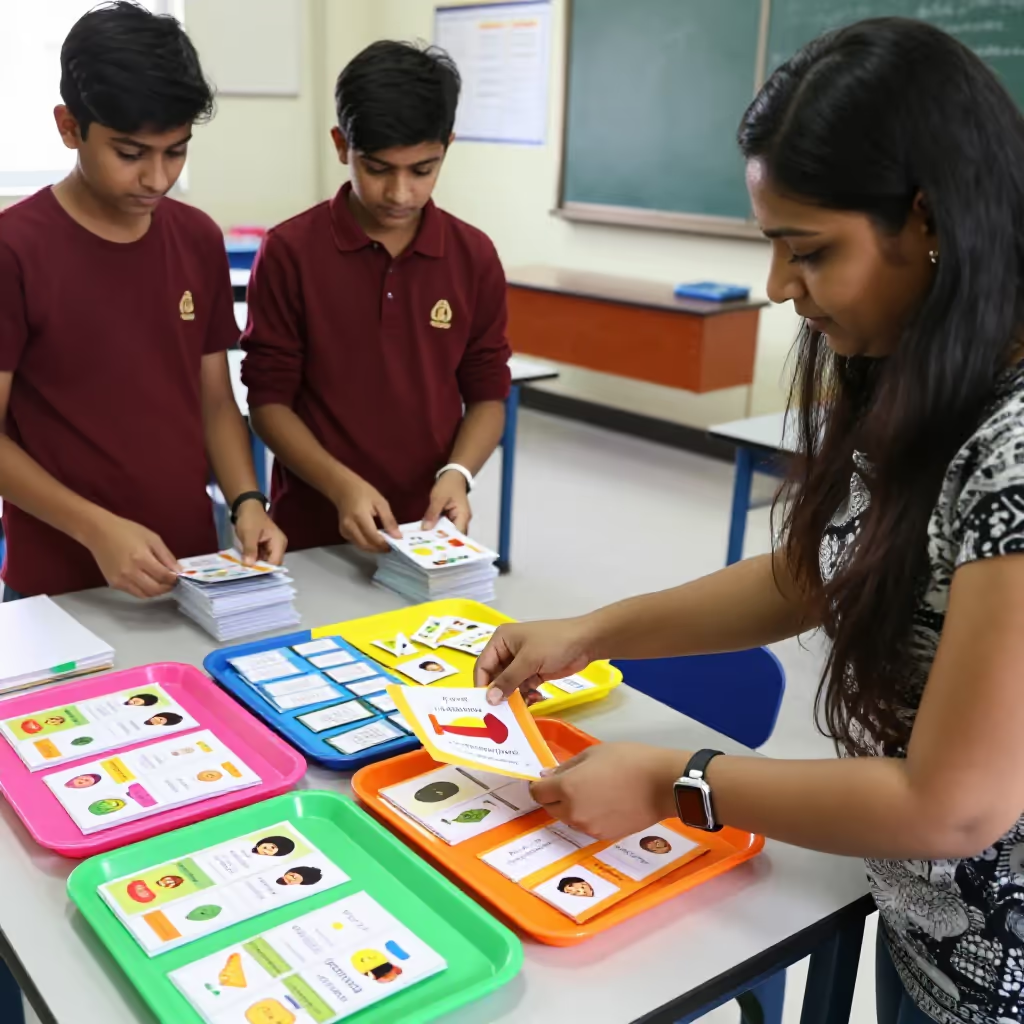
The process of placing a thing, piece of information, or event into a larger context or assigning it to a particular category in order to understand it better.
example
Die historische Einordnung dieser Ereignisse ist für das Verständnis entscheidend.
The historical classification of these events is crucial for understanding them.

Usage tips
Word structure
'Einordnung' (classification/integration) is a noun derived from the separable verb 'einordnen' (to classify/to fit in). The verb consists of 'ein' (in/into) and 'ordnen' (to order/arrange), so it literally means to 'place something into' an order or structure.
EXAMPLE
Die Einordnung der neuen Bücher ins Regal dauert Stunden.
The classification of the new books on the shelf takes hours.
Sentence structure with preposition
The noun 'Einordnung' (classification/integration) is almost always used with the preposition 'in' (+ accusative) to name the context or group into which something or someone is classified or integrated.
EXAMPLE
Die Einordnung des Autors in die Epoche der Romantik ist umstritten.
The classification of the author into the Romantic period is disputed.
Typical collocations
In this meaning, 'Einordnung' (classification) is often used with abstract terms. Typical combinations are 'historische Einordnung' (historical classification), 'politische Einordnung' (political classification), or 'wissenschaftliche Einordnung' (scientific classification).
EXAMPLE
Der Experte half bei der politischen Einordnung der Rede.
The expert helped with the political classification of the speech.
Social context
When it is about fitting into a group, typical contexts are 'die Einordnung in die Gesellschaft' (integration into society), 'in die Klasse' (into the class), or 'in ein Team' (into a team). It is often described as being difficult or easy.
EXAMPLE
Dem neuen Mitarbeiter fiel die Einordnung ins Team sehr leicht.
The new employee found integration into the team very easy.
Compare with
near_synonym · confusable
Einordnung vs Integration
integration
'die Integration' and 'die Einordnung' can both have to do with something or someone getting a place within a larger context. 'Integration' means that people, groups, or parts are included and can truly participate or function together. 'Einordnung' is more about assigning something, understanding it, or finding its place in a group or structure. The words can be confused when people join a group. In that case, 'Integration' emphasizes active inclusion, while 'Einordnung' emphasizes the appropriate place or role.
Einordnung
Nach dem Gespräch fällt mir die Einordnung der Situation viel leichter.
After the conversation, I find it much easier to assess the situation.
Integration
Die Integration der neuen Klasse in die Schule braucht Zeit und gute Begleitung.
The integration of the new class into the school takes time and good support.