


die Kette
necklace
A piece of jewelry worn around the neck.
EXAMPLE
Sie hat zum Geburtstag eine wunderschöne Goldkette bekommen.
She got a beautiful gold necklace for her birthday.
chain / necklace
Loading your saved state.
necklace
A piece of jewelry worn around the neck.
Sie hat zum Geburtstag eine wunderschöne Goldkette bekommen.
She got a beautiful gold necklace for her birthday.
chain
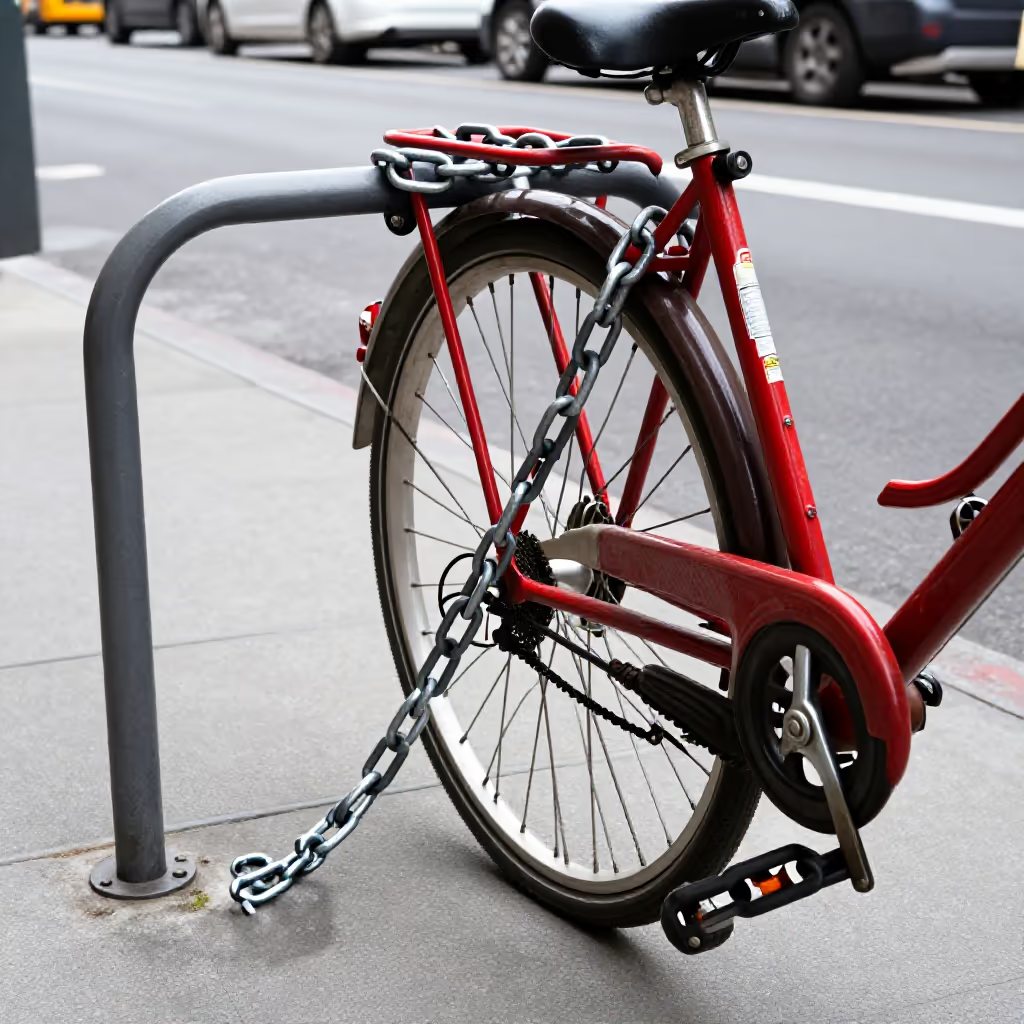
A series of connected links, usually made of metal, used for fastening, driving a mechanism, or blocking something off.
Die Kette am Fahrrad ist gerissen und muss repariert werden.
The chain on the bicycle has snapped and needs to be repaired.

chain
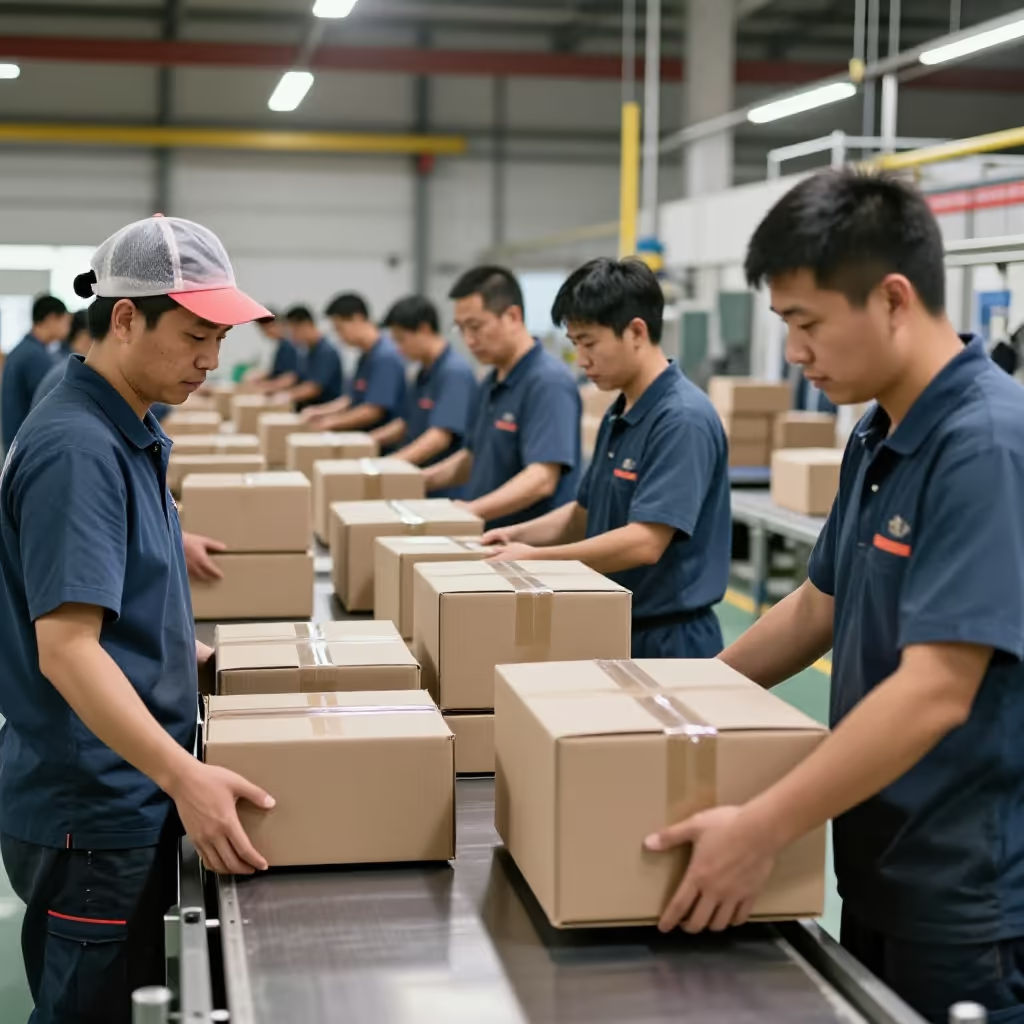
A group of related shops, hotels, or restaurants that belong to the same company.
Diese Supermarkt-Kette hat Filialen in ganz Deutschland.
This supermarket chain has branches all over Germany.
chain
An unbroken sequence of connected events, things, or people.
Ein kleiner Fehler löste eine ganze Kette von Problemen aus.
One small mistake triggered a whole chain of problems.
The word 'Kette' (chain/necklace) is often the base word in compound nouns that make the meaning more precise. This lets you immediately recognize what kind of 'Kette' is meant.
Am Hals trägt man eine Halskette.
You wear a necklace around your neck.
The exact meaning of 'Kette' (chain/necklace) is almost always clear from the context. Pay attention to the verbs and adjectives: jewelry is 'getragen' (worn), a retail chain has 'Filialen' (branches), and a chain of events is 'ausgelöst' (triggered).
Sie trägt eine teure Kette aus Silber.
She is wearing an expensive silver necklace.
The idiom 'jemanden an die Kette legen' means to severely restrict someone's freedom. It is used figuratively and refers to the function of a chain for holding something in place.
Mit den strengen Regeln fühlte er sich von seinen Eltern an die Kette gelegt.
With the strict rules, he felt chained down by his parents.
In its abstract meaning, 'Kette' (chain) is often connected with negative events. Typical combinations are 'eine Kette von Fehlern' (a chain of mistakes), 'eine Kette von unglücklichen Zufällen' (a chain of unfortunate coincidences), or 'eine Kette von Problemen' (a chain of problems).
Eine Kette von unglücklichen Umständen führte zu dem Unfall.
A chain of unfortunate circumstances led to the accident.
consequence / episode
Folge and Kette can both refer to several events that occur one after another. Folge mainly emphasizes their order, while Kette additionally shows that the events are closely connected. Use Folge for an ordered sequence and Kette when each event is connected to the next.

Eine Kette von Fehlern führte schließlich zum Stromausfall.
A chain of errors eventually led to the power outage.
Die Folge der Ereignisse begann mit einem kurzen Stromausfall.
The sequence of events began with a brief power outage.