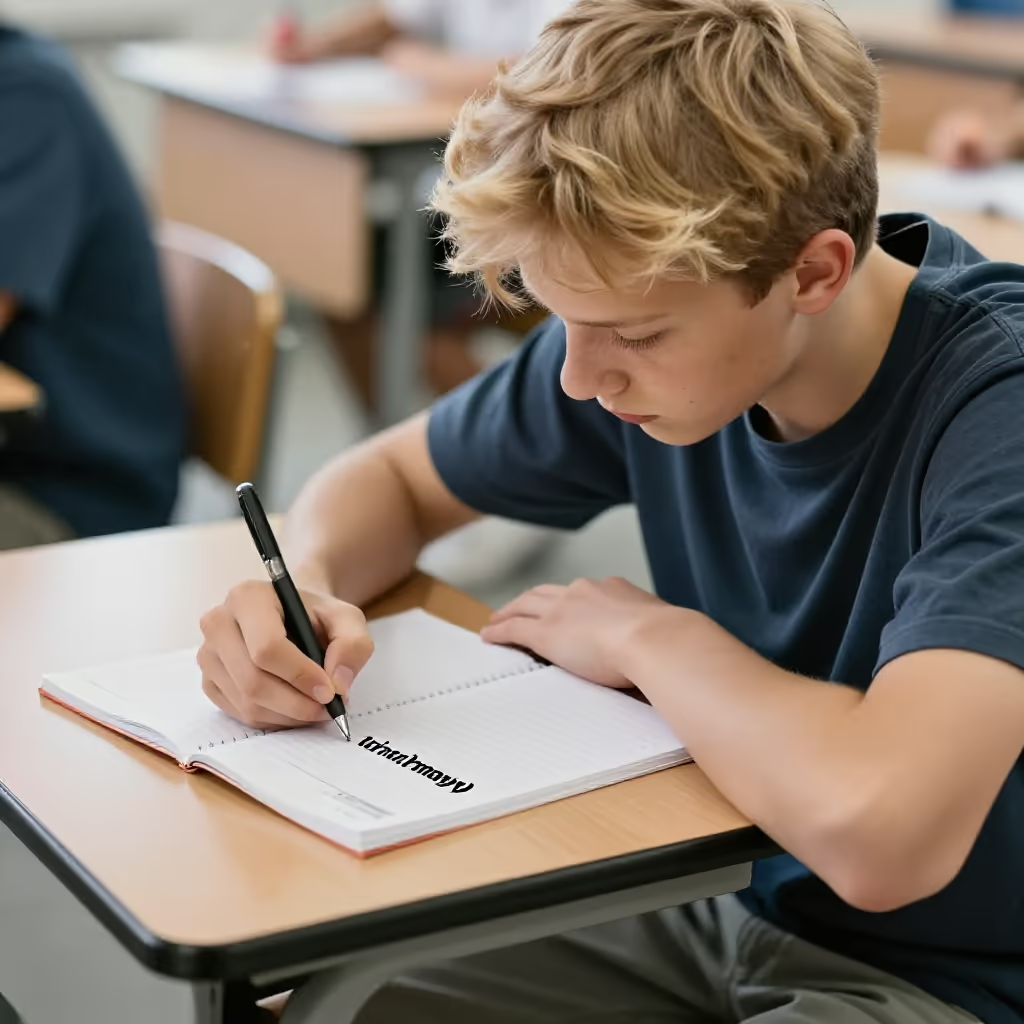
To hold on tightly to something or someone, often out of fear, insecurity, or desperation. It can be used both literally and figuratively.
example
Das kleine Kind klammerte sich ängstlich an das Bein seiner Mutter.
The small child clung anxiously to his mother's leg.

Usage tips
Word family
The verb 'klammern' (to cling / staple) is closely connected to the noun 'die Klammer' (clip / staple / bracket). The different meanings of the verb derive from the meanings of the noun: paper clip, staple, or even surgical staple.
EXAMPLE
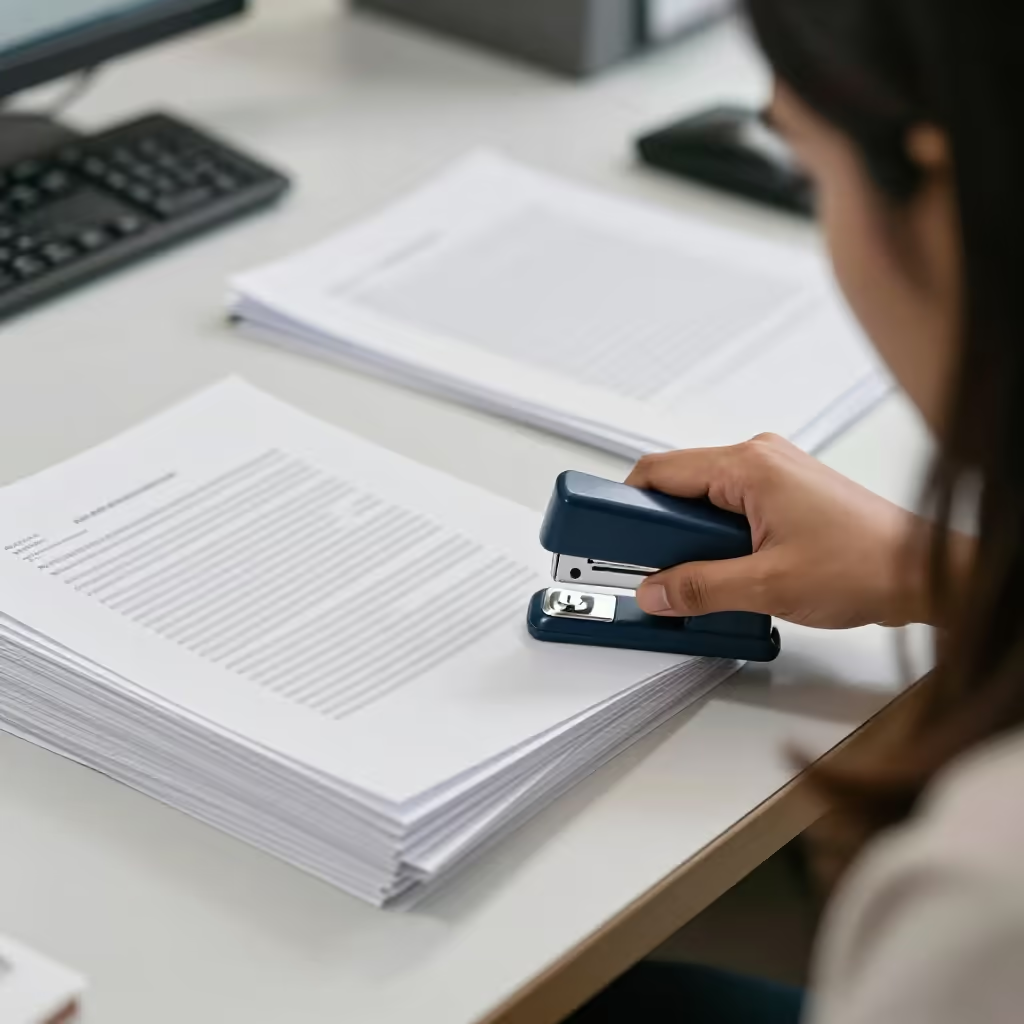
Ich brauche etwas, um diese Papiere zu klammern.
I need something to staple these papers.
Sentence structure with 'an'
In the meaning 'sich festhalten' (to hold on tightly), 'klammern' is reflexive and is always used with the preposition 'an' and the accusative: sich an jemanden/etwas klammern (to cling to someone/something).
EXAMPLE
Der Kletterer klammerte sich mit letzter Kraft an den Felsvorsprung.
The climber clung to the ledge with his last bit of strength.
Literal and figurative
The phrase 'sich an etwas klammern' (to cling to something) can be used literally (to physically hold on tightly) or figuratively (to hold on to an idea or hope).
EXAMPLE
Obwohl alles verloren schien, klammerte er sich an die Hoffnung auf ein Wunder.
Although everything seemed lost, he clung to the hope of a miracle.
Context clue
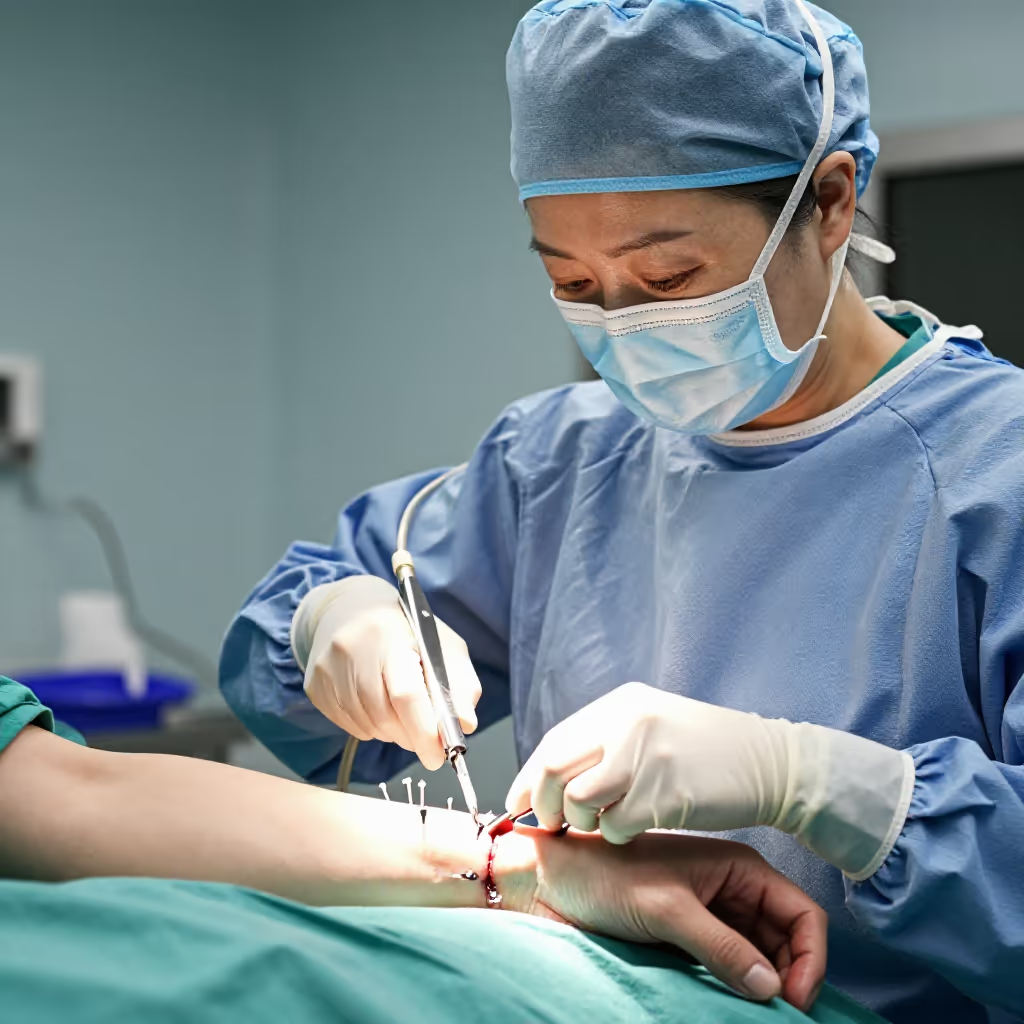
The meaning of 'klammern' (to cling / staple) becomes clear from context. If it is about paper and office work, it means fastening sheets together. In a medical context, it refers to closing a wound.
EXAMPLE
Klammerst du bitte die Berichte für das Meeting zusammen?
Could you please staple the reports for the meeting together?
Compare with
near_synonym · confusable
klammern vs nähen
to sew / stitch
'nähen' and 'klammern' can both mean in medicine that a wound is closed. The difference lies in the method. With 'nähen', a special needle and thread are used. With 'klammern', the wound is closed with surgical staples. The words can be confused because the result is similar: the wound is supposed to close again and heal. In everyday language, people often say 'die Wunde wurde genäht' (the wound was stitched) when thread was used. When metal staples are used, 'klammern' is more precise.
klammern
Weil der Schnitt sehr gerade war, klammerte der Arzt die Wunde statt sie zu nähen.
Because the cut was very straight, the doctor closed the wound with staples instead of stitching it.
nähen
Nach dem Sturz musste die Ärztin die Wunde am Arm nähen.
After the fall, the doctor had to stitch the wound on his arm.