

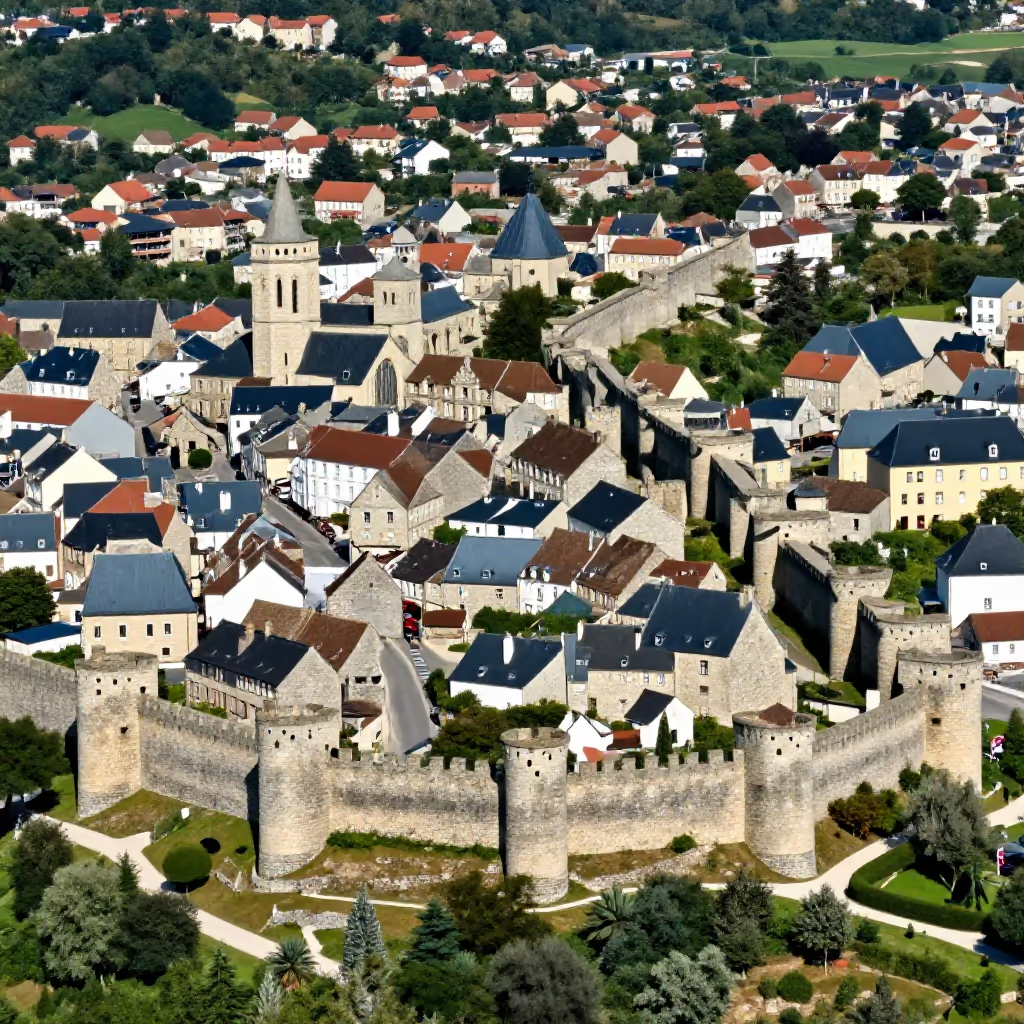
umschließen
to enclose
To completely surround or frame something or someone.
EXAMPLE
Eine hohe Hecke umschließt den gesamten Garten und schützt vor Blicken.
A tall hedge encloses the entire garden and protects it from view.
to enclose / embrace
Loading your saved state.
to enclose
To completely surround or frame something or someone.
Eine hohe Hecke umschließt den gesamten Garten und schützt vor Blicken.
A tall hedge encloses the entire garden and protects it from view.

to embrace
To hold someone or something tightly with one's arms or hands; to hug.
Die Mutter umschloss ihr weinendes Kind tröstend mit den Armen.
The mother embraced her crying child comfortingly with her arms.
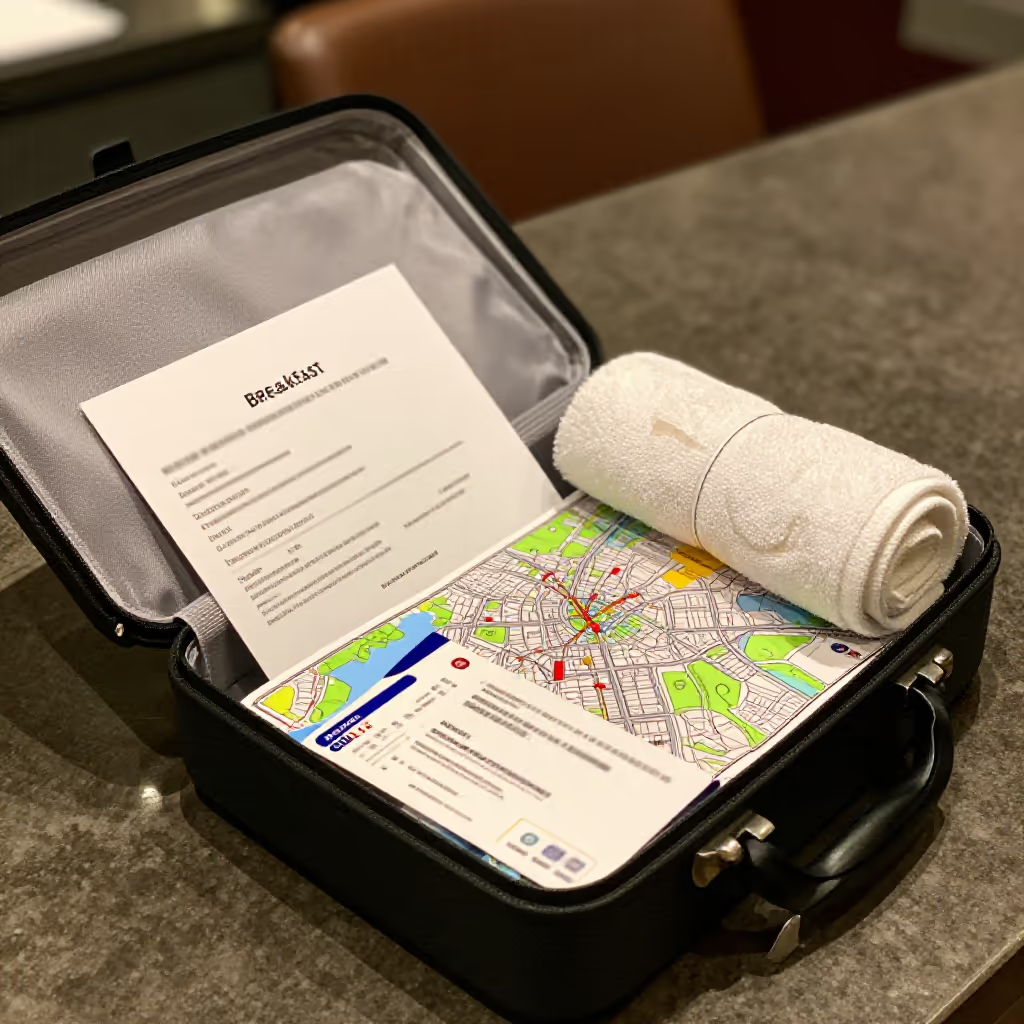
to include
To contain something as part of a whole or include it as well. This meaning is more formal and is similar to 'umfassen' (to encompass).
Das Reformpaket umschließt Maßnahmen zur Steuererleichterung und zur Förderung von Familien.
The reform package includes measures for tax relief and for supporting families.
'Umschließen' (to enclose / embrace) is an inseparable verb. The prefix 'um-' always remains attached to the verb, and the stress is on the stem: um-SCHLIE-ßen. The past participle is 'umschlossen'.
Die Stadtmauer umschloss früher das gesamte Zentrum.
The city wall used to enclose the entire center.
The meaning depends on the subject and object. Physical objects (wall, fence) enclose places. People embrace other people. Abstract terms (plan, law) include other concepts.
Ein dichter Wald umschließt das kleine Dorf.
A dense forest encloses the small village.
In the meaning 'beinhalten' (to contain) or 'umfassen' (to encompass), 'umschließen' (to include) belongs to formal written language. You often find it in official documents, contracts, or academic texts.
Der Begriff „Nachhaltigkeit“ umschließt sowohl ökologische als auch soziale Aspekte.
The term 'Nachhaltigkeit' (sustainability) includes both ecological and social aspects.
to contain / abstain
Both words can indicate which services or components belong to a whole. „Enthalten“ neutrally names the existing contents, while „umschließen“ is more formal in this meaning and emphasizes the full scope of an offer or package. Use „enthalten“ for a simple description of the contents and „umschließen“ when the complete range of services is being emphasized.

Das Paket umschließt den Versand und eine persönliche Beratung.
The package encompasses shipping and a personal consultation.
Das Paket enthält den Versand und eine persönliche Beratung.
The package includes shipping and a personal consultation.