


klassisch
classic
Typical, characteristic, or a textbook example of something.
EXAMPLE
Den Bus zu verpassen, weil man verschlafen hat, ist ein klassischer Montagmorgen.
Missing the bus because you overslept is a classic Monday morning.
classic / classical
Loading your saved state.
classic
Typical, characteristic, or a textbook example of something.
Den Bus zu verpassen, weil man verschlafen hat, ist ein klassischer Montagmorgen.
Missing the bus because you overslept is a classic Monday morning.
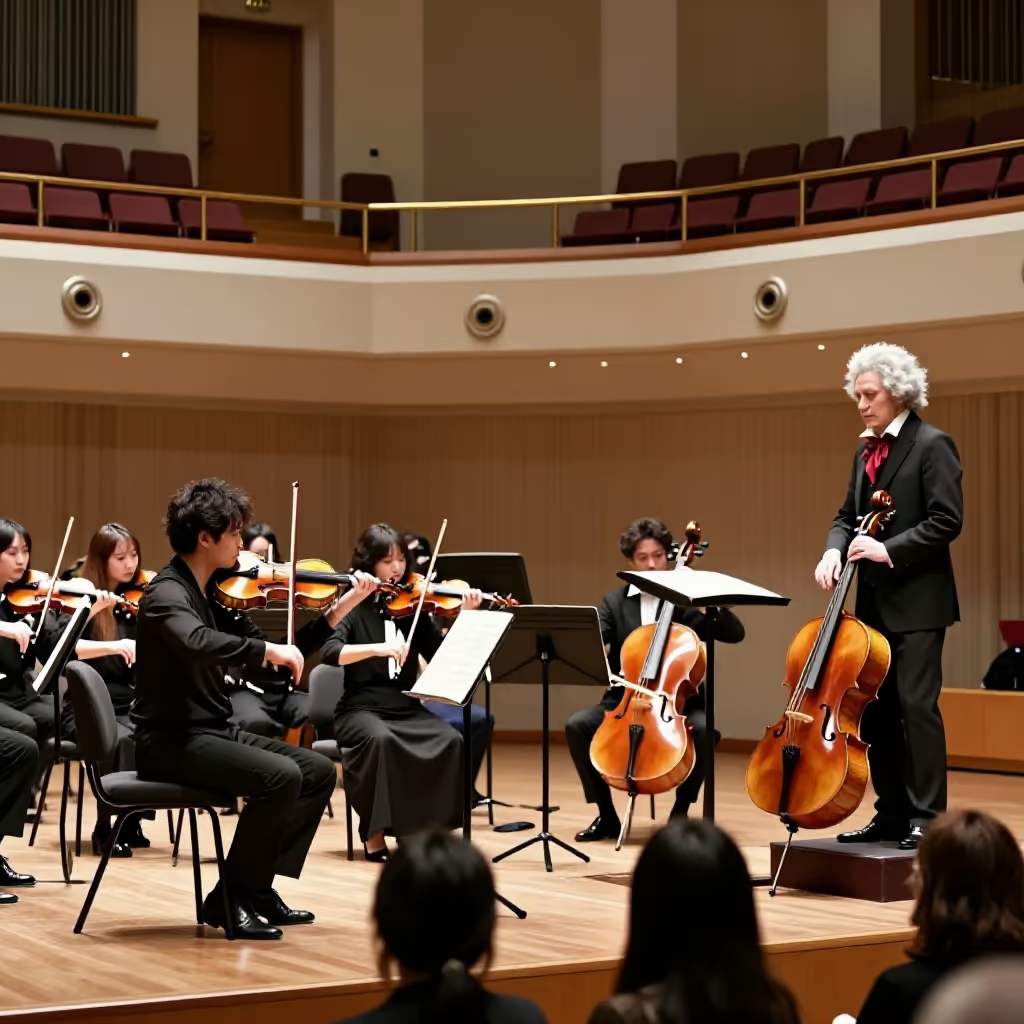
classical
Refers to an important period in art, music, or literature whose works are considered timeless and of great value.
Am liebsten höre ich klassische Musik von Komponisten wie Bach oder Beethoven.
I most like listening to classical music by composers such as Bach or Beethoven.

classic
Describes a style that is simple, traditional, and elegant, and does not depend on short-lived fashion trends.
Er trägt einen klassischen Anzug mit weißem Hemd und Krawatte.
He is wearing a classic suit with a white shirt and tie.
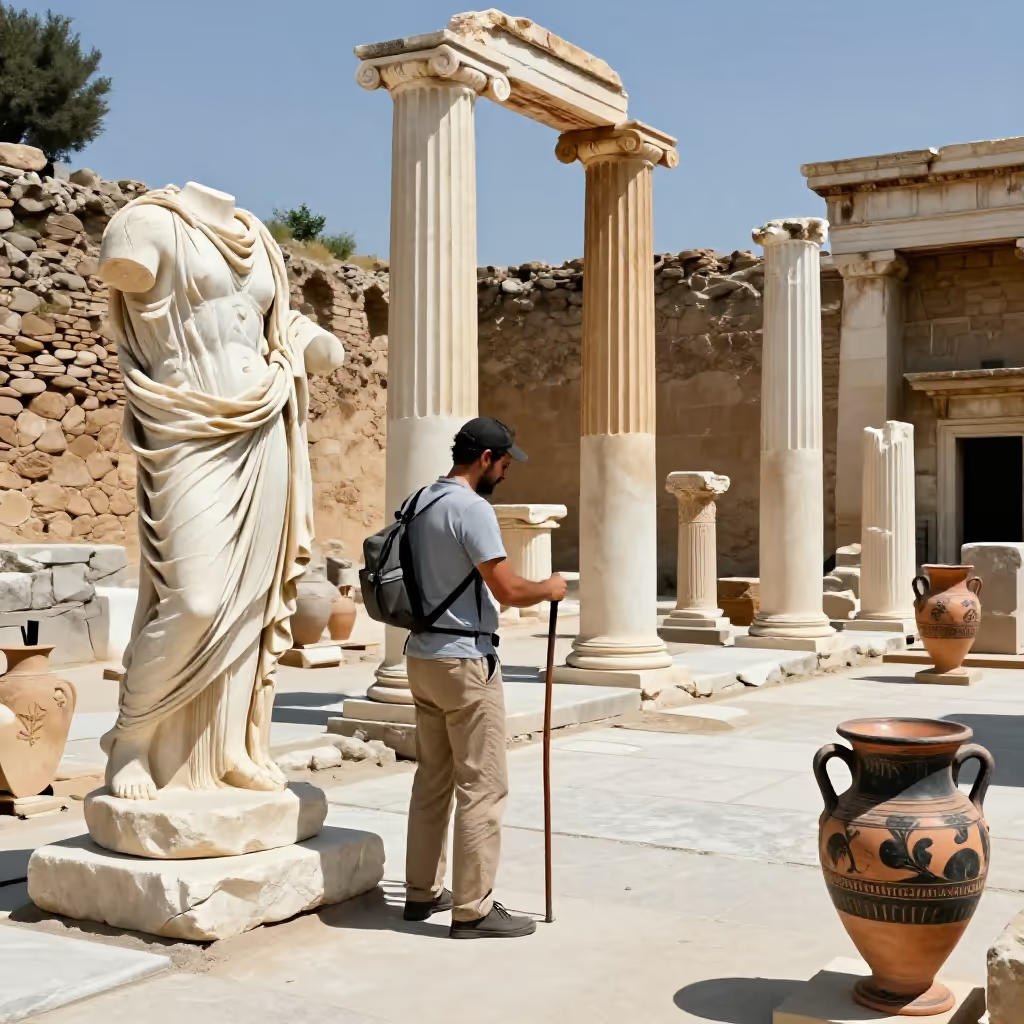
classical
Refers to the culture of ancient Greece and Rome.
Im Geschichtsunterricht lernen wir über das klassische Athen.
In history class, we are learning about classical Athens.
The adjective 'klassisch' (classic/classical) is closely related to the nouns 'die Klassik' (the classical period) and 'der Klassiker' (a classic example or a masterpiece).
Dieses Buch ist ein echter Klassiker der modernen Literatur.
This book is a true classic of modern literature.
You can recognize the exact meaning of 'klassisch' (classic/classical) from the noun it describes. 'Klassische Musik' (classical music) refers to a period, a 'klassischer Fehler' (classic mistake) is a typical mistake, and 'klassisches Griechenland' (classical Greece) means antiquity.
Ein klassischer Fehler ist, den Schlüssel im Auto zu vergessen.
A classic mistake is forgetting the key in the car.
In the meaning 'typical', 'klassisch' is often used in a slightly ironic or colloquial way to comment on a predictable, often negative situation.
Ich habe den Zug verpasst. Ein klassischer Start in die Woche!
I missed the train. A classic start to the week!
When talking about art, 'klassisch' (classical) is often combined with the art form itself. Typical collocations are 'klassische Musik' (classical music), 'klassische Literatur' (classical literature), or 'klassisches Ballett' (classical ballet).
Sonntagmorgens hört mein Vater gerne klassische Musik.
On Sunday mornings, my father likes to listen to classical music.
In the context of design, fashion, or architecture, 'klassisch' (classic) describes a timeless, elegant, and understated style that does not go out of fashion.
Für das Büro trägt er am liebsten klassische, dunkle Anzüge.
For the office, he prefers to wear classic, dark suits.
typical
Klassisch and typisch can both describe an expected or characteristic example. Typisch mainly emphasizes the normal features of something, while klassisch refers more to a well-known model example that makes something especially easy to recognize. Use typisch for characteristics and klassisch for a familiar example type.

Die verspätete Antwort ist ein klassischer Fehler bei diesem Formular.
The late reply is a classic mistake on this form.
Die verspätete Antwort ist typisch für diesen schlecht organisierten Ablauf.
The late reply is typical of this poorly organized process.