

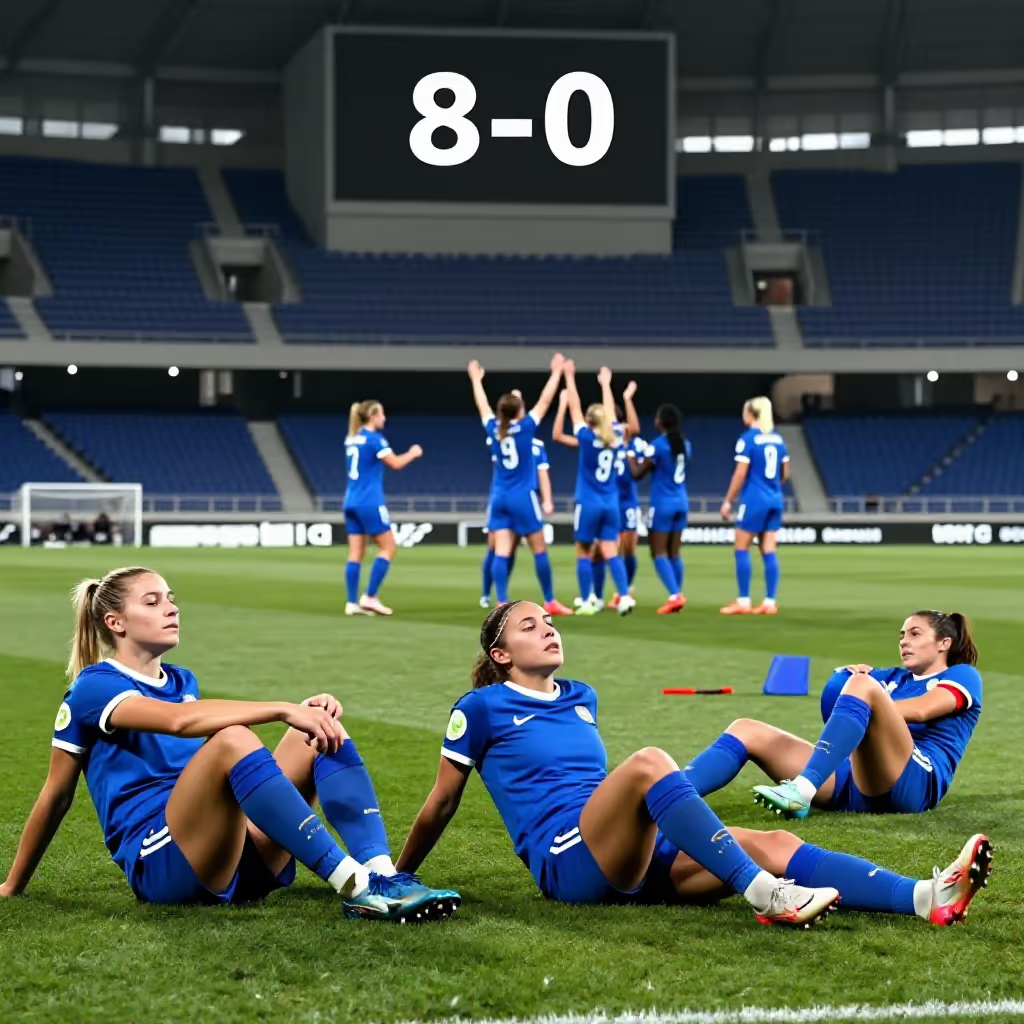
die Klatsche
thrashing
Colloquial for a clear and heavy defeat, especially in sports.
EXAMPLE
Die Mannschaft hat im Finale eine richtige Klatsche bekommen und 0:5 verloren.
The team took a real thrashing in the final and lost 5-0.
thrashing / slap / swatter
Loading your saved state.
thrashing
Colloquial for a clear and heavy defeat, especially in sports.
Die Mannschaft hat im Finale eine richtige Klatsche bekommen und 0:5 verloren.
The team took a real thrashing in the final and lost 5-0.

slap
Colloquial for a blow with the flat of the hand, usually to the face; a slap in the face.
Er hat ihm für die freche Bemerkung eine Klatsche gegeben.
He gave him a slap for the cheeky remark.

to be nuts
A colloquial idiom meaning that someone is crazy, eccentric, or not quite right in the head.
Wer bei diesem Sturm nach draußen geht, hat doch eine Klatsche!
Anyone who goes outside in this storm must be nuts!
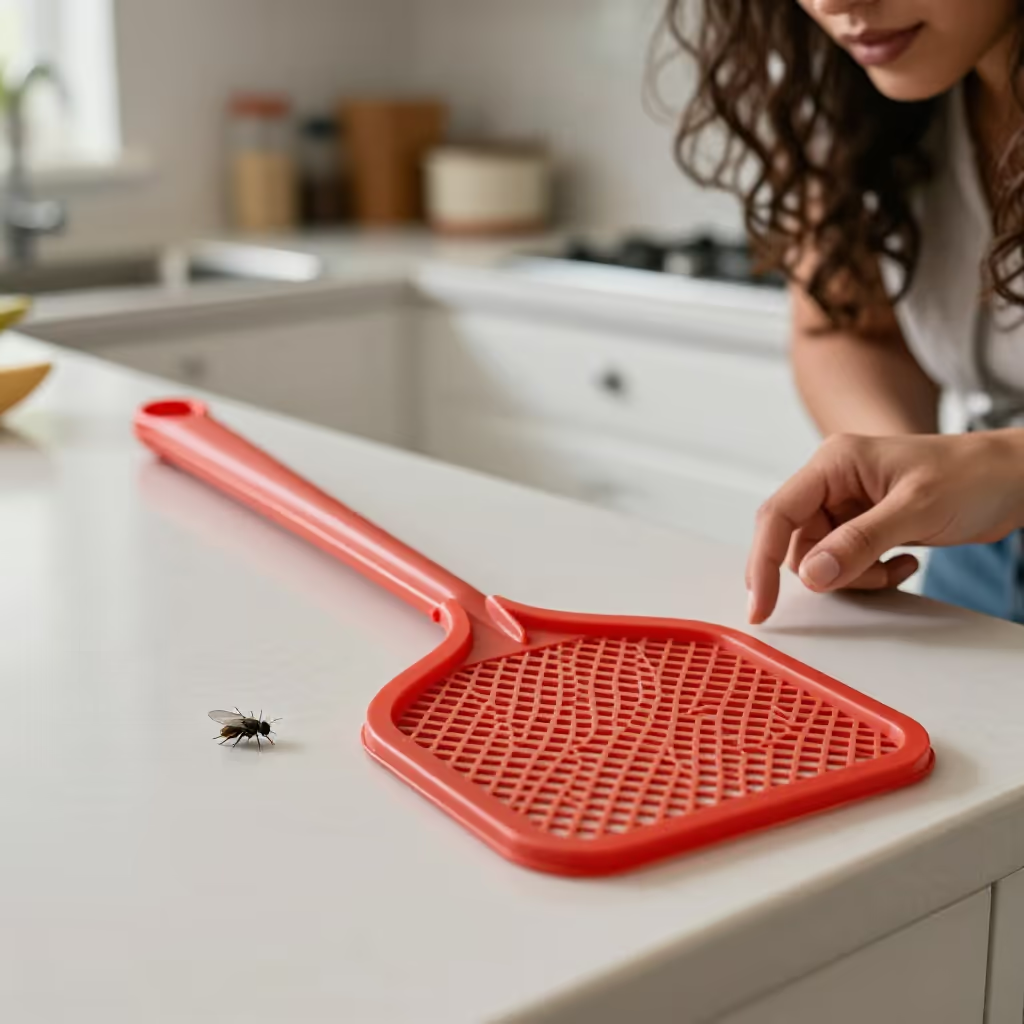
swatter
An object with a handle and a flat, often mesh-like surface, used to kill flies and other insects. Also called a fly swatter.
Ich hole mal die Klatsche, hier ist eine Mücke im Zimmer.
I'll go get the swatter; there's a mosquito in the room.
All meanings of 'die Klatsche' derive from the verb 'klatschen' (to clap / to smack). This verb imitates a sound, like clapping hands or a blow. This onomatopoeic root connects the ideas of a hit, a defeat, and the tool used for hitting.
Das Geräusch des Aufpralls war ein lautes Klatschen.
The sound of the impact was a loud smack.
Almost all meanings of this word are strongly colloquial. You should avoid it in formal conversations, emails, or texts.
In der Kabine gab es nach der Klatsche eine laute Ansage vom Trainer.
In the locker room, after the thrashing, the coach gave the team a loud talking-to.
The meaning becomes clear from the context: In sports, it is about a defeat (m01). In an argument, it is about a slap (m02). With the verb 'haben' (to have), it means 'to be crazy' (m03). In the context of insects, it refers to the fly swatter (m04).
Nach dem 0:7 war die Klatsche für den Verein perfekt.
After the 7-0 loss, the thrashing was complete for the club.
In a sports context, a defeat is often described with the verbs 'bekommen' (to get) or 'kassieren' (to suffer / to take). You can also give someone 'eine Klatsche verpassen' (to hand someone a thrashing).
Unsere Mannschaft hat am Sonntag eine ordentliche Klatsche kassiert.
Our team took a proper thrashing on Sunday.
The meaning 'to be crazy' is used exclusively in the fixed expression 'eine Klatsche haben' (to be nuts). The structure is always: person + conjugated verb 'haben' + 'eine Klatsche'.
Du hast wohl eine Klatsche, bei dem Wetter ohne Jacke rauszugehen!
You must be nuts to go out without a jacket in this weather!
When an object is being referred to, 'die Klatsche' is usually a colloquial short form of 'die Fliegenklatsche' (the fly swatter).
Gib mir mal die Klatsche, da sitzt eine Spinne an der Wand.
Pass me the swatter; there's a spider on the wall.
defeat
Niederlage is the neutral term for a game that was lost. Klatsche is colloquial and refers to a particularly clear and heavy defeat. Niederlage fits a narrow or neutrally described result; a heavy defeat in sports can be called a Klatsche.
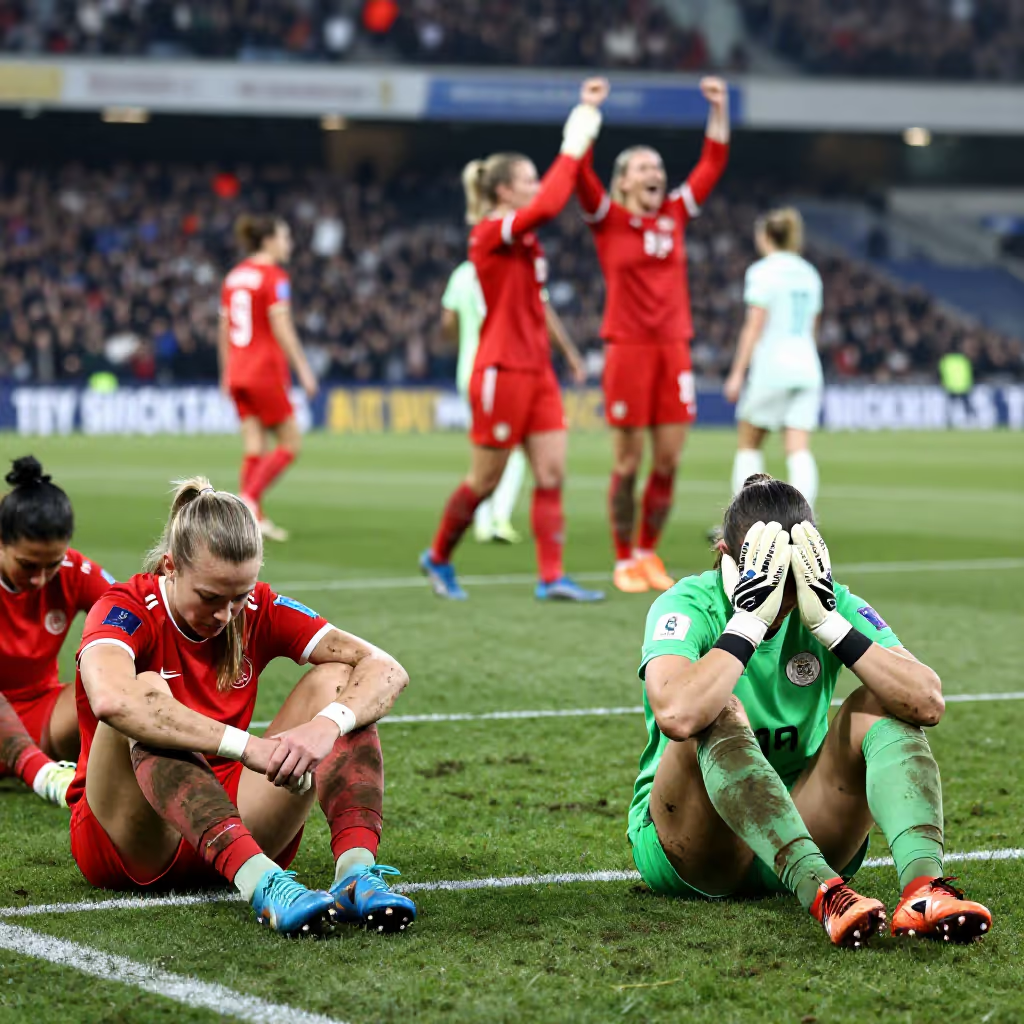
Das Team kassierte mit dem deutlichen 0:6 eine Klatsche.
The team suffered a thrashing, losing 6–0.
Das Team kassierte mit dem knappen 1:2 eine Niederlage.
The team suffered a narrow 2–1 defeat.