

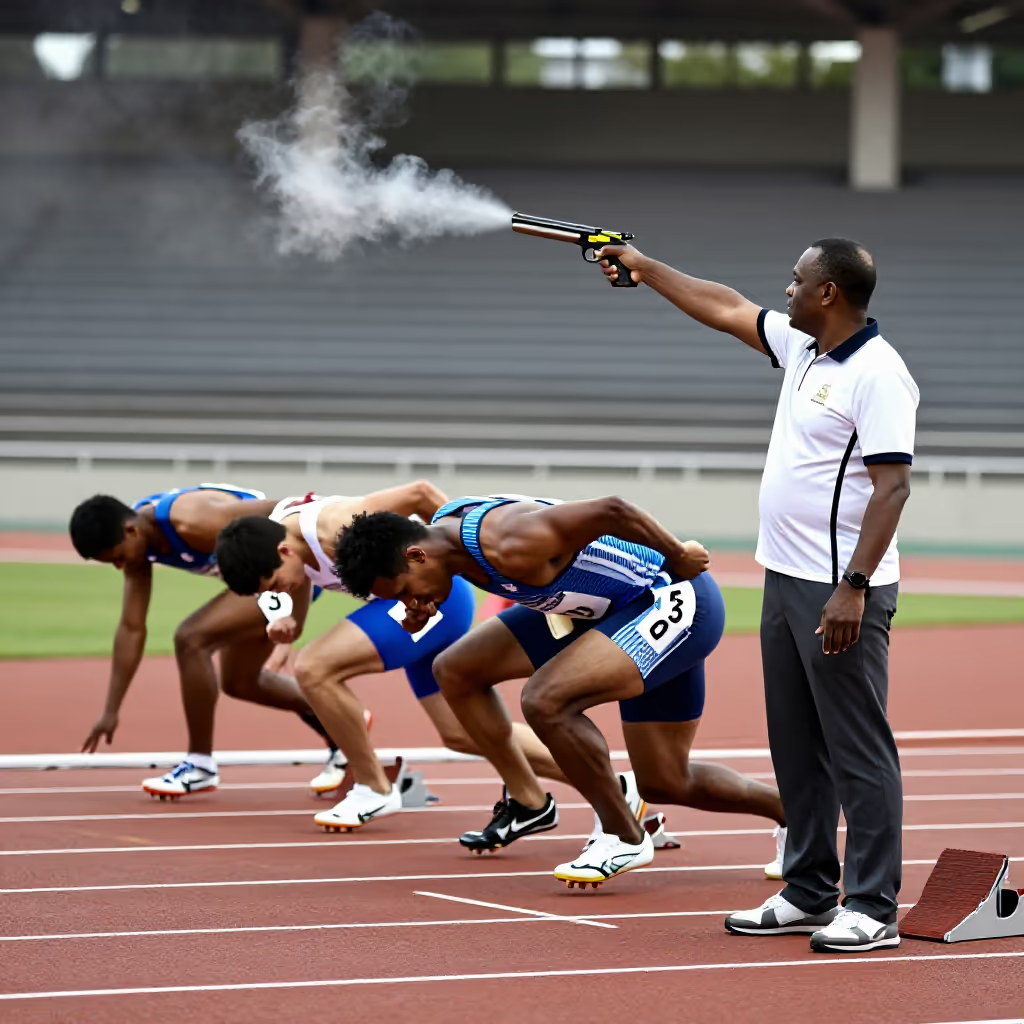
knallen
to bang
To cause a loud, short, explosive sound, as with a shot, a whip, or a door falling shut.
EXAMPLE
Der Sektkorken knallte laut an die Decke.
The champagne cork banged loudly against the ceiling.
to bang / slam
Loading your saved state.
to bang
To cause a loud, short, explosive sound, as with a shot, a whip, or a door falling shut.
Der Sektkorken knallte laut an die Decke.
The champagne cork banged loudly against the ceiling.
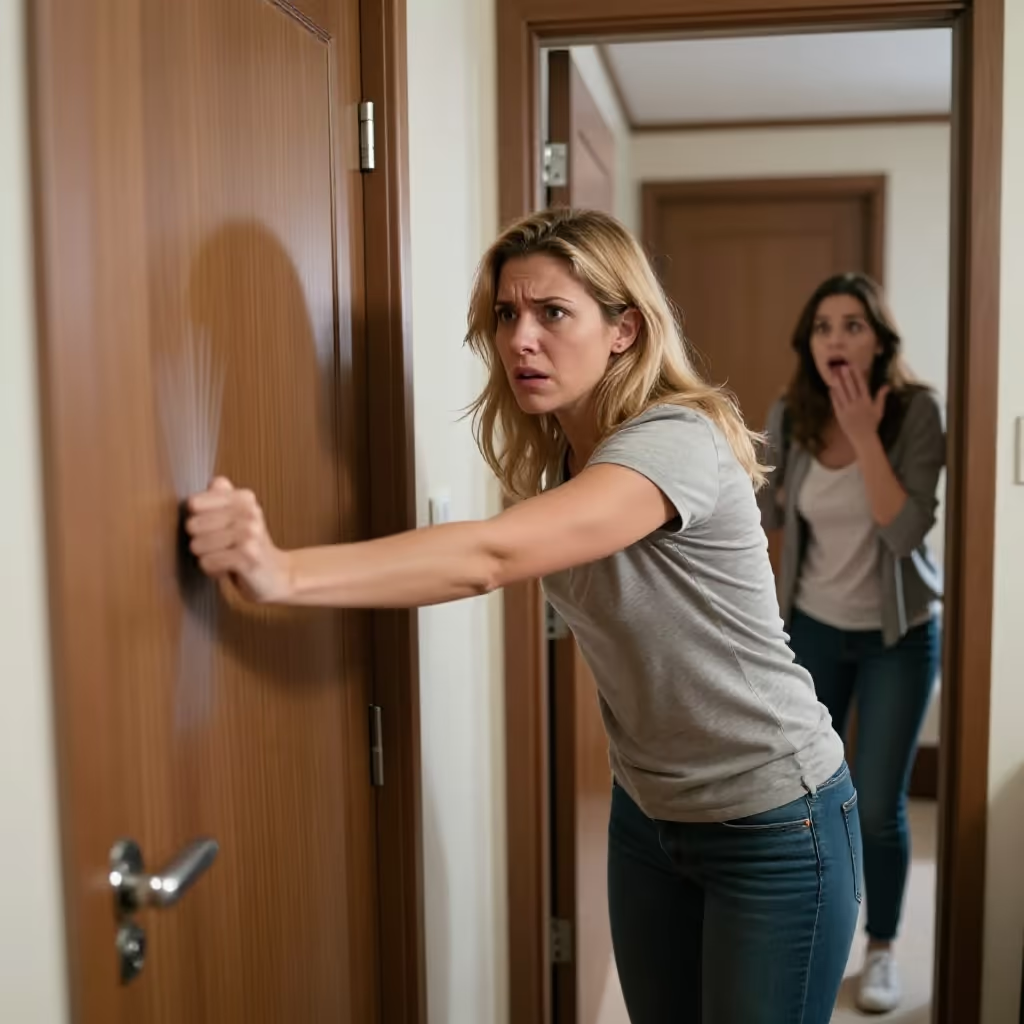
to slam
To close or throw something forcefully and noisily.
Er war so wütend, dass er die Tür hinter sich knallte.
He was so angry that he slammed the door behind him.

to beat down
To shine very intensely and hotly (referring to the sun).
Die Sonne knallte den ganzen Nachmittag vom Himmel.
The sun beat down from the sky all afternoon.

to bang
A colloquial, often vulgar expression for having sexual intercourse.
Er prahlte in der Kneipe damit, wen er am Wochenende alles geknallt hätte.
In the pub, he bragged about all the people he had banged over the weekend.
The verb can be used transitively (with an accusative object) or intransitively (without an object). Intransitively, it means that something makes a noise by itself. Transitively, it means that someone deliberately moves or throws something loudly.
Draußen knallte ein Feuerwerkskörper.
Outside, a firecracker banged.
The word 'knallen' (to bang) is onomatopoeic. That means it imitates the sound it describes — a short, loud 'Knall' (bang).
Als der Ballon platzte, knallte es sehr laut.
When the balloon burst, it banged very loudly.
When something is thrown or closed, there is often a preposition or adverb that indicates the direction. Typical phrases are 'die Tür zuknallen' (to slam the door shut) or 'etwas auf den Tisch knallen' (to slam something onto the table).
Bitte knall die Tür nicht so zu!
Please don't slam the door like that!
In the meaning 'to shine intensely', 'knallen' (to beat down) is used almost exclusively with the subject 'die Sonne' (the sun). It is a very figurative and colloquial description of great heat.
Wir sollten in den Schatten gehen, die Sonne knallt richtig.
We should go into the shade; the sun is really beating down.
In the sexual meaning, 'knallen' (to bang) is very colloquial and is often perceived as vulgar or derogatory. You should use this word in this context with great caution.
In dem Film wird eine sehr direkte und vulgäre Sprache verwendet.
The film uses very direct and vulgar language.
to fuck
Both verbs can refer to having sexual intercourse. Ficken is clearly vulgar and sounds very direct. Knallen is colloquial and is also often perceived as vulgar in this meaning, but it sounds more like crude colloquial speech.

In seiner derben Prahlerei sagte er, er wolle sie knallen.
In his crude boasting, he said he wanted to bang her.
In seiner sehr vulgären Prahlerei sagte er, er wolle sie ficken.
In his very vulgar boasting, he said he wanted to fuck her.