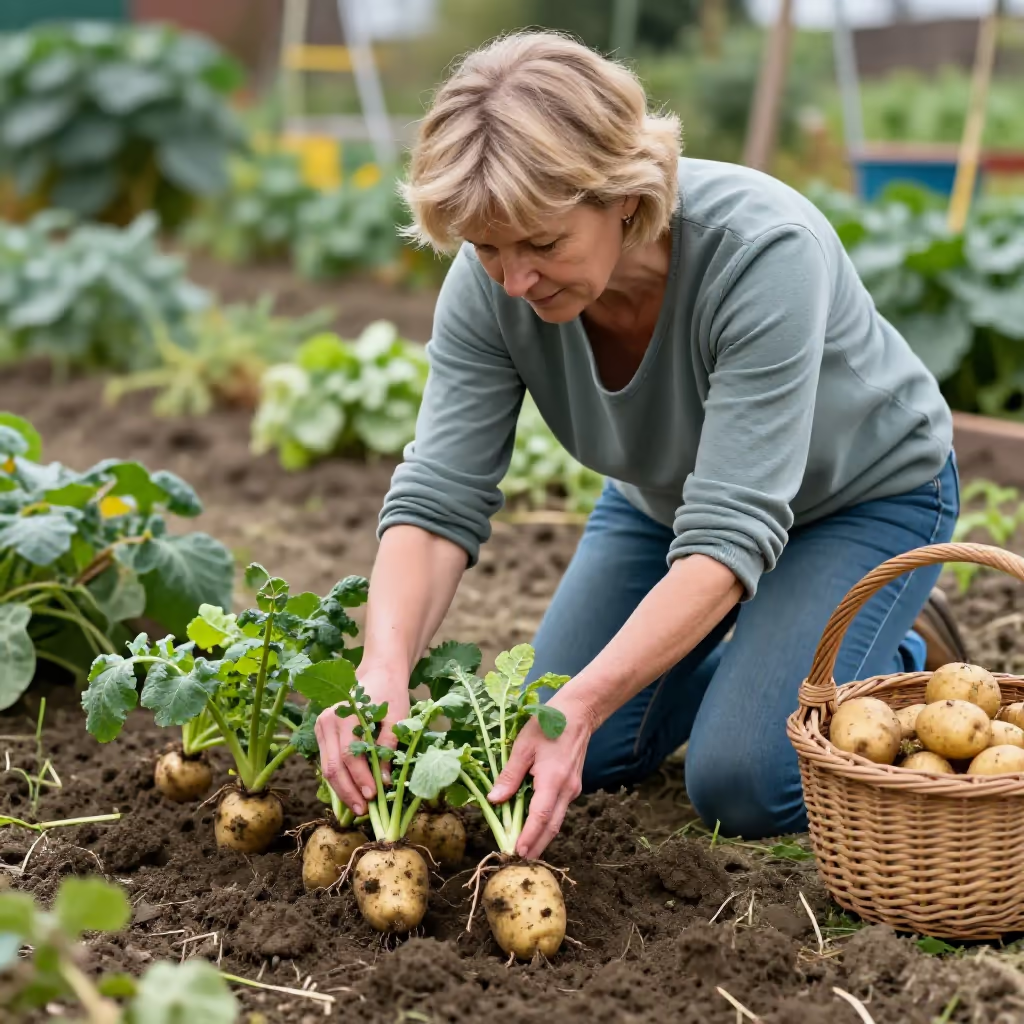
A thickened, usually underground part of a plant that serves as a storage organ. Potatoes, celery, and dahlias form tubers.
example
Für das Gericht brauchen wir ein paar Kartoffeln und eine Sellerieknolle.
For the dish, we need a few potatoes and a celery root.

Usage tips
Context clues
You can easily recognize the meaning of 'Knolle' from the context. In a supermarket or garden, it refers to the plant. When the topic is cars and parking, it means a ticket. When describing a face, it refers to the nose.
EXAMPLE
Für den Salat reibe ich eine Knolle Sellerie.
For the salad, I grate a celery root.
Register: colloquial language
While the botanical meaning is neutral, the meanings for 'Strafzettel' (ticket/fine) and 'Nase' (nose) are clearly colloquial. They are used in informal conversation, but not in formal texts.
EXAMPLE
Pass auf, wo du parkst, sonst kriegst du eine Knolle.
Watch where you park, or you'll get a ticket.
Typical verbs
When 'Knolle' means a ticket, typical verbs are 'bekommen' (to get), 'kriegen' (to get), or 'kassieren' (to get/receive). A person from the public order office can 'Knollen verteilen' (hand out tickets).
EXAMPLE
Gestern habe ich eine Knolle über 30 Euro kassiert.
Yesterday I got a 30-euro ticket.
Compare with
near_synonym
Knolle vs Nase
nose
'die Nase' and 'die Knolle' can both refer to the organ on the face. 'die Nase' is the normal, neutral word and fits in almost all situations. 'die Knolle' colloquially means a large, thick nose and often sounds mocking or unfriendly. For this reason, you should not use 'Knolle' in polite or neutral conversations about a person. If you are simply talking about the body part, 'Nase' is always the safe choice.
Knolle
Tom ärgert sich, weil jemand seine Nase eine Knolle nennt.
Tom is annoyed because someone calls his nose a big lump.
Nase
Die Ärztin untersucht seine Nase, weil er schlecht Luft bekommt.
The doctor examines his nose because he is having trouble breathing.