

knistern
to crackle
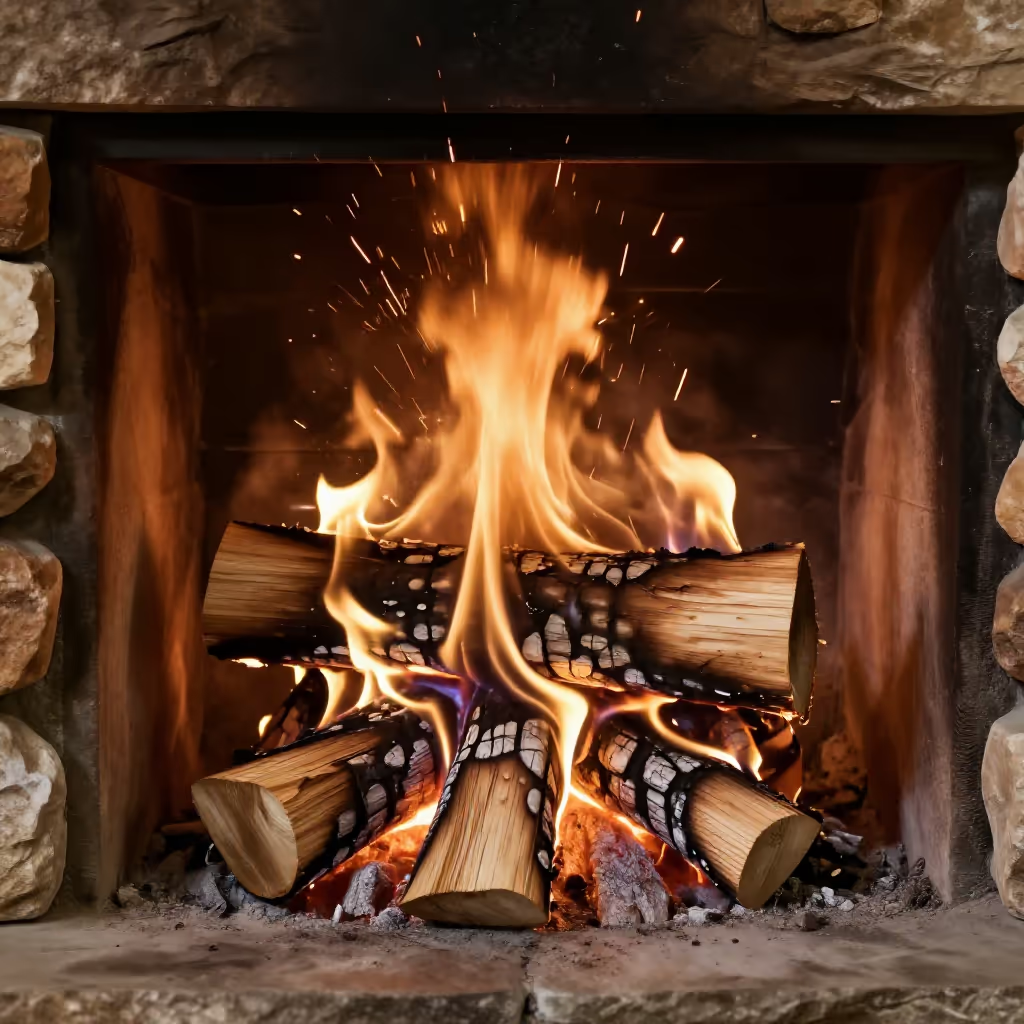
To make a soft, dry, cracking or rustling sound. It is often associated with fire, dry leaves, or paper.
EXAMPLE
Das Kaminfeuer knisterte gemütlich vor sich hin.
The fire in the fireplace crackled cozily away.
to crackle
Loading your saved state.
to crackle
To make a soft, dry, cracking or rustling sound. It is often associated with fire, dry leaves, or paper.
Das Kaminfeuer knisterte gemütlich vor sich hin.
The fire in the fireplace crackled cozily away.

to crackle
For a noticeable but unspoken tension or excitement to be present in a situation. This is often used for the atmosphere between two people who are attracted to each other or are on the verge of a conflict.
Als die beiden ehemaligen Konkurrenten den Raum betraten, knisterte es förmlich vor Anspannung.
When the two former rivals entered the room, the air practically crackled with tension.
'Knistern' (to crackle) is an onomatopoeic word. It imitates the soft, dry sound it describes, for example from fire or dry leaves.
Das trockene Laub knisterte unter seinen Schritten.
The dry leaves crackled under his steps.
The sound 'knistern' (crackling) is typically produced by a fire in a fireplace, dry leaves, a paper bag, or even electrical tension.
Als sie die Bonbontüte öffnete, knisterte es leise.
When she opened the candy bag, it crackled softly.
In a figurative sense, 'knistern' (to crackle) describes a noticeable tension or excitement in the air, often between people. One signal for this is the preposition 'zwischen' (between).
Man konnte spüren, wie es zwischen den beiden Hauptdarstellern knisterte.
You could feel how the air crackled between the two lead actors.
In the figurative meaning, the impersonal pronoun 'es' is often used as the subject to express a general, intangible tension.
Vor der wichtigen Ankündigung knisterte es im ganzen Raum.
Before the important announcement, the whole room crackled with tension.
to crack
Both verbs can describe the sounds of burning wood. „Knacken“ refers more to individual short, clearly audible sounds, while „knistern“ highlights a soft, dry sound continuing over a period of time. „Knacken“ fits individual loud sounds, while „knistern“ fits the ongoing sound of a fire.

Im Kamin knisterte das trockene Holz leise.
The dry wood crackled softly in the fireplace.
Im Kamin knackte ein dicker Ast laut.
A thick branch cracked loudly in the fireplace.