

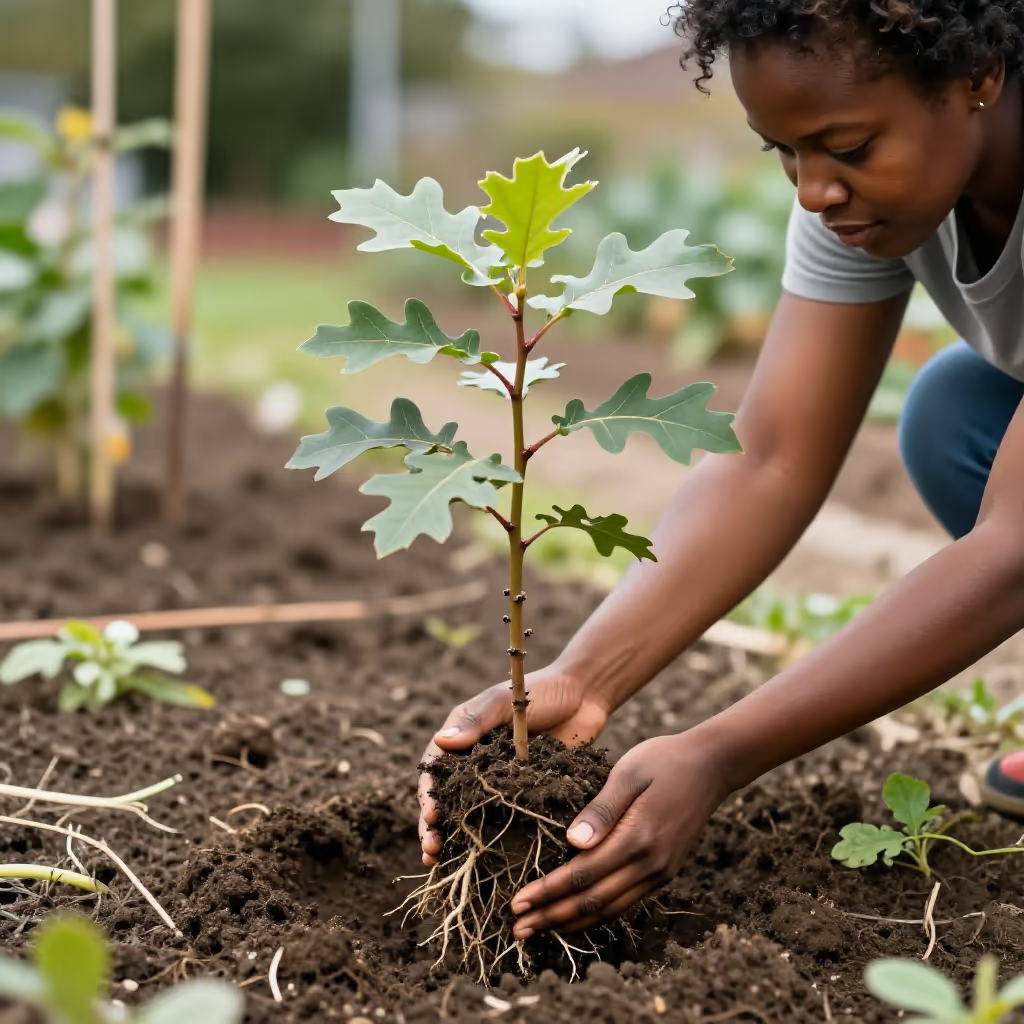
die Wurzel
root
The underground part of a plant that anchors it in the soil and absorbs water and nutrients.
EXAMPLE
Die Wurzeln dieses alten Baumes reichen sehr tief in die Erde.
The roots of this old tree reach very deep into the ground.
root
Loading your saved state.
root
The underground part of a plant that anchors it in the soil and absorbs water and nutrients.
Die Wurzeln dieses alten Baumes reichen sehr tief in die Erde.
The roots of this old tree reach very deep into the ground.

root
In a figurative sense, the origin, source, or deepest cause of something.
Um das Problem zu lösen, müssen wir es an der Wurzel packen.
To solve the problem, we have to tackle it at the root.

root
In mathematics, a number that, when multiplied by itself or multiple times, results in another given number.
Die Quadratwurzel aus 81 ist 9.
The square root of 81 is 9.

root
In anatomy, the lower part of an organ, such as a tooth or hair, that is anchored in the body.
Bei der Behandlung musste der Zahnarzt bis zur Wurzel bohren.
During the treatment, the dentist had to drill down to the root.
root
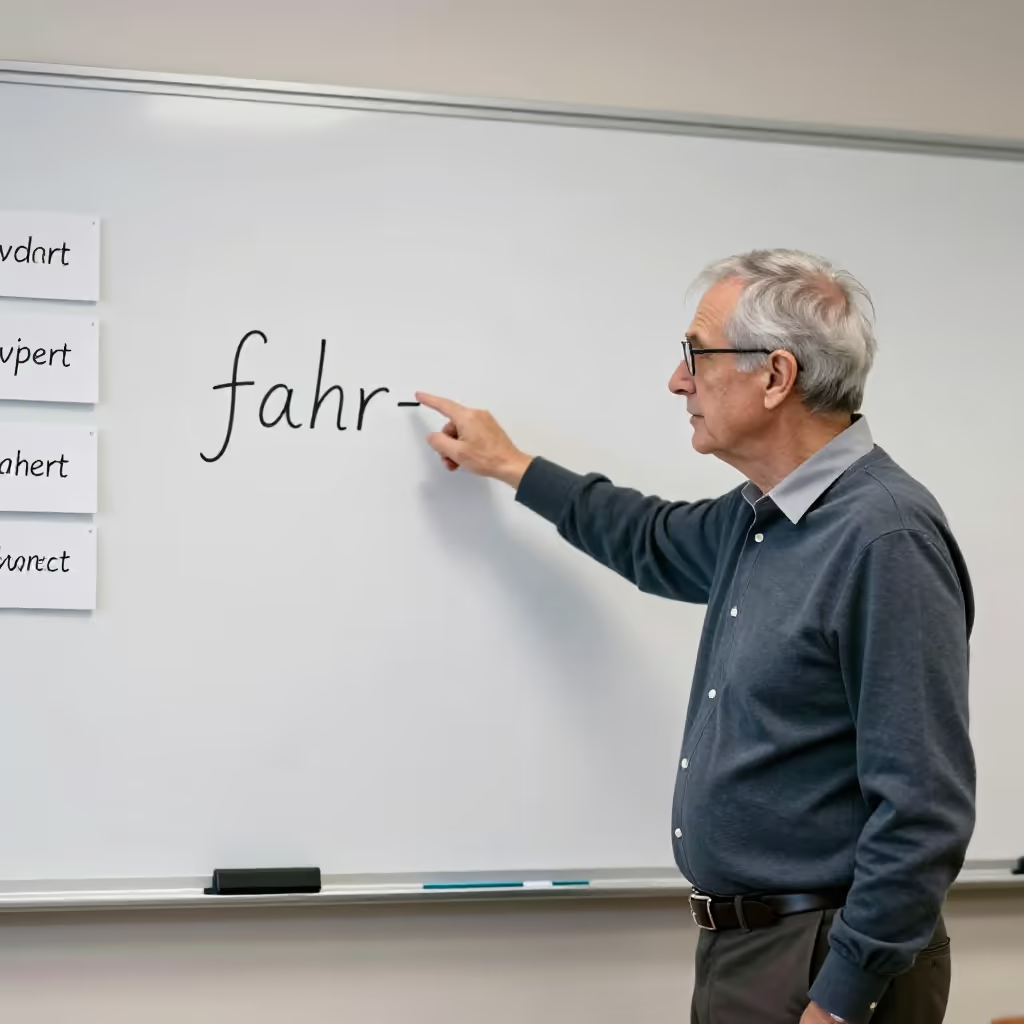
In linguistics, the unchanging core of a word that carries the basic meaning.
Die Wörter 'gehen', 'Gang' und 'vergehen' haben dieselbe germanische Wurzel.
The words 'gehen' (to go), 'Gang' (walk / passage), and 'vergehen' (to pass) have the same Germanic root.
You can easily recognize the meaning of 'Wurzel' (root) from the context: words like 'Baum' (tree) or 'Erde' (soil/earth) point to the plant, 'Zahl' (number) to mathematics, and 'Problem' (problem) or 'Ursache' (cause) to the figurative sense.
Die Wurzel des Problems liegt oft in der Vergangenheit.
The root of the problem often lies in the past.
The adjective 'verwurzelt' (rooted) is derived from 'Wurzel' (root) and means that something is firmly anchored. It is often used figuratively for culture, traditions, or people.
Obwohl er lange im Ausland lebte, ist er tief in seiner Heimat verwurzelt.
Although he lived abroad for a long time, he is deeply rooted in his homeland.
The idiom 'Wurzeln schlagen' (to put down roots) means to settle in a new place and become at home there. It can be used both for plants and for people.
Nach einigen Jahren in der neuen Stadt hat sie dort endlich Wurzeln geschlagen.
After a few years in the new city, she finally put down roots there.
The idiom 'etwas an der Wurzel packen' (to tackle something at the root) means to fight the actual cause of a problem and not just the symptoms.
Anstatt nur die Folgen zu behandeln, müssen wir das Problem an der Wurzel packen.
Instead of only treating the consequences, we have to tackle the problem at the root.
In a mathematical context, 'Wurzel' (root) is almost always combined with the verb 'ziehen' (to draw/pull). You 'zieht die Wurzel aus' (take/find the root of) a number.
Im Kopf die dritte Wurzel aus 125 zu ziehen, ist nicht einfach.
Finding the cube root of 125 in your head is not easy.
solution
Eine Lösung is a number that satisfies the given equation. Eine Wurzel is a number determined by taking a root of a given number. Therefore, x² = 9 has two solutions, whereas die Wurzel aus 9 usually means 3.

Die Wurzel aus 9 ist 3.
The square root of 9 is 3.
Die Gleichung x² = 9 hat die Lösungen 3 und −3.
The equation x² = 9 has the solutions 3 and −3.