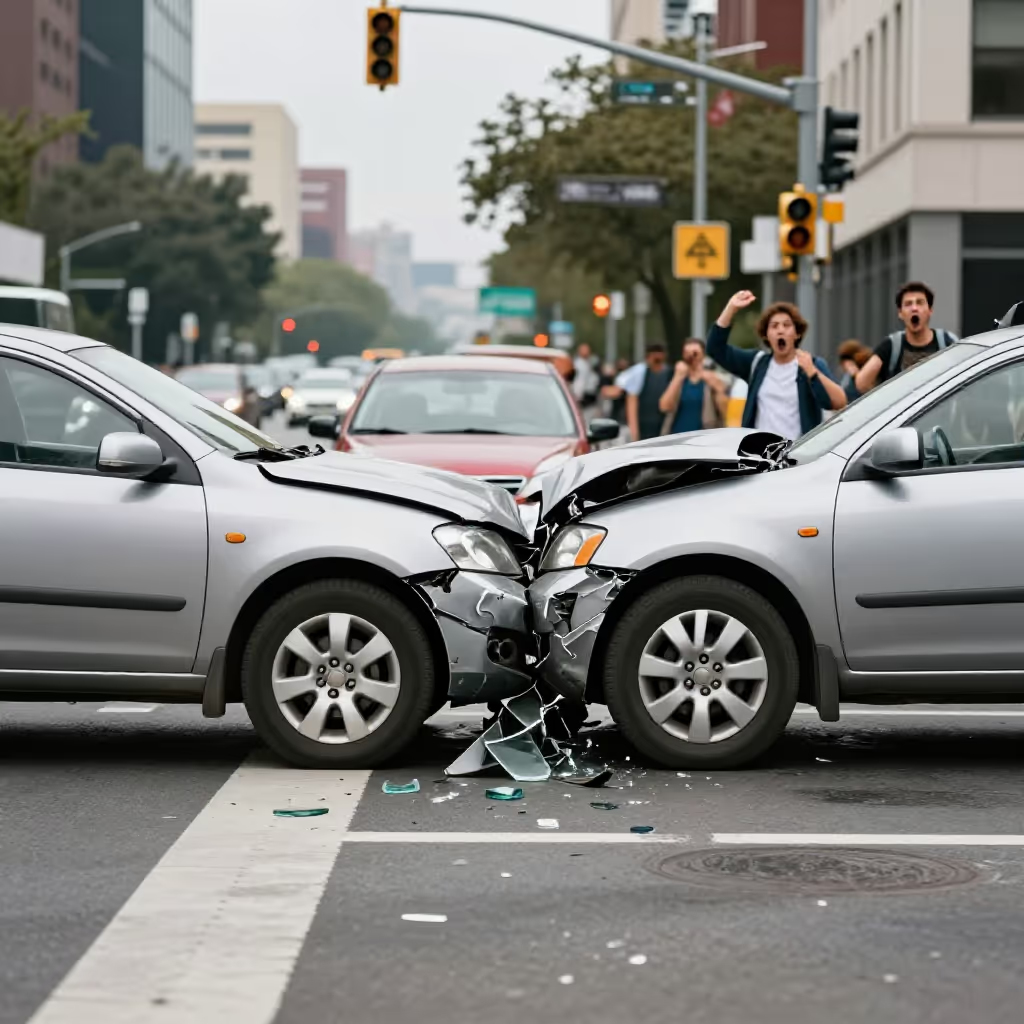
To crash into each other or collide with force. This usually refers to vehicles, people, or other physical objects in motion.
example
Auf der Kreuzung sind zwei Autos miteinander kollidiert.
Two cars collided with each other at the intersection.

Usage tips
Use with "mit"
'Kollidieren' (to collide) is almost always used with the preposition 'mit' (with). Either two subjects collide ('A und B kollidieren' — A and B collide) or one subject collides with an object ('A kollidiert mit B' — A collides with B).
EXAMPLE
Der Radfahrer ist mit einem Auto kollidiert.
The cyclist collided with a car.
Perfect tense with "sein"
Since 'kollidieren' (to collide) describes a sudden change of state, the perfect tense is always formed with the auxiliary verb 'sein' (to be), not with 'haben' (to have).
EXAMPLE
Das Schiff ist mit einem Eisberg kollidiert.
The ship collided with an iceberg.
Context clue
You can tell whether a physical or figurative meaning is meant from the subject. If it involves vehicles or people, it is about a collision. If it involves abstract things like appointments or interests, it is about a conflict.
EXAMPLE
Der Zug ist mit einem umgestürzten Baum kollidiert.
The train collided with a fallen tree.
Typical collocations
In its figurative meaning, 'kollidieren' (to conflict) is often used with abstract nouns. Typical examples are: 'Termine kollidieren' (appointments conflict), 'Interessen kollidieren' (interests conflict), 'Pflichten kollidieren' (obligations conflict), or 'Meinungen kollidieren' (opinions conflict).
EXAMPLE
Meine beruflichen Pflichten kollidieren manchmal mit meinem Privatleben.
My professional obligations sometimes conflict with my private life.
Compare with
near_synonym
kollidieren vs krachen
to crash / crack
'krachen' and 'kollidieren' can both mean that something crashes into something else with force. However, 'krachen' sounds more colloquial and often emphasizes the sudden, loud impact or an accident. 'kollidieren' is more precise and somewhat more factual; it is often used for vehicles or other things that are in motion. If you are describing the accident itself in a vivid way, 'krachen' fits well. If you are stating factually that two vehicles or objects collide, 'kollidieren' sounds more natural.
kollidieren
Am Montag kollidierten zwei Fahrräder an der Kreuzung.
On Monday, two bicycles collided at the intersection.
krachen
Auf der nassen Straße krachte der Wagen gegen einen Baum.