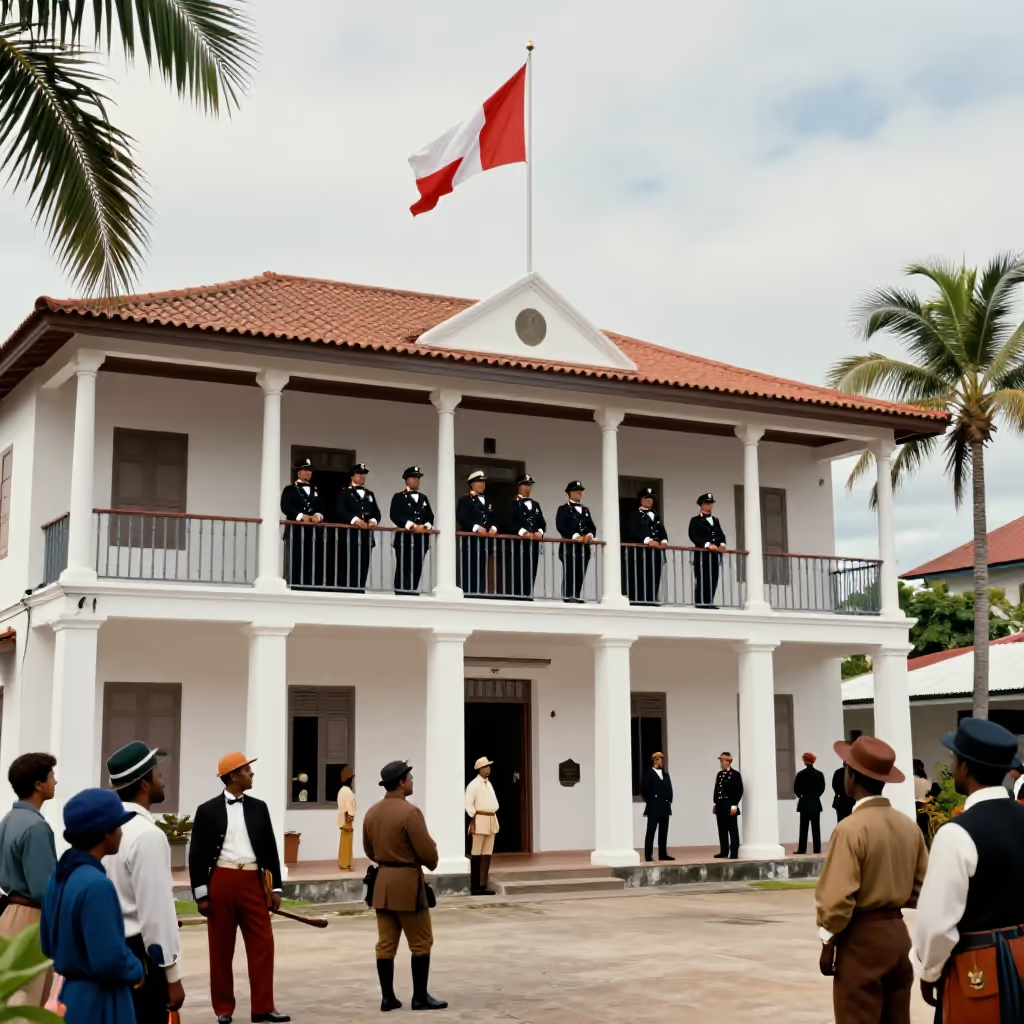
die Kolonie
colony
An overseas territory that is politically and economically dependent on another state, the so-called mother country, and is ruled by it.
Indien war lange Zeit eine britische Kolonie.
India was a British colony for a long time.
colony
Loading your saved state.
colony
An overseas territory that is politically and economically dependent on another state, the so-called mother country, and is ruled by it.
Indien war lange Zeit eine britische Kolonie.
India was a British colony for a long time.
The word 'Kolonie' (colony) has three clearly separate meanings. The context makes it clear whether it is about politics and history (countries), biology (animals/plants), or social life (groups of people).
Brasilien war einst eine portugiesische Kolonie.
Brazil was once a Portuguese colony.
In a historical context, 'Kolonie' (colony) is often used with the former ruling country, e.g. 'britische Kolonie' (British colony), 'französische Kolonie' (French colony), or with verbs such as 'gründen' (to found), 'beherrschen' (to rule), or 'verlieren' (to lose).
Viele afrikanische Staaten kämpften im 20. Jahrhundert für ihre Unabhängigkeit von den Kolonialmächten.
Many African states fought for their independence from the colonial powers in the 20th century.
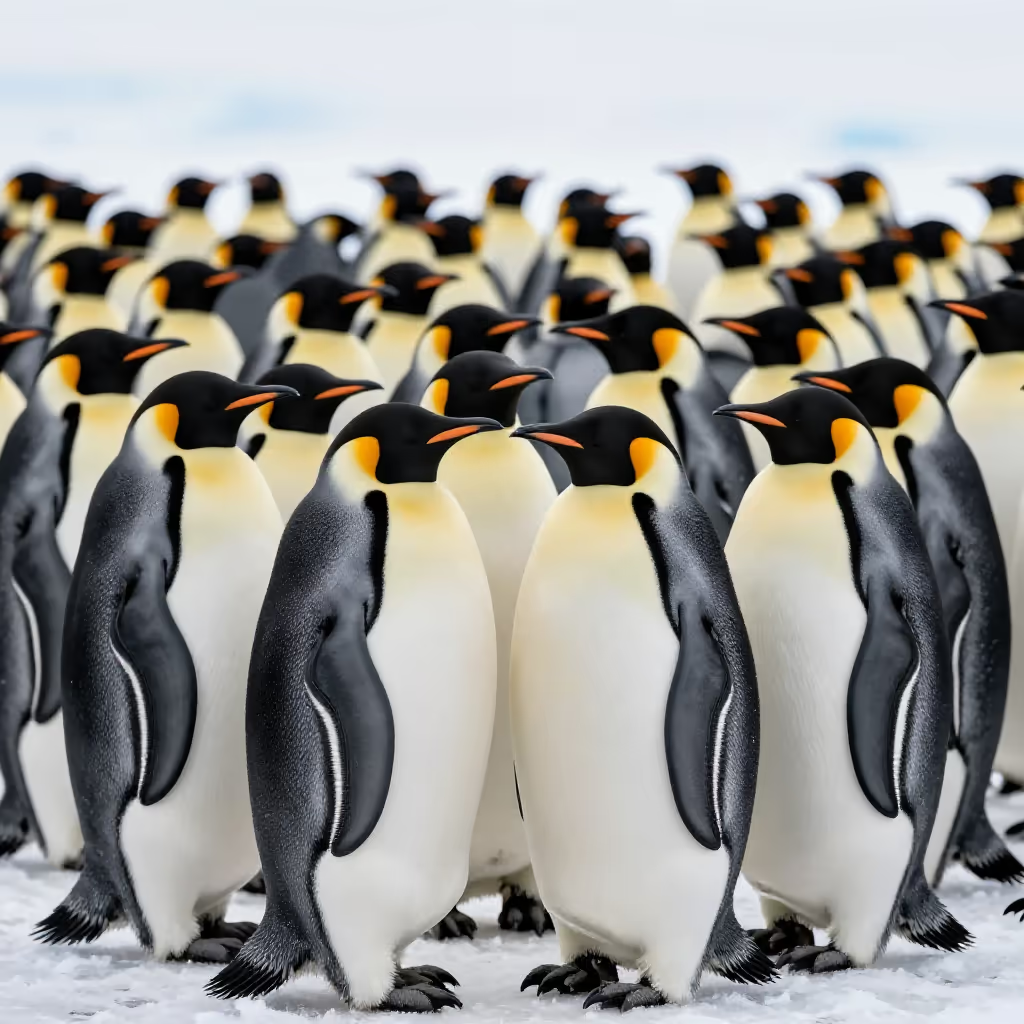
In biology, 'Kolonie' (colony) is often combined with animal or microorganism species. Typical examples are 'Ameisenkolonie' (ant colony), 'Pinguinkolonie' (penguin colony), or 'Bakterienkolonie' (bacterial colony).
Forscher untersuchen eine große Korallenkolonie im Pazifik.
Researchers are studying a large coral colony in the Pacific.
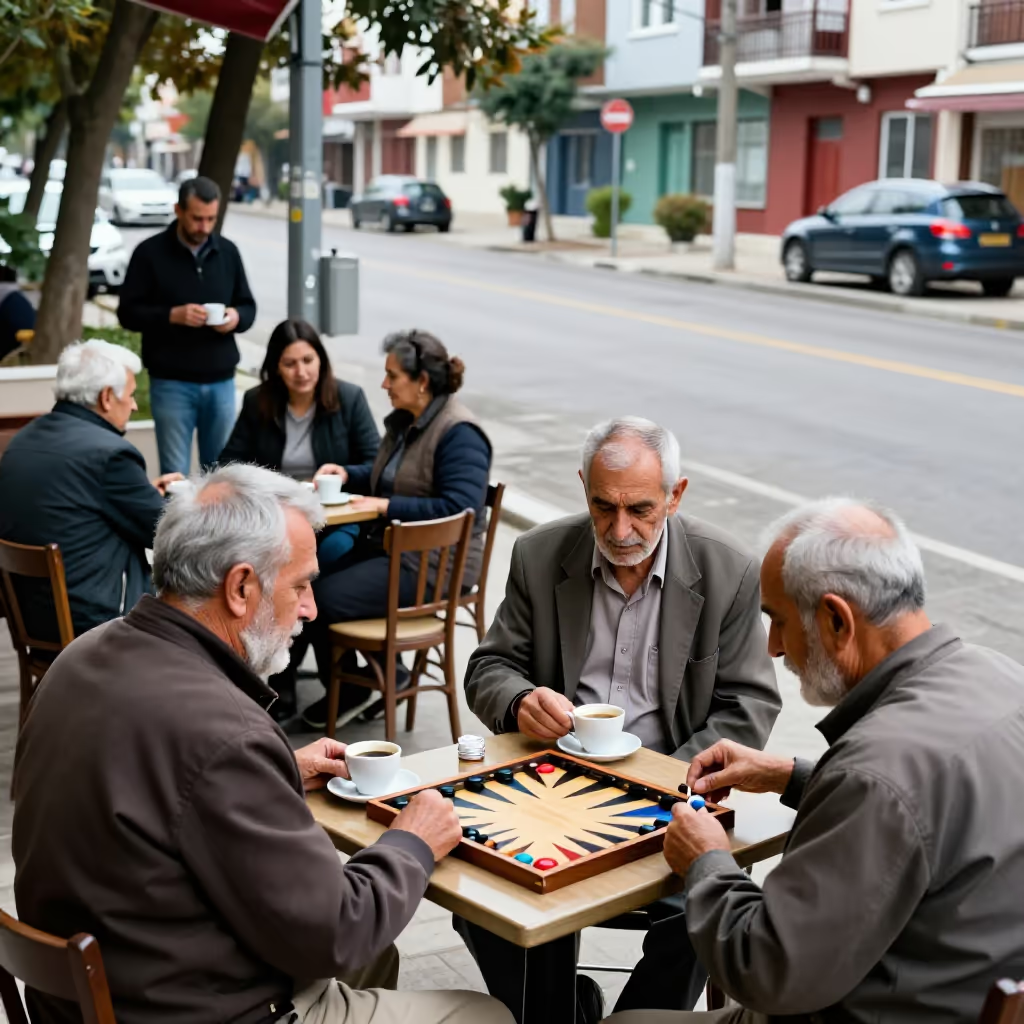
In a social context, 'Kolonie' (colony) describes a group of people with shared interests in one place. Well-known examples are 'Künstlerkolonie' (artists' colony) or 'Gartenkolonie' (allotment garden colony, also Schrebergarten).
Am Stadtrand gibt es eine große Gartenkolonie mit kleinen Häusern.
On the outskirts of the city, there is a large allotment garden colony with small houses.
culture
'die Kultur' and 'die Kolonie' can both have to do with microorganisms or cells in biology. Here, 'Kultur' means deliberate growing in a lab, that is, the process or result of letting cells or germs grow. 'Kolonie' more often means the individual visible group of organisms that grows together in one place. The words can be confused because a culture can contain several colonies. When talking about growing something in a lab, 'Kultur' fits. When describing a group of bacteria or other organisms, 'Kolonie' is more precise.

Unter dem Mikroskop sieht die Schülerin eine kleine Kolonie von Mikroorganismen.
Under the microscope, the student sees a small colony of microorganisms.
Im Labor prüft die Ärztin, ob in der Kultur Bakterien wachsen.
In the lab, the doctor checks whether bacteria are growing in the culture.