die Kultur
culture
The totality of a society's or group's intellectual, artistic, and scientific achievements, as well as its ways of life, values, and norms.
Die japanische Kultur fasziniert mich sehr.
Japanese culture fascinates me a lot.
culture
Loading your saved state.
culture
The totality of a society's or group's intellectual, artistic, and scientific achievements, as well as its ways of life, values, and norms.
Die japanische Kultur fasziniert mich sehr.
Japanese culture fascinates me a lot.

The adjective for 'die Kultur' (culture) is 'kulturell' (cultural). It is used to refer to aspects of culture, for example differences, events, or the heritage of a society.
Es gibt große kulturelle Unterschiede zwischen den Ländern.
There are major cultural differences between the countries.
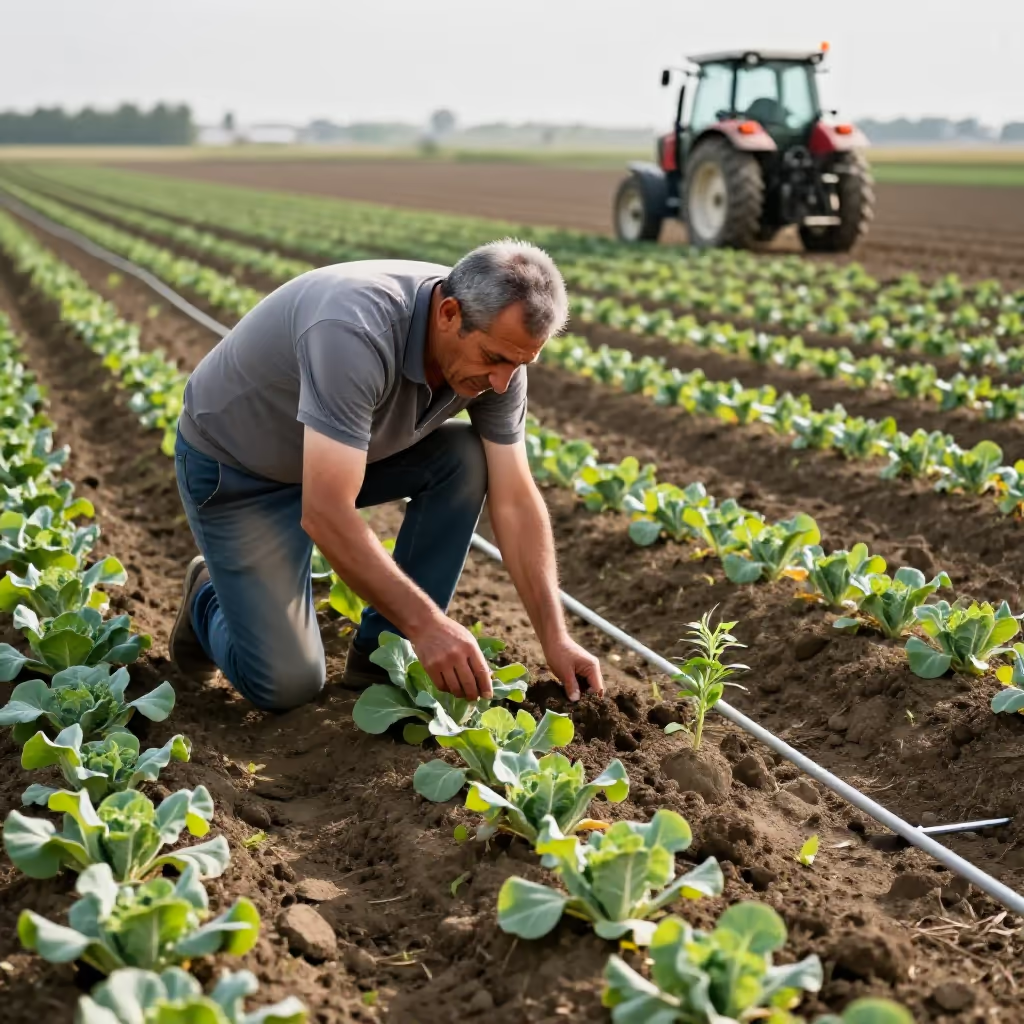
The general meaning of 'Kultur' (culture) refers to society and art. In specialized language, the word has specific meanings: in biology and medicine, a 'Kultur' (culture) is the growing of cells; in agriculture, it is the cultivation of plants.
Für die Untersuchung legte der Arzt eine Gewebekultur an.
For the examination, the doctor set up a tissue culture.
When referring to the way of life of a society, 'Kultur' (culture) is often combined with verbs like 'kennenlernen' (to get to know), 'entdecken' (to discover), or 'erleben' (to experience). People also speak of 'in Berührung kommen' (coming into contact) with another culture.
Auf meiner Reise möchte ich eine fremde Kultur kennenlernen.
On my trip, I want to get to know a foreign culture.
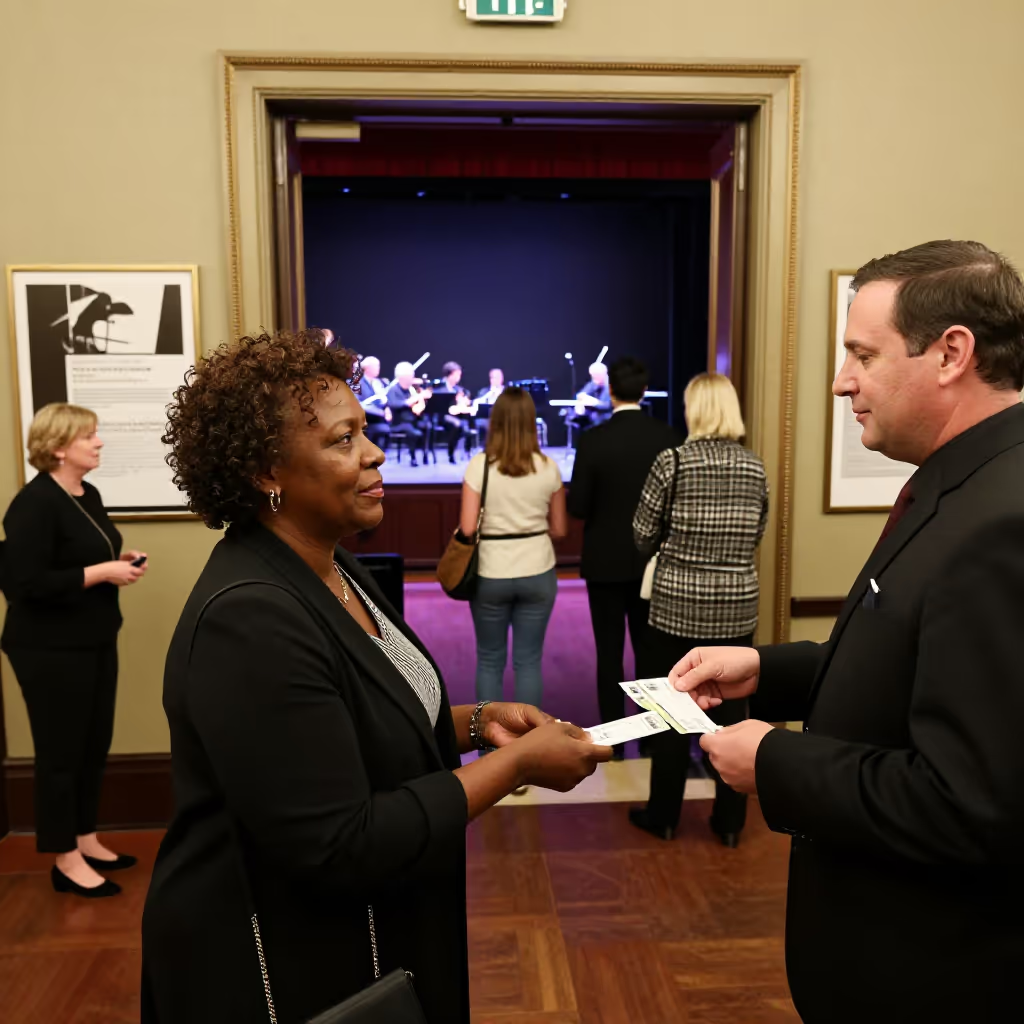
In the sense of art and theater, 'Kultur' (culture) is often mentioned as part of a field, e.g. 'Kultur und Sport' (culture and sports) or 'Kultur und Medien' (culture and media). It also forms many compounds such as 'Kulturangebot' (cultural offerings) or 'Kulturprogramm' (cultural program).
Das Kulturangebot der Stadt ist sehr vielfältig.
The city's cultural offerings are very diverse.
society / company
'die Gesellschaft' and 'die Kultur' are closely connected because both talk about how people live together. But you cannot simply use them interchangeably. 'Die Gesellschaft' means the people and their social, political, and economic structures. 'Die Kultur' refers more to these people's values, ways of life, art, knowledge, and habits. Learners confuse the words because culture always develops within a society. Practically speaking: for people and social rules, 'Gesellschaft' fits; for ways of life, values, and art, 'Kultur' fits.

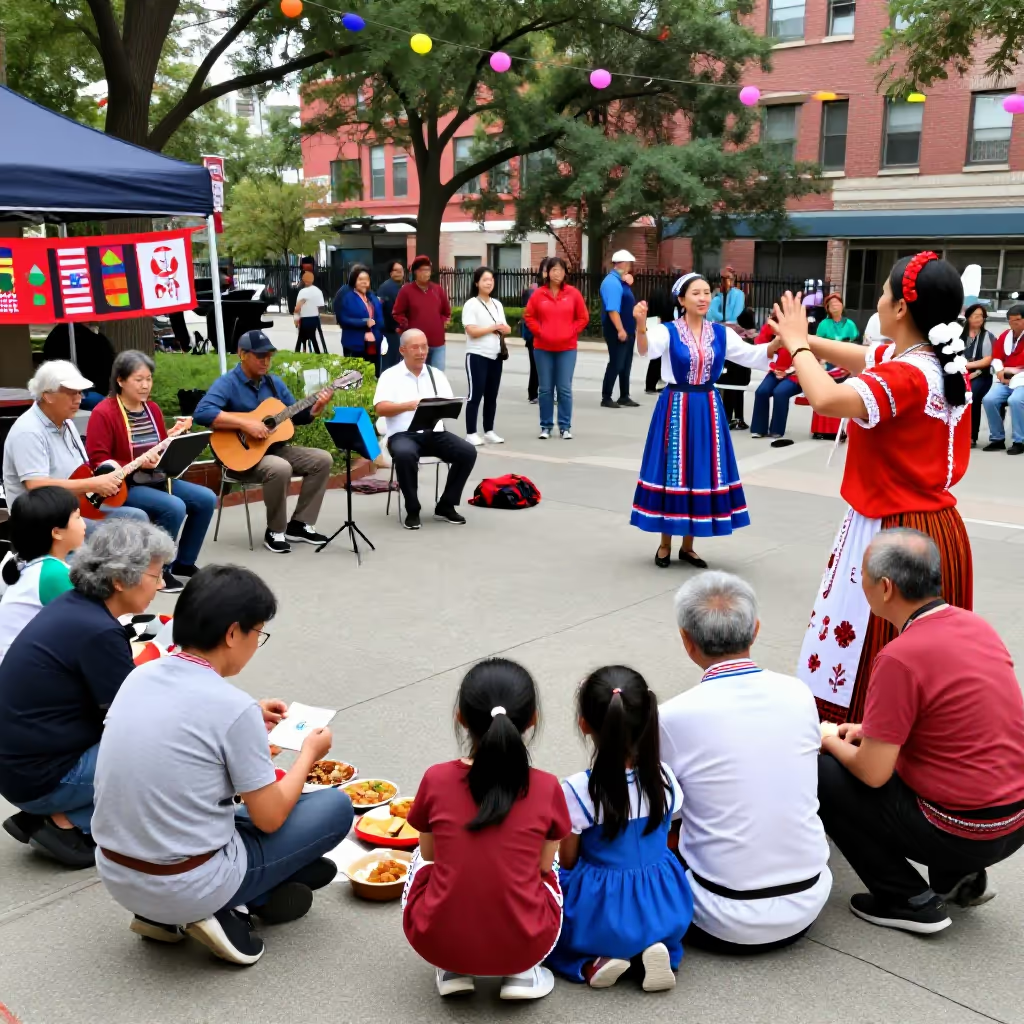
Musik, Feste und Sprache sind wichtige Teile einer Kultur.
Music, festivals, and language are important parts of a culture.
In einer offenen Gesellschaft dürfen Menschen ihre Meinung frei sagen.
In an open society, people may express their opinions freely.