


komplett
completely
Used as an adverb to express that something is entirely or fully the case; in the sense of 'völlig' (completely) or 'total' (totally).
EXAMPLE
Ich habe den Termin komplett vergessen.
I completely forgot the appointment.
complete / completely
Loading your saved state.
completely
Used as an adverb to express that something is entirely or fully the case; in the sense of 'völlig' (completely) or 'total' (totally).
Ich habe den Termin komplett vergessen.
I completely forgot the appointment.
complete
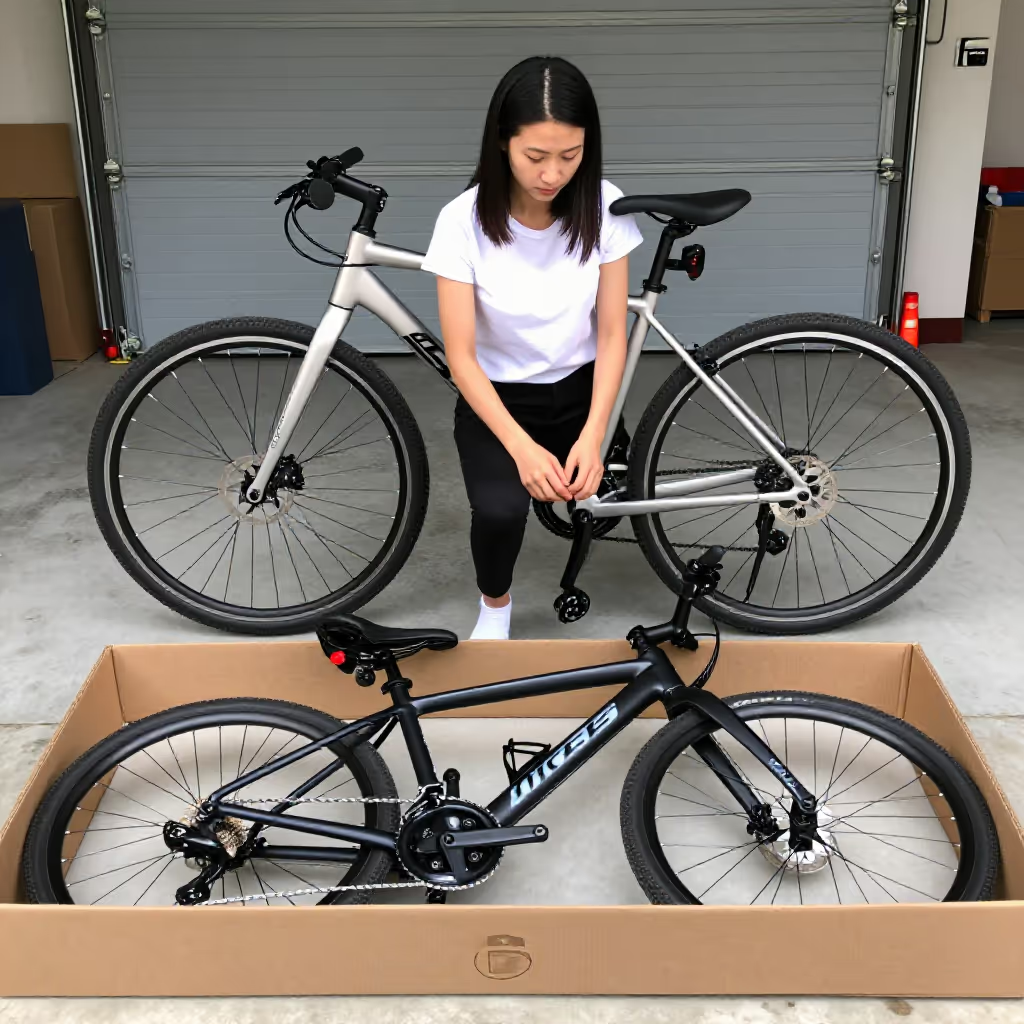
Used as an adjective to express that something contains all necessary parts and nothing is missing; in the sense of 'vollständig' (complete) or 'ganz' (whole).
Erst mit diesem letzten Band ist die Buchreihe komplett.
Only with this final volume is the book series complete.
'Komplett' can have two functions. As an adjective before a noun, it is declined and means 'vollständig' (complete). As an adverb intensifying a verb or adjective, it remains unchanged and means 'völlig' (completely).
Er hat eine komplette Modelleisenbahn geschenkt bekommen.
He was given a complete model railway as a gift.
In its function as an adverb ('völlig' (completely), 'total' (totally)), 'komplett' is very common in colloquial speech. It is used to emotionally intensify a statement.
Nach der Wanderung war ich komplett erschöpft.
After the hike, I was completely exhausted.
As an adjective with the meaning 'vollständig' (complete), 'komplett' is often combined with things that consist of several parts. Typical examples are: eine komplette Sammlung (a complete collection), die komplette Ausrüstung (the complete equipment), das komplette Menü (the complete menu).
Für die Reise benötigen Sie eine komplette Winterausrüstung.
For the trip, you need complete winter equipment.
whole / quite
Ganz and komplett can express completeness. Ganz describes something or a group as an undivided whole; komplett emphasizes that all necessary parts are present and nothing is missing. Ganz is suitable when examining the entire object, while komplett is suitable when emphasizing that all its parts are accounted for.
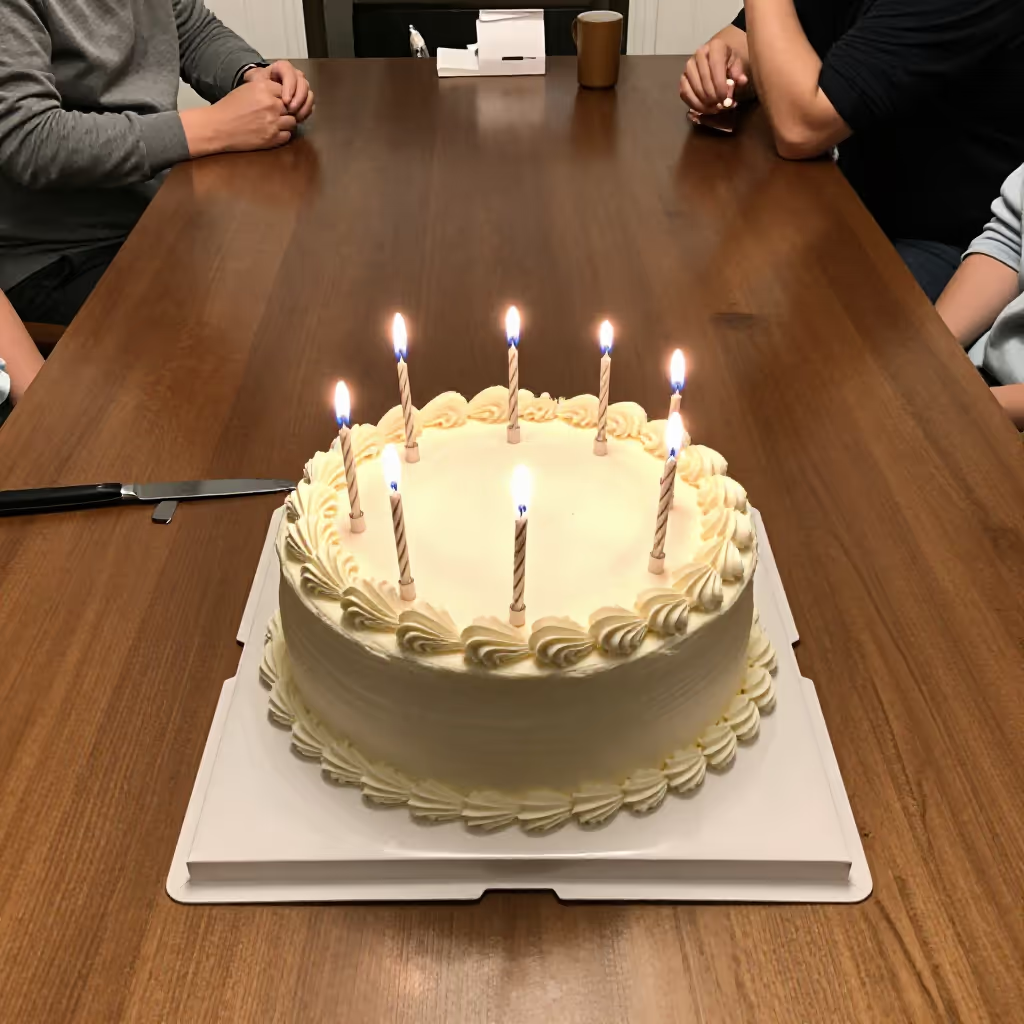
Der Werkzeugkasten ist komplett, denn kein Werkzeug fehlt.
The toolbox is complete because no tool is missing.
Ich habe den ganzen Werkzeugkasten geprüft.
I checked the entire toolbox.