

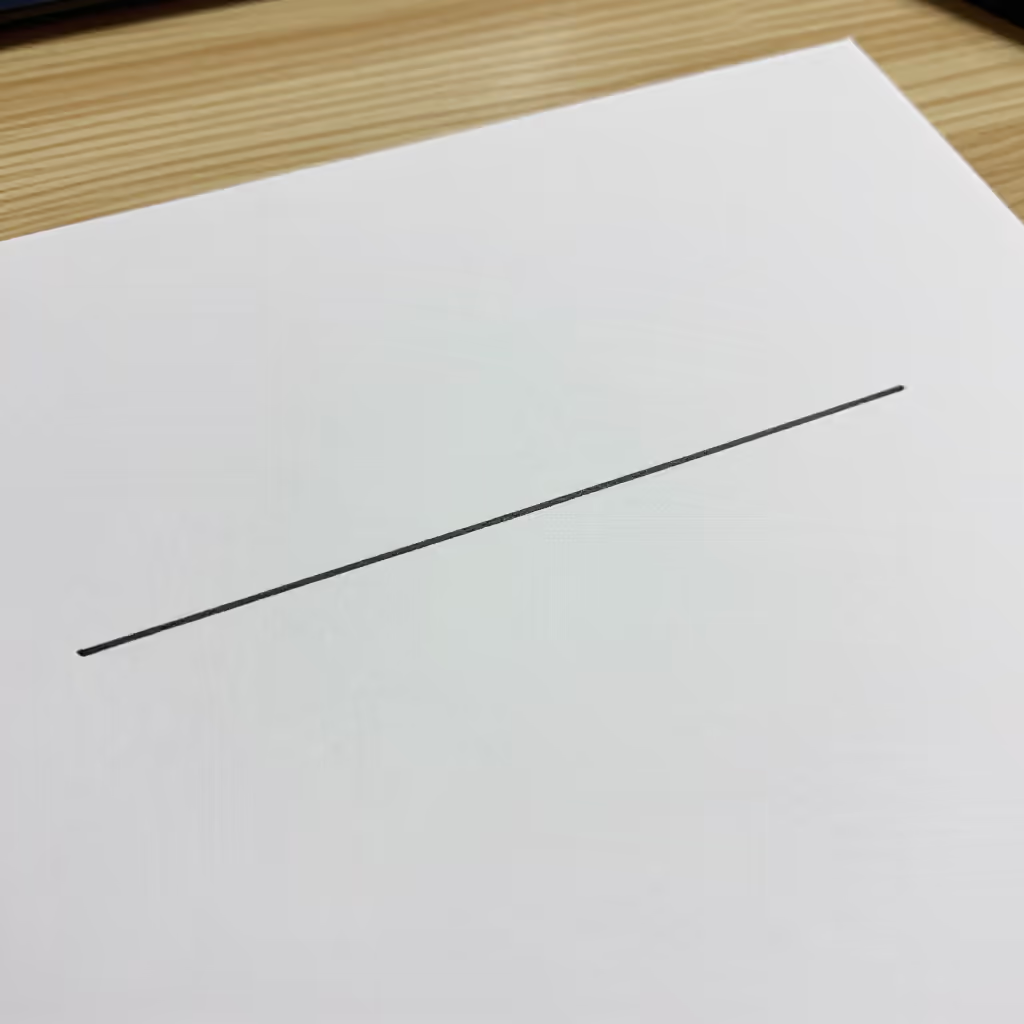
die Linie
line
A long, narrow mark on a surface.
EXAMPLE
Bitte unterschreiben Sie auf der gepunkteten Linie.
Please sign on the dotted line.
line
Loading your saved state.
line
A long, narrow mark on a surface.
Bitte unterschreiben Sie auf der gepunkteten Linie.
Please sign on the dotted line.
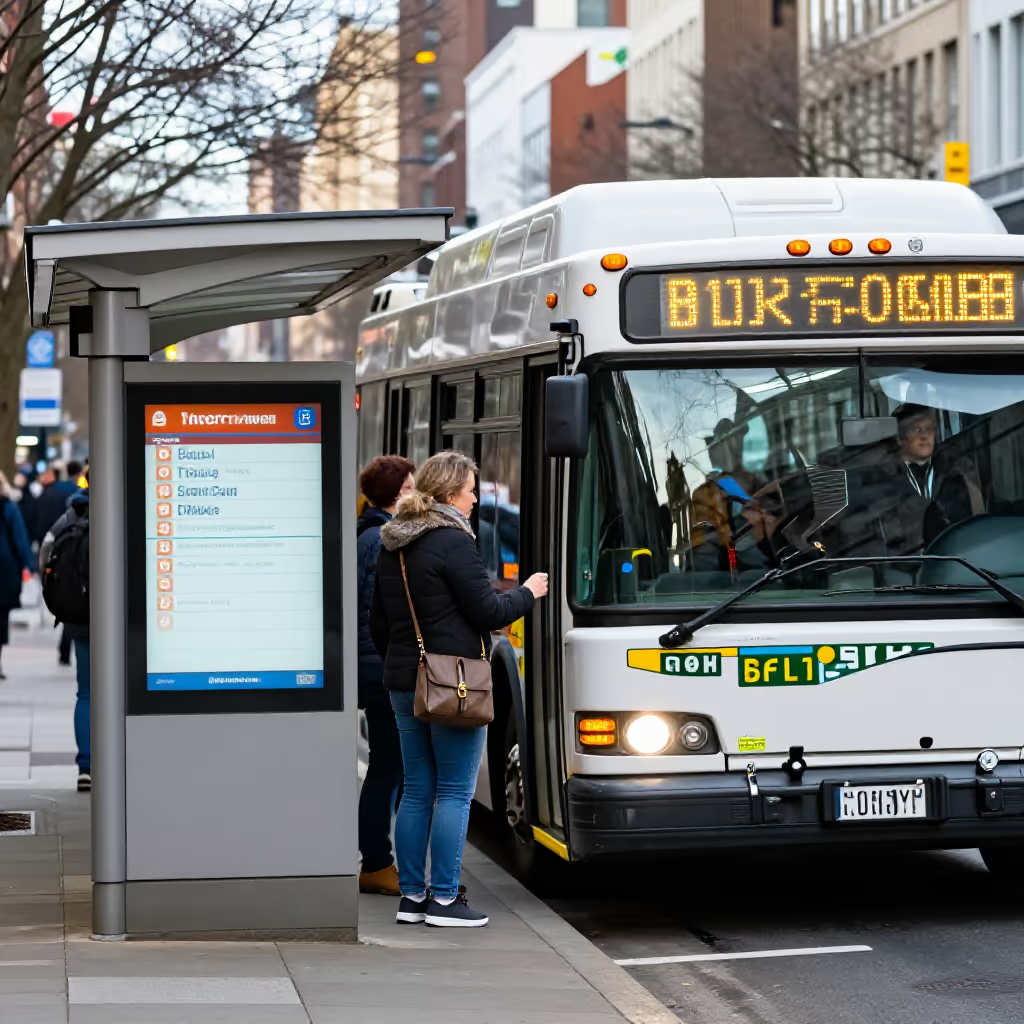
line
A fixed route of a public means of transport such as a bus, train, or subway.
Die Linie U3 fährt direkt zum Stadtzentrum.
Line U3 goes directly to the city center.

primarily
Mainly, above all. Expresses what is most important.
Bei diesem Projekt geht es uns in erster Linie um die Qualität, nicht um den Preis.
In this project, we are primarily concerned with quality, not price.

line / approach
A fundamental attitude, strategy, or approach of a person or organization.
Die Regierung verfolgt eine harte Linie in der Sicherheitspolitik.
The government is pursuing a hard line in security policy.

figure / outline
The outer shape or contour of something.
Das neue Kleid betont ihre schlanke Linie.
The new dress emphasizes her slim figure.

line
A telephone connection.
Entschuldigung, die Linie war gerade besetzt.
Sorry, the line was busy just now.

line / lineage
A sequence of ancestors or descendants; ancestry.
Er stammt in direkter Linie von einem berühmten Dichter ab.
He is descended in a direct line from a famous poet.
The expression 'in erster Linie' (primarily/first and foremost) is a fixed expression and means 'mainly' or 'above all.' It often appears at the beginning or in the middle of a sentence to emphasize what is most important.
Mir geht es in erster Linie darum, dass alle zufrieden sind.
What matters to me primarily is that everyone is satisfied.
In connection with public transportation, 'Linie' (line) is used whenever a specific route is meant. For example, you say 'die Linie 5 nehmen' (to take line 5) or 'mit der Linie 10 fahren' (to travel on line 10).
Welche Linie fährt zum Hauptbahnhof?
Which line goes to the main train station?
When 'Linie' (line/approach) describes a strategy or attitude, it is often combined with verbs like 'verfolgen' (to pursue), 'fahren' (to take/pursue), or 'vertreten' (to represent/advocate). The expression 'seiner Linie treu bleiben' (to stay true to one's line) is also common.
Das Unternehmen verfolgt eine klare Linie bei der Produktentwicklung.
The company is pursuing a clear line in product development.
When talking about telephoning, 'die Linie' (the line) can mean the connection. Typical phrases are 'die Linie ist besetzt' (the line is busy) or 'jemanden in der Linie haben' (to have someone on the line).
Ich habe versucht anzurufen, aber die Linie war ständig besetzt.
I tried to call, but the line was constantly busy.
In connection with appearance, 'Linie' (figure/outline) describes the body shape. A typical expression is 'auf seine Linie achten' (to watch one's figure), which means to pay attention to one's weight or figure.
Er isst viel Gemüse, weil er auf seine Linie achtet.
He eats a lot of vegetables because he watches his figure.
When it comes to family relationships, 'Linie' (line/lineage) is used to describe ancestry. The fixed expression is often 'in direkter Linie' (in a direct line) or 'in weiblicher/männlicher Linie' (through the female/male line).
Die Familie kann ihre Vorfahren in direkter Linie bis ins 17. Jahrhundert zurückverfolgen.
The family can trace its ancestors in a direct line back to the 17th century.
In the basic meaning of a stroke or mark, 'Linie' (line) is often used with verbs like 'ziehen' (to draw), 'zeichnen' (to draw), or 'malen' (to paint/draw).
Der Architekt zog mit dem Bleistift eine gerade Linie auf dem Plan.
The architect drew a straight line on the plan with a pencil.
management / line
When making a phone call, die Linie refers to the existing connection used for the conversation. Die Leitung, by contrast, generally refers to the cable or physical route that carries telephone or other data. Linie is used when a line is busy or free, while Leitung is used when a cable is damaged.

Die Linie ist besetzt, deshalb rufe ich später noch einmal an.
The line is busy, so I'll call again later.
Die Leitung ist beschädigt, deshalb kann ich gerade nicht telefonieren.
The line is damaged, so I can't make a phone call right now.