

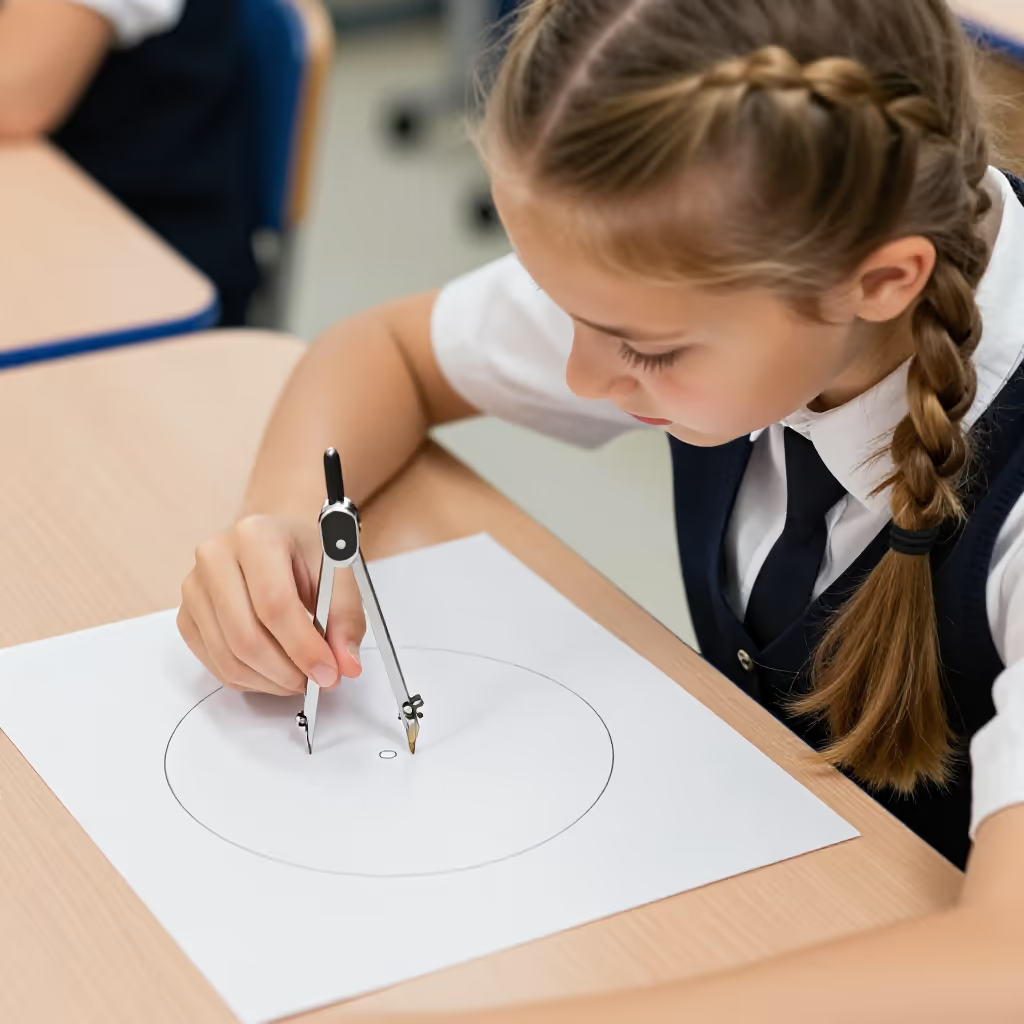
der Kreis
circle
A round, closed line in which all points are the same distance from the center; a circular area or arrangement.
EXAMPLE
Die Kinder malten bunte Kreise auf das Papier.
The children drew colorful circles on the paper.
circle / district
Loading your saved state.
circle
A round, closed line in which all points are the same distance from the center; a circular area or arrangement.
Die Kinder malten bunte Kreise auf das Papier.
The children drew colorful circles on the paper.

circle
A group of people connected by shared interests, relationships, or activities.
Er feierte seinen Geburtstag nur im engsten Familienkreis.
He celebrated his birthday only in his closest family circle.
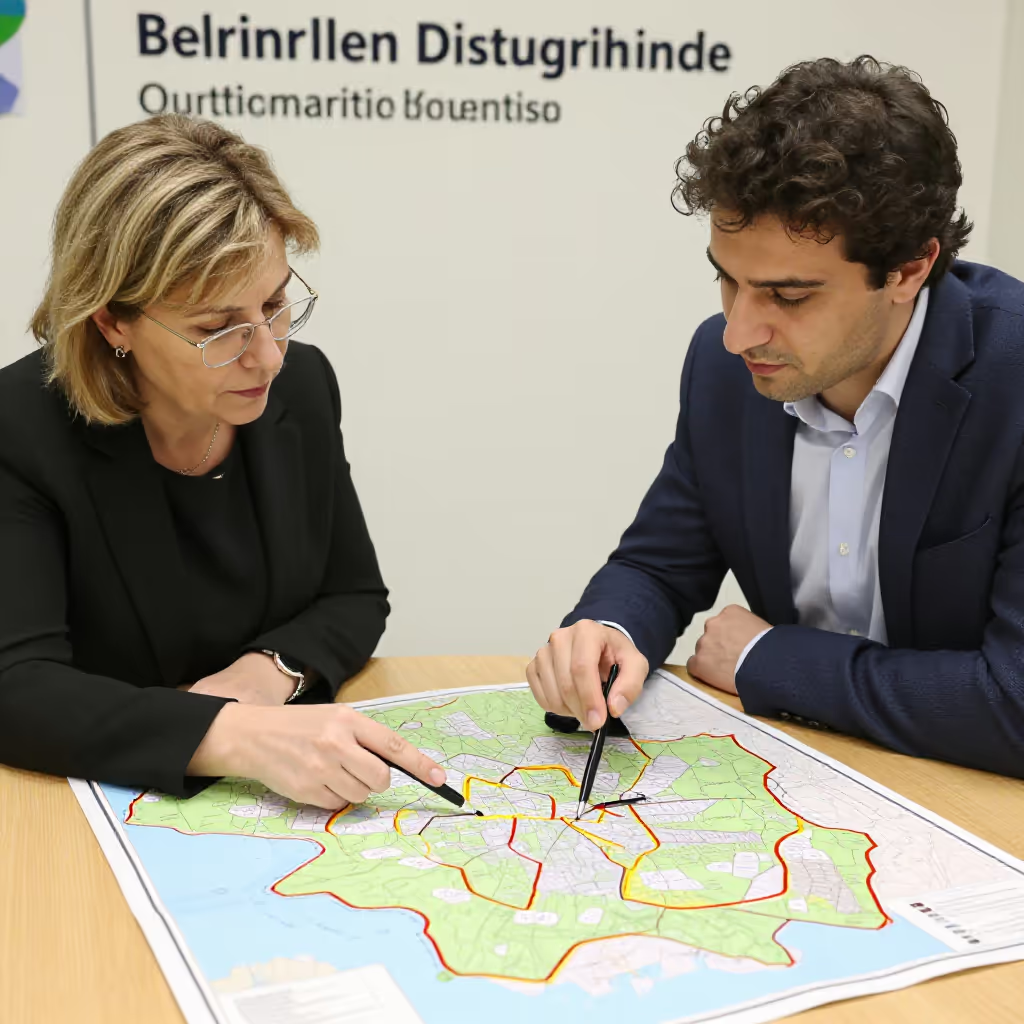
district
An administrative and territorial unit in Germany that stands between the municipality and the federal state; a rural district.
Das zuständige Amt befindet sich in der Hauptstadt des Kreises.
The responsible office is located in the capital of the district.

to go in circles
To make no progress in a discussion or problem and keep returning to the same point.
Die Debatte dreht sich seit einer Stunde im Kreis, ohne dass eine Entscheidung fällt.
The debate has been going in circles for an hour without a decision being made.
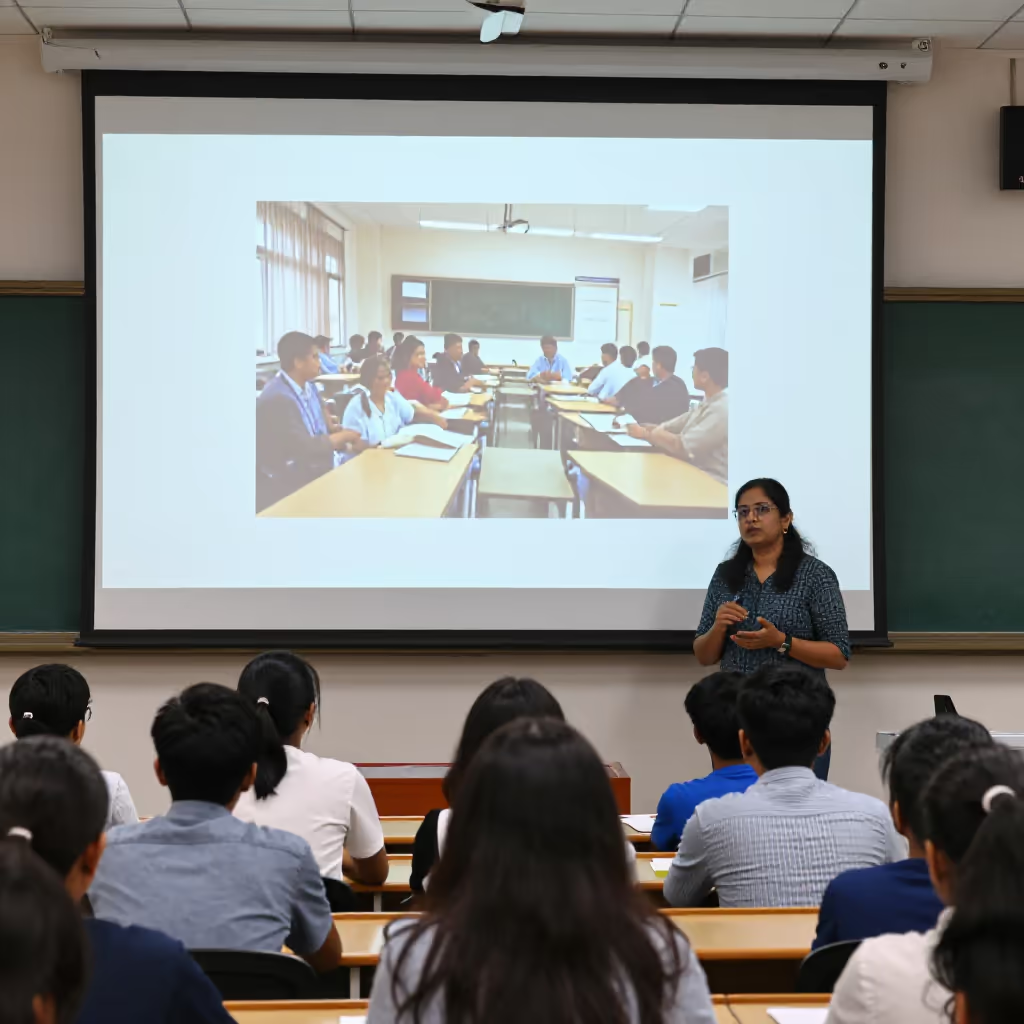
to close the circle
To logically conclude an action, thought, or narrative by returning to the starting point.
Um den Kreis zu schließen, möchte ich auf meine einleitende Frage zurückkommen.
To close the circle, I would like to return to my opening question.
You can recognize the meaning of 'Kreis' (circle/district) from context. Is it about geometry or a round shape? Is it about a social group? Or is it about an administrative region in Germany?
Wir saßen im Kreis und sangen Lieder.
We sat in a circle and sang songs.
To describe a social group, 'Kreis' (circle) is often used as the second part of a compound noun. Examples are 'Freundeskreis' (circle of friends), 'Familienkreis' (family circle), or 'Lesekreis' (reading group).
Mein Freundeskreis ist mir sehr wichtig.
My circle of friends is very important to me.
The meaning 'Landkreis' (district/rural district) is specific to the German administrative system. Here, a 'Kreis' is an administrative unit between the municipalities and the federal state, comparable to a 'county' in other countries.
Für den neuen Pass müssen Sie zur Verwaltung des Kreises gehen.
For the new passport, you have to go to the district administration.
The idiom 'sich im Kreis drehen' (to go in circles) means that you are not making progress on a topic or problem. You repeat arguments without finding a solution.
Die Diskussion über das Budget dreht sich seit Stunden im Kreis.
The discussion about the budget has been going in circles for hours.
'Den Kreis schließen' (to close the circle) is an idiom and means to logically conclude a story or argument by returning to the starting point. It creates a connection between the beginning and the end.
Mit dieser letzten Bemerkung schließt sich der Kreis zu meiner anfänglichen Frage.
With this final remark, the circle closes back to my initial question.
group
Gruppe and Kreis can both refer to several people connected by a shared activity or relationship. Kreis places more emphasis on lasting relationships, shared interests, or belonging, while Gruppe can also be formed just for a particular situation. Gruppe fits a temporary grouping; Kreis is more suitable for an established social connection.
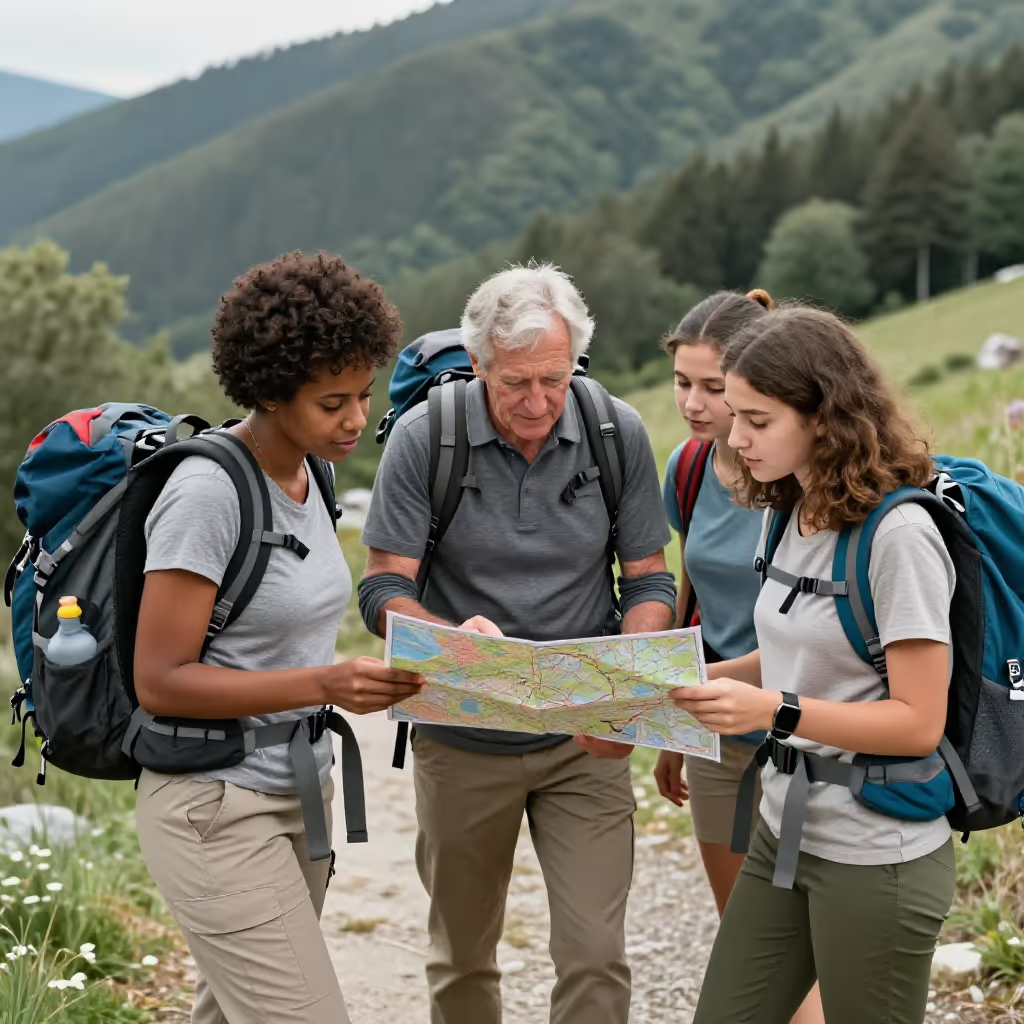
In unserem Freundeskreis treffen wir uns jeden Freitag zum Spielen.
We meet in our circle of friends every Friday to play games.
Für das Projekt bildeten wir eine Gruppe aus fünf Studierenden.
We formed a group of five students for the project.