


müde
tired
Feeling the need for sleep or rest; being physically or mentally exhausted.
EXAMPLE
Nach der langen Wanderung war ich sehr müde und bin sofort eingeschlafen.
After the long hike, I was very tired and fell asleep immediately.
tired
Loading your saved state.
tired
Feeling the need for sleep or rest; being physically or mentally exhausted.
Nach der langen Wanderung war ich sehr müde und bin sofort eingeschlafen.
After the long hike, I was very tired and fell asleep immediately.
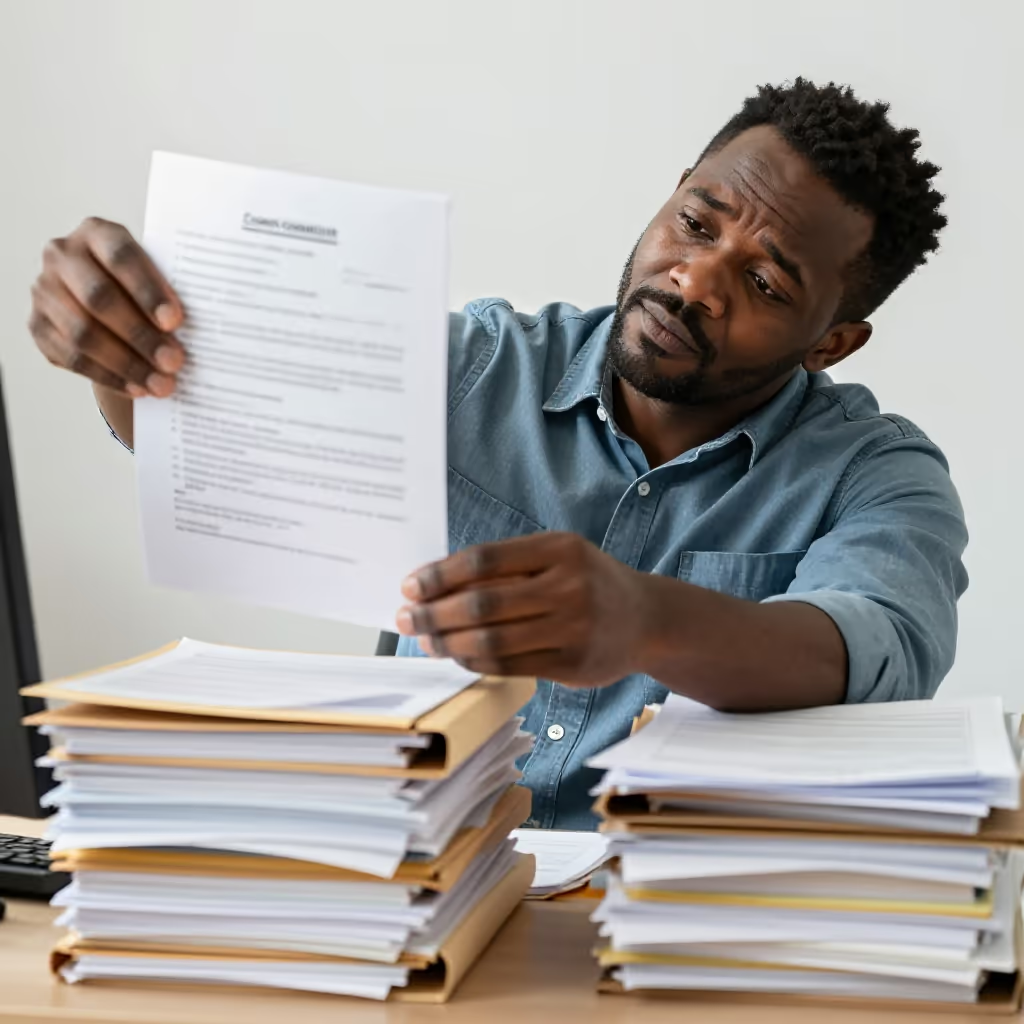
tired of
To be weary of something; to no longer have the desire or energy to deal with something. Often used in the construction 'etwas/jemanden müde sein'.
Ich bin es müde, immer wieder dieselbe Diskussion zu führen.
I am tired of having the same discussion again and again.
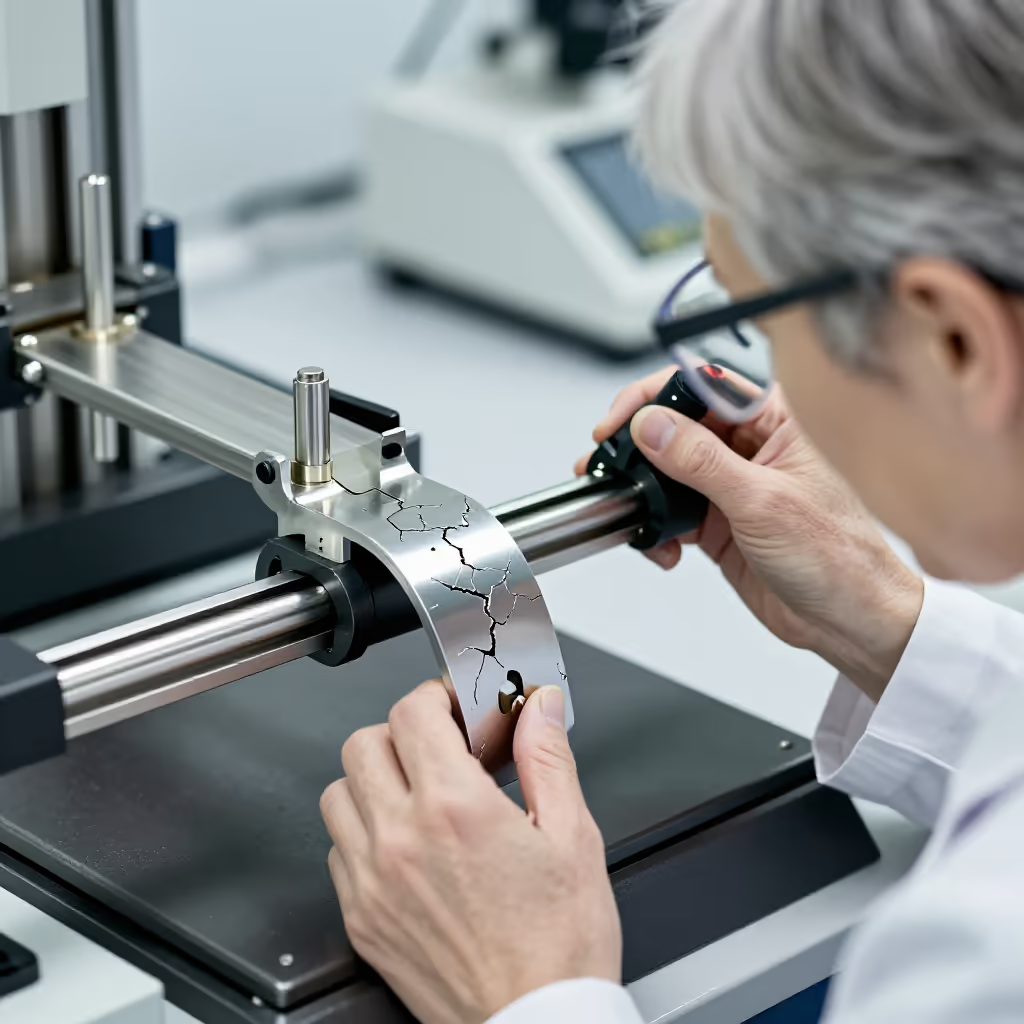
fatigued
In materials science, the property of a material losing strength and becoming brittle after long or repeated stress.
Das Metall der Brücke war nach Jahrzehnten der Belastung müde geworden und musste ersetzt werden.
The metal of the bridge had become fatigued after decades of stress and had to be replaced.
The adjective 'müde' (tired) is most often combined with the verbs 'sein' (to be), 'werden' (to become/get), or 'aussehen' (to look). It describes either a state or a change.
Ich bin heute wirklich müde.
I am really tired today.
When 'müde' (tired) refers to a person, it usually means 'schläfrig' (sleepy). When it refers to a material such as metal or plastic, the technical meaning 'an Festigkeit verloren' (having lost strength) is meant. The construction 'etwas müde sein' means 'einer Sache überdrüssig sein' (to be tired of something).
Der Läufer war nach dem Marathon völlig müde.
The runner was completely tired after the marathon.
To express that you have had enough of something, you use the construction 'etwas (Akkusativ) müde sein' or 'es müde sein, etwas zu tun'. The person who is fed up with something is the subject of the sentence.
Ich bin diesen langen Winter müde.
I am tired of this long winter.
The meaning 'an Festigkeit verlieren' (to lose strength) is technical language from materials science and engineering. In everyday life, 'müde' (tired) is almost never used in this context.
Nach Millionen von Biegungen wurde die Feder müde und brach.
After millions of bends, the spring became fatigued and broke.
suffering
„Etwas leid sein“ and „etwas müde sein“ both mean that you no longer want to put up with something. „Leid“ is the more usual fixed expression; „müde“ sounds more elevated in this construction and places greater emphasis on weariness caused by constant repetition.

Nach vielen Monaten bin ich die immer gleichen Beschwerden müde.
After many months, I'm tired of the same complaints over and over.
Ich bin die ständigen Beschwerden leid und will endlich Ruhe.
I'm fed up with the constant complaints and want some peace at last.