

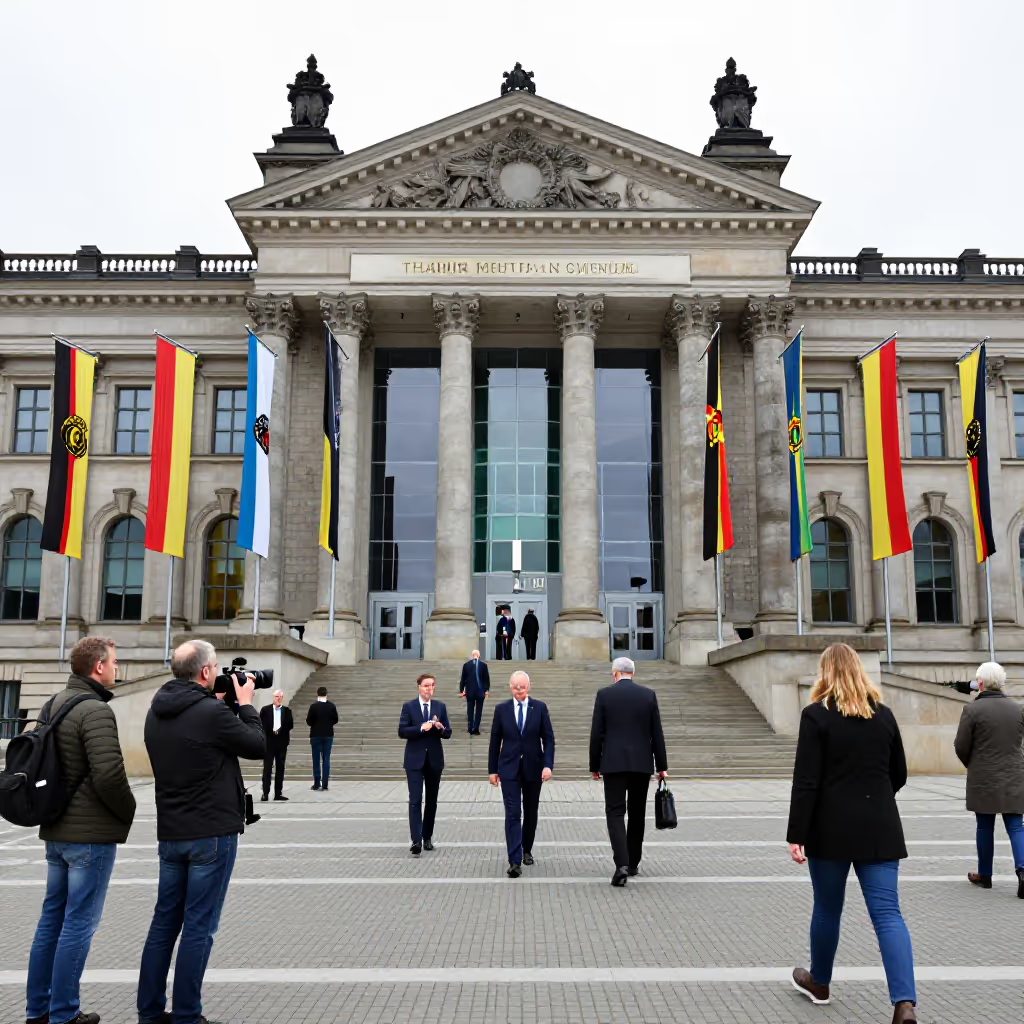
The city where the government and parliament of a federal state (in Germany and Austria) or a canton (in Switzerland) have their seat.
example
München ist die Landeshauptstadt von Bayern.
Munich is the state capital of Bavaria.

Usage tips
Word composition
The word is made up of three parts: 'Land' (here: federal state), 'Haupt' (main/most important), and 'Stadt' (city). So it is the 'Haupt-Stadt' (capital city) of a 'Land' (state).
EXAMPLE
Wiesbaden ist die Landeshauptstadt von Hessen.
Wiesbaden is the state capital of Hesse.
Cultural context
This word is important for understanding the political structure of Germany and Austria. Each federal state has its own government and an official state capital where that government is based.
EXAMPLE
Deutschland besteht aus 16 Bundesländern mit 16 Landeshauptstädten.
Germany consists of 16 federal states with 16 state capitals.
Sentence structure with 'von'
To express belonging to a federal state, the preposition 'von' is almost always used. The pattern is: [city] ist die Landeshauptstadt von [federal state].
EXAMPLE
Potsdam ist die Landeshauptstadt von Brandenburg.
Potsdam is the state capital of Brandenburg.
Compare with
confusable
Landeshauptstadt vs Hauptstadt
capital
'die Hauptstadt' and 'die Landeshauptstadt' can both refer to a city where a government is based. The difference is the level. 'die Hauptstadt' is often the most important city of a country, for example Berlin for Germany. But the word can also be used more generally for a region. 'die Landeshauptstadt' more specifically means the capital of a federal state, for example Stuttgart for Baden-Württemberg. Learners confuse the words because both have to do with government and administration. When it is about a whole country, 'Hauptstadt' is usually appropriate. When it is about a federal state, 'Landeshauptstadt' is more precise.