

lau
mild
Describing a pleasant, gentle warmth that is felt as neither hot nor cold. Often used for weather or air.
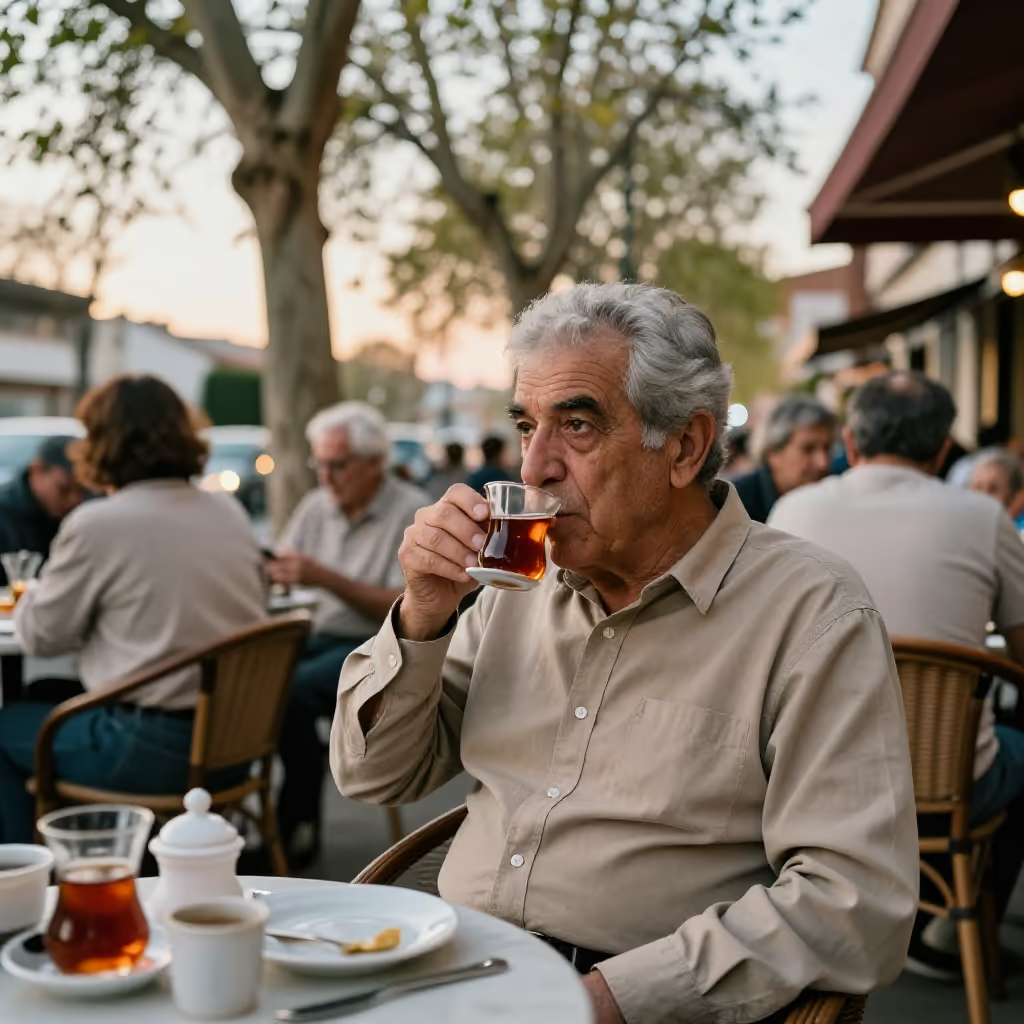
Wir saßen an dem lauen Sommerabend noch lange auf der Terrasse.
We sat on the terrace for a long time on that mild summer evening.

mild / lukewarm
Loading your saved state.

mild
Describing a pleasant, gentle warmth that is felt as neither hot nor cold. Often used for weather or air.
Wir saßen an dem lauen Sommerabend noch lange auf der Terrasse.
We sat on the terrace for a long time on that mild summer evening.


half-hearted
In a figurative sense, describing an action or performance that lacks energy, enthusiasm, or conviction; half-hearted.
Die Mannschaft lieferte nur eine laue Vorstellung ab und verlor das Spiel.
The team delivered only a half-hearted performance and lost the game.
The noun that 'lau' (mild/lukewarm) describes reveals the meaning. If it refers to temperature or weather, e.g. 'Abend' (evening) or 'Wasser' (water), it means 'mild' or 'lukewarm'. If it refers to a performance or feeling, e.g. 'Applaus' (applause) or 'Interesse' (interest), it means 'half-hearted'.
Ein laues Lüftchen wehte vom Meer herüber.
A mild little breeze blew in from the sea.
In its literal meaning, 'lau' (mild/lukewarm) is almost always used for weather, air, or liquids. Typical combinations are 'ein lauer Sommerabend' (a mild summer evening), 'laues Wasser' (lukewarm water), or 'ein laues Lüftchen' (a mild little breeze).
Für das Babybad sollte das Wasser nur lau sein.
For the baby's bath, the water should only be lukewarm.
In its figurative meaning, 'lau' (half-hearted/lukewarm) describes a lack of energy or enthusiasm. Common combinations are 'ein lauer Applaus' (lukewarm applause), 'eine laue Vorstellung' (a half-hearted performance), or 'ein lauer Versuch' (a half-hearted attempt).
Nach der lauen Leistung im Halbfinale hatte die Mannschaft keine Chance mehr.
After the half-hearted performance in the semifinal, the team no longer had a chance.
half-hearted
Lau and halbherzig can both describe an unconvincing action. Lau generally emphasizes a lack of energy or enthusiasm, while halbherzig particularly refers to insufficient effort or lack of conviction. The meanings may overlap.

Seine Unterstützung für den Plan blieb lau und löste kaum Begeisterung aus.
His support for the plan remained lukewarm and generated little enthusiasm.
Seine Unterstützung für den Plan blieb halbherzig, weil er kaum Zeit dafür einsetzte.
His support for the plan remained half-hearted because he put very little time into it.