


The final stage in a person's life, immediately preceding death. The term is often used in the context of care, medicine, and personal decisions.
example
Viele Menschen wünschen sich, ihr Lebensende zu Hause im Kreis ihrer Familie zu verbringen.
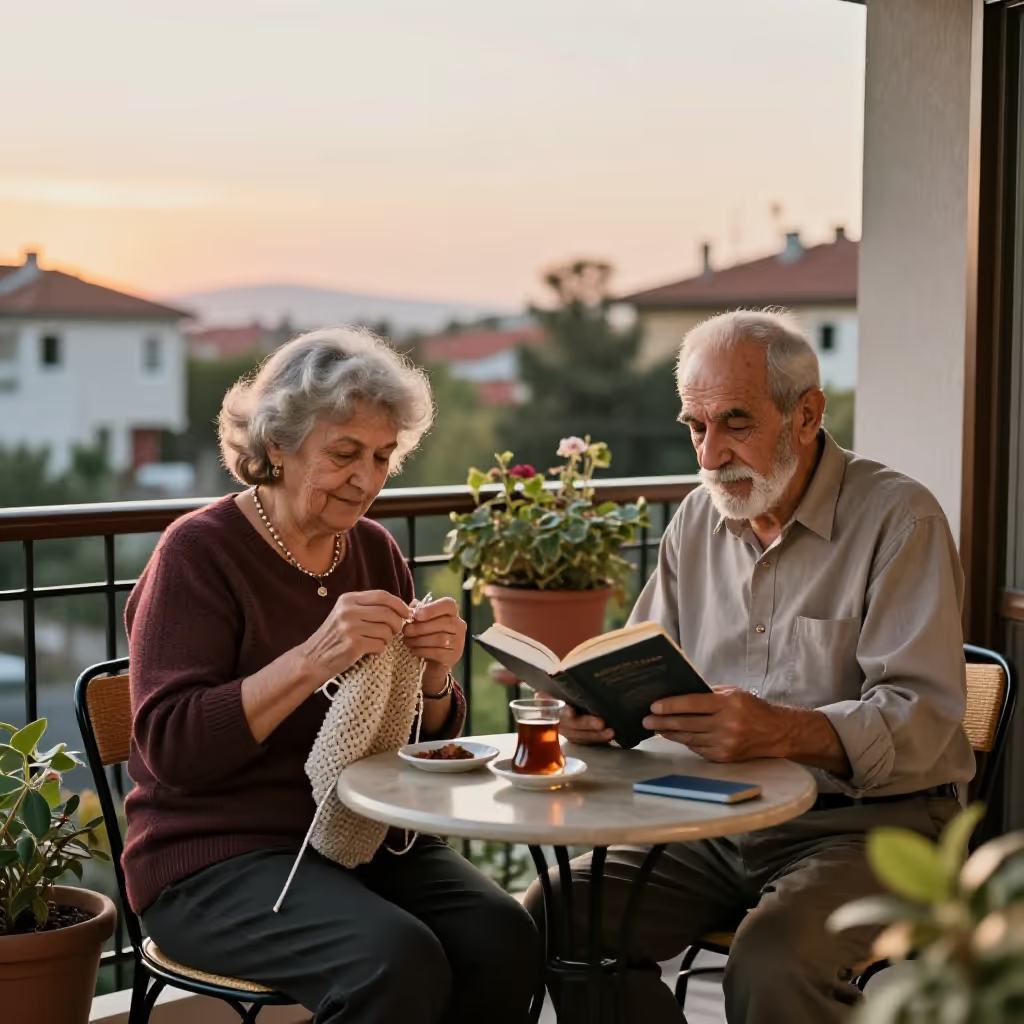
Many people wish to spend the end of their life at home surrounded by their family.
Usage tips
Compound word
The word is a clear compound of 'das Leben' (life) and 'das Ende' (end), connected by an 's'. It literally means 'the end of life'.
EXAMPLE
Er hat bis zu seinem Lebensende in diesem Haus gewohnt.
He lived in this house until the end of his life.
Fixed preposition
To describe the period of time, the preposition 'am' is almost always used: 'am Lebensende' (at the end of life). This emphasizes the state or phase someone is in.
EXAMPLE
Am Lebensende denken viele Menschen über ihre Vergangenheit nach.
At the end of life, many people think about their past.
Register and context
'Lebensende' (end of life) is a rather formal and respectful expression. It is often used in medical, ethical, or legal discussions, for example in connection with advance directives.
EXAMPLE
Die Palliativmedizin beschäftigt sich mit der Betreuung von Menschen am Lebensende.
Palliative medicine deals with caring for people at the end of life.
Compare with
near_synonym
Lebensende vs Tod
death
'der Tod' and 'das Lebensende' are thematically close, but they do not mean exactly the same thing. 'der Tod' refers to the end of life itself. 'das Lebensende' refers more to the final period before death, a stage in which care, medicine, or personal decisions are often important. 'Lebensende' often sounds more cautious and factual than 'Tod'. When speaking directly about the event, 'Tod' is more precise. When speaking about care, wishes, or decisions in the final stage of life, 'Lebensende' fits better.
Lebensende
Am Lebensende wünschen sich viele Menschen Ruhe und vertraute Personen um sich.
At the end of life, many people wish for peace and familiar people around them.
Tod
Der plötzliche Tod des Nachbarn hat alle im Haus erschüttert.
The sudden death of the neighbor shocked everyone in the building.