

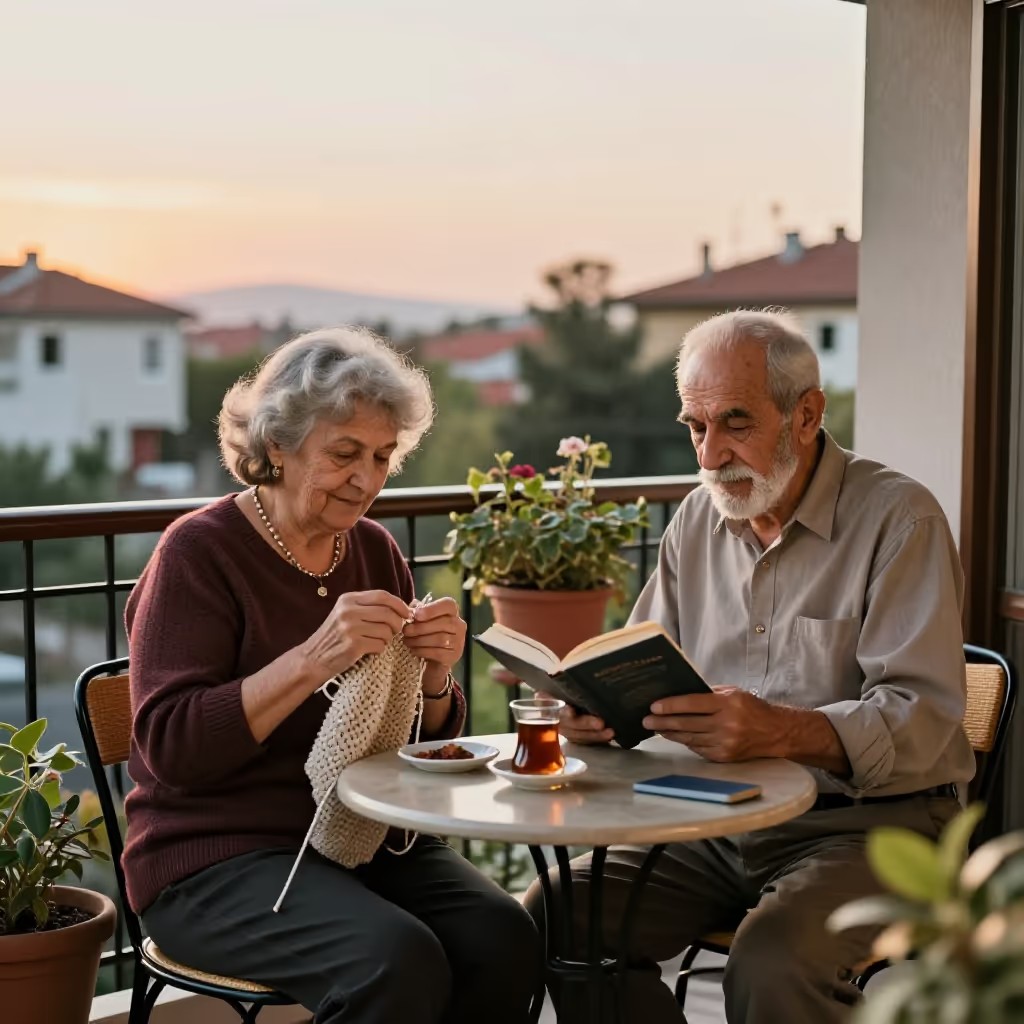
The final stage in a person's life, usually the period after the end of working life in retirement.
example
Sie verbringen ihren Lebensabend in einem kleinen Haus am Meer.
They are spending their twilight years in a small house by the sea.
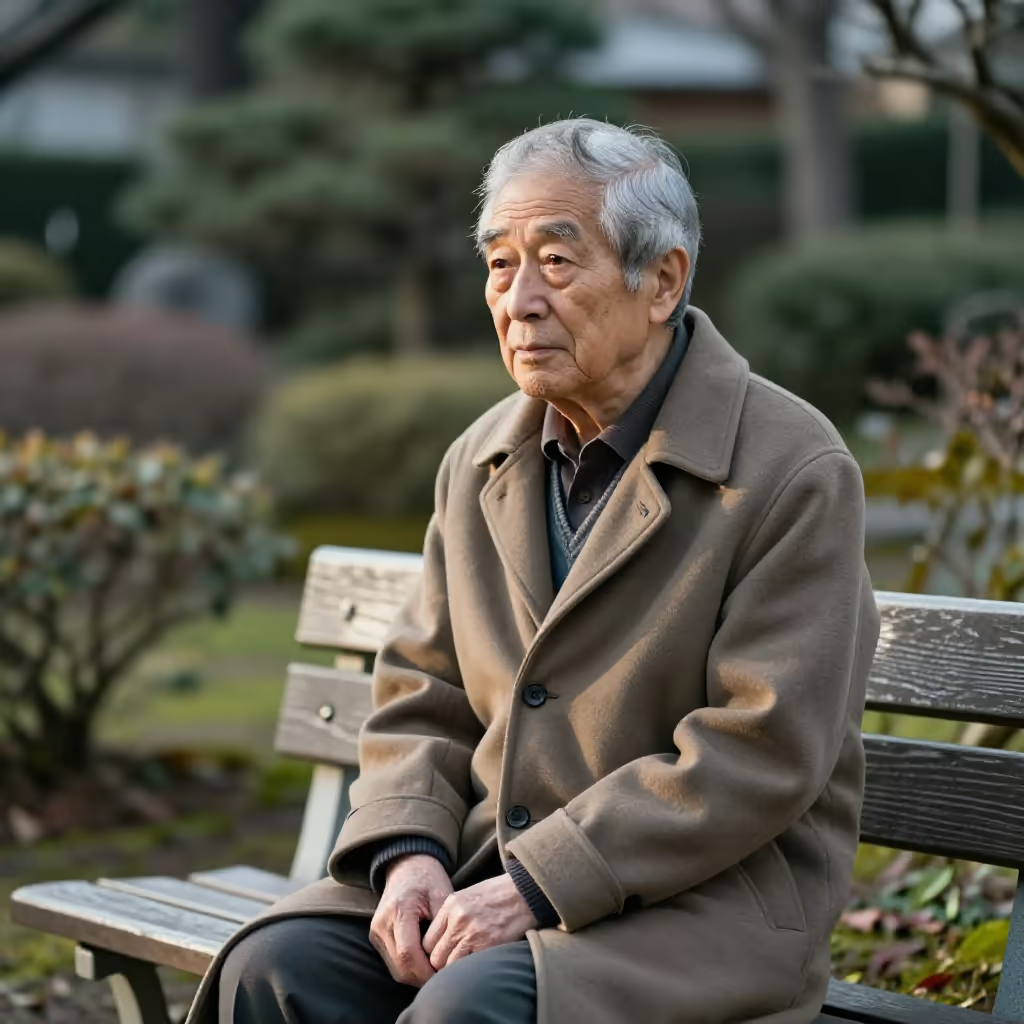
Usage tips
Poetic word formation
'Lebensabend' is a metaphor. It is made up of 'das Leben' (life) and 'der Abend' (evening) and poetically describes the final stage of life as the 'evening of life'.
EXAMPLE
Er blickt zufrieden auf sein Leben zurück und genießt nun seinen Lebensabend.
He looks back on his life with satisfaction and is now enjoying his twilight years.
Use with possessives
This noun is almost always used with a possessive pronoun to show whose phase of life is meant. So you say 'seinen Lebensabend' (his twilight years), 'ihren Lebensabend' (her/their twilight years), and so on.
EXAMPLE
Meine Großeltern verbringen ihren Lebensabend in den Bergen.
My grandparents are spending their twilight years in the mountains.
Register and style
The expression has a respectful and slightly elevated style. It is often used to speak positively about the time spent in retirement.
EXAMPLE
Nach einem langen Arbeitsleben wünscht er sich einen ruhigen Lebensabend.
After a long working life, he wishes for peaceful twilight years.
Typical collocations
Common verbs are 'den Lebensabend verbringen' (to spend one's twilight years), 'genießen' (to enjoy), or 'gestalten' (to shape). Typical adjectives are 'ruhig' (quiet), 'friedlich' (peaceful), or 'wohlverdient' (well-deserved).
EXAMPLE
Sie gestalten ihren Lebensabend aktiv mit Reisen und Hobbys.
They actively shape their twilight years with travel and hobbies.
Compare with
near_synonym · confusable
Lebensabend vs Abend
evening
'der Abend' and 'der Lebensabend' are connected when 'Abend' is used figuratively for the final stage of a life. 'Lebensabend' says this directly and usually means one’s later years, often after working life. 'Abend' by itself normally means the time of day. Only in fixed or poetic expressions like 'am Abend seines Lebens' (in the evening of his life) does it mean the final stage of life. The words can be confused because 'Lebensabend' uses the image of evening. In everyday language, 'Lebensabend' is clearer when talking about old age and the time after work.
Lebensabend
Nach vielen Jahren im Beruf verbringt Herr Kaya seinen Lebensabend auf dem Land.
After many years in his profession, Mr. Kaya is spending his later years in the countryside.
Abend
Am Abend ihres Lebens wollte sie noch einmal ans Meer ziehen.
In the evening of her life, she wanted to move to the seaside once more.