

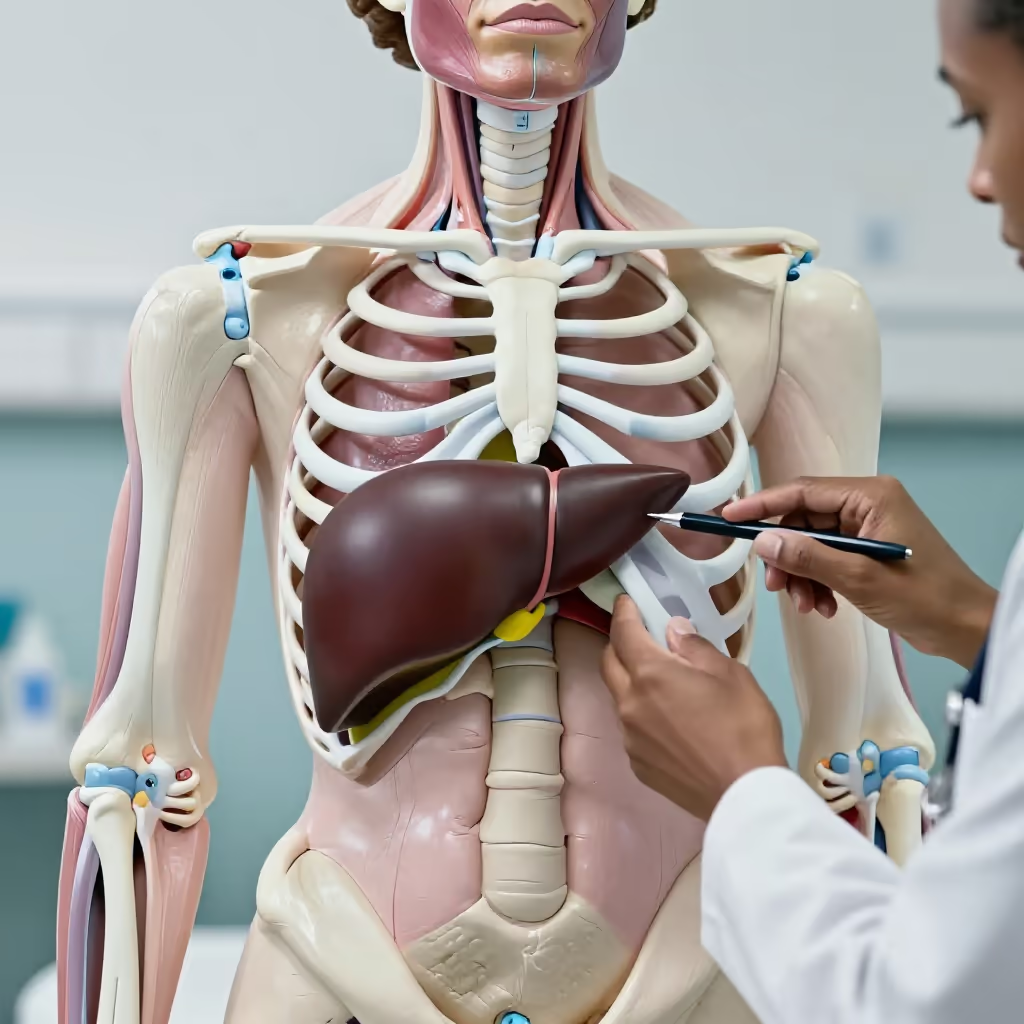
die Leber
liver
A large, important organ in the abdomen of humans and vertebrates that is responsible for metabolism and detoxifying the body.
EXAMPLE
Alkohol kann die Leber schädigen.
Alcohol can damage the liver.
liver
Loading your saved state.
liver
A large, important organ in the abdomen of humans and vertebrates that is responsible for metabolism and detoxifying the body.
Alkohol kann die Leber schädigen.
Alcohol can damage the liver.

liver
The liver of certain animals, prepared and eaten as food.
Ich esse gerne gebratene Leber mit Apfelringen und Zwiebeln.
I like eating fried liver with apple rings and onions.

to speak frankly
An idiom meaning that someone states their opinion openly, honestly, and without beating around the bush.
Er sagte frei von der Leber weg, was er von der neuen Regelung hielt.
He said frankly what he thought of the new regulation.

to be in a bad mood
An idiom expressing that someone is in a bad mood, irritated, or annoyed for no obvious reason.
Sprich den Chef heute besser nicht an, ihm ist anscheinend eine Laus über die Leber gelaufen.
You'd better not talk to the boss today; he seems to be in a bad mood.
In a medical context, 'Leber' (liver) is often used with certain verbs and nouns. Common combinations are 'die Leberwerte überprüfen' (to check liver values), 'eine Fettleber haben' (to have a fatty liver), or 'eine Lebertransplantation benötigen' (to need a liver transplant).
Der Arzt hat meine Leberwerte kontrolliert.
The doctor checked my liver values.
You can tell from the context whether 'Leber' (liver) is meant as food. Verbs like 'essen' (to eat), 'braten' (to fry), 'kochen' (to cook), or 'bestellen' (to order), as well as mention of it on a menu, clearly point to this meaning.
Als Hauptgericht bestelle ich heute Leber mit Kartoffelpüree.
For my main course today, I'm ordering liver with mashed potatoes.
The idiom 'frei von der Leber weg' (frankly, openly) functions as an adverbial expression that describes how someone speaks. It often appears with verbs like 'sagen' (to say), 'sprechen' (to speak), or 'antworten' (to answer).
Sie hat ihm frei von der Leber weg ihre Meinung gesagt.
She told him her opinion frankly.
In the idiom 'jemandem ist eine Laus über die Leber gelaufen' (someone is in a bad mood), the person who is in a bad mood is always in the dative. The subject of the sentence is 'eine Laus' (a louse).
Frag ihn lieber später, ich glaube, ihm ist eine Laus über die Leber gelaufen.
Better ask him later; I think he's in a bad mood.